 |
| Open Theism Discussion Board > Public Forums > General Chat > Evangelicalism Today | Forum Quick Jump
|
 | 
One Love
Registered Member

Date Joined Jan 2003
Total Posts : 13888
| Posted 10/29/2011 9:29 AM (GMT -6) |   | | | |
|
One Love
Registered Member
Date Joined Jan 2003
Total Posts : 13888
| Posted 10/29/2011 9:35 AM (GMT -6) | | Tom:
It's the same grammar behind Jn. 1.1f where John says "in the beginning was the Word and the Word was with God, AND THE WORD WAS GOD."
The Greek, "and God [theos without the article] was the Word (Word with the article). That means attributes divinity to the Word without reducing God TO the person of the Word, so that the Word is not all there is to God. Similarly, Jesus is not all there is to the Word.
Beautifully articulated, bro. Thinking of Jesus in this way could show Evangelicals the significance of the Chalcedonian christology formulated by the Councils...and, in so doing, linking itself to true historical Christianity. And the cool stuff is...IT'S ALL IN THE BIBLE. For anyone to read who can do so.
See, the "cure" for this is relatively SIMPLE.
It's ADMINISTERING it that's the challenge.
Lord Jesus Christ, Son of God, have mercy on me, a sinner. | | Back to Top | | |
|
Similitude
Registered Member
Date Joined Apr 2004
Total Posts : 4968
| Posted 10/29/2011 10:49 AM (GMT -6) | | D: It's obvious to me that MOST kenoticists do NOT want to deny...
1) the "eternally existent" interpersonal relationships amid the divine persons of the Trinity
2) Jesus was fully God and fully human.
I can see that clearly from the interactions. It's just that they don't want to ACCEPT the transcendent and fully divine Son of God becoming fully human without "giving up" being fully divine (meaning transcendent). Again, it's the despairing "offense to reason" that Kierkegaard KEPT warning about. Bowing the proverbial knee to Chalcedonian Christianity is an aspect of the "leap of faith." (ALL of this is in Loder!)
J: Where I think you're not seeing my view is in the phrase "fully divine." Because as I see it, once we accept that the persons of the godhead are diverse at all, we are dependent upon scripture to tell us how they are diverse. This is why I have insisted that the second person never gave up anything with respect to his deity. It's just that given the diversity of the persons of the godhead, the sense in which each is divine relative to creation is different. And I see nothing in scripture that equivocally says or implies that the second person ever was or is now transcendant to creation except in the sense that he preceded it, was in some sense causally involved in its existence, is the beneficiary of its existence, and will exist forever henceforth.
And this gets down to how I understand the attributes of deity. To my mind, the deity is originally humanly-known as the creator. We are compelled by our intellectual nature to synthesize/organize our experience teleologically in terms of some extra-ego beings. What we come to believe the designer(s) know or can do is what they must know or can do to account for this teleological perspective. I.e., it's all worked out correlatively. These things are not known fundamentally in propositional form prior to our synthesizing/organizing our perspective. They evolve correlatively per the teleological causal category AS we organize/synthesize teleologically.
Thus, by my view, any additional attributes of deity come per scripture or private revelation.
As for the "offense to reason," though I don't believe the lucid dream analogy explains a bona-fide 2-consciousnesses view, I don't see how it doesn't entail a contradiction if the mental content of one mind is a subset of the 1st-person content of the other's, while the other is omniscient. This seems to imply that ONE person can hold contradictory perspectives/beliefs simultaneously.
T: It's the same grammar behind Jn. 1.1f where John says "in the beginning was the Word and the Word was with God, AND THE WORD WAS GOD."
The Greek, "and God [theos without the article] was the Word (Word with the article). That means attributes divinity to the Word without reducing God TO the person of the Word, so that the Word is not all there is to God.
J: I'm not seeing how I'm contradicting any of this. That passage is the first one that explicitly says that all things came into being through him. Thus, the Father is not "all there is to God" in the sense of the intelligent (i.e., divine) cause of creation.
T: Similarly, Jesus is not all there is to the Word.
J: This is what I'm not seeing scriptural support for.
| | Back to Top | | |
|
One Love
Registered Member
Date Joined Jan 2003
Total Posts : 13888
| Posted 10/29/2011 11:07 AM (GMT -6) | | T: Similarly, Jesus is not all there is to the Word.
J: This is what I'm not seeing scriptural support for.
Hebrews 1:3-4 is that scriptural support. Re-read what Tom wrote about that. His interpretation is too solid.
Really look at it, Jeff.
To understand what the "all things" in 1.3 means I'd suggest starting with the immediate context..."whom he appointed heir of all things." There's an all things right there. Then I'd ask what possible sense "...by his powerful word" could have if "upholding all things" means enduring worldly problems (or even the cross itself). What would you construe "endure temporal evils by his powerful word" to mean? THEN I'd ask how well it fits into the flow of argument, which has this present participle (i.e., upholding) prior to the aorist main verb with the co-ordinate present participle "being," to have it function like the aorist participle ("cleansing" ) after the main verb describing the redemptive work of his incarnate state. THEN I'd take a look at how similar phrases "upholding all things" with THIS verb might have been used in contemporary literature. Philo's description of the Logos as creator and sustainer of the world (using THIS verb) would be a good place to start. THEN I'd take a good look at the history of interpretation and ask myself "Has anyone in 2,000 years understood "upholding all things by the word of his power" to mean "endure worldly evils" or something along those lines?
********************************************************** Jeff: As for the "offense to reason," though I don't believe the lucid dream analogy explains a bona-fide 2-consciousnesses view, I don't see how it doesn't entail a contradiction if the mental content of one mind is a subset of the 1st-person content of the other's, while the other is omniscient. This seems to imply that ONE person can hold contradictory perspectives/beliefs simultaneously.Let's let this stand for right now, bro. Just for the sake of argument. What if THIS is the "leap of faith" that one has to make in order to affirm Scriptural testimony (Hebrews 1:3-4, Colossians 1:17) AND the collective wisdom of the Church ala Chalcedonian Christianity? Can you make that "leap"? Seriously. Whether you can or can't is your decision and your decision alone. Jesus doesn't love any of us any less. At the same time...
WHO…
BEING
(pres. ptc)
the brightness of his glory
and the express image of his substance/essence
and
CARRYING/UPHOLDING
(pres. ptc) all things by the word of his power
SAT DOWN
(Aor Ind) on the right hand of the majesty on high
HAVING MADE
(Aor Ptc) cleansing of our sins
HAVING BECOME
(Aor Ptc) so much better than angels…
[Yay, Tom!]
Lord Jesus Christ, Son of God, have mercy on me, a sinner. Post Edited (One Love) : 10/29/2011 11:53:17 AM (GMT-5) | | Back to Top | | |
|
Similitude
Registered Member
Date Joined Apr 2004
Total Posts : 4968
| Posted 10/29/2011 4:27 PM (GMT -6) | | |
D: To understand what the "all things" in 1.3 means I'd suggest starting with the immediate context..."whom he appointed heir of all things." There's an all things right there. Then I'd ask what possible sense "...by his powerful word" could have if "upholding all things" means enduring worldly problems (or even the cross itself). What would you construe "endure temporal evils by his powerful word" to mean? THEN I'd ask how well it fits into the flow of argument, which has this present participle (i.e., upholding) prior to the aorist main verb with the co-ordinate present participle "being," to have it function like the aorist participle ("cleansing" ) after the main verb describing the redemptive work of his incarnate state. THEN I'd take a look at how similar phrases "upholding all things" with THIS verb might have been used in contemporary literature. Philo's description of the Logos as creator and sustainer of the world (using THIS verb) would be a good place to start. THEN I'd take a good look at the history of interpretation and ask myself "Has anyone in 2,000 years understood "upholding all things by the word of his power" to mean "endure worldly evils" or something along those lines?
J: I'll say this. Since I just noticed the "all things" is preceded by the article in greek, I would say that is a good indicator that "all things" is more cosmic in nature. But even so, it is not at all clear that "by the word of his power" doesn't mean the Father's word of power. In that case, it is more easy to understand how and why Jesus had to learn obedience by the things he suffered, depending on God to not test him above what he was able at any given time.
On the other hand, Jesus prayed that the cup pass from him if it were possible. Seemingly, is was not possible. This indicates that something about that cup was part and parcel of the success of the teleological project that the world exists to play out. I take it to mean that God accomplished something via that cup which would have failed to occur otherwise. So in that sense, Jesus was bearing all things simply by doing what he did, being perfected by the sufferings. The success of the creational project was hanging on him actually purifying our sins the way he did.
Or if I'm reading the participle tenses wrong, I can see it meaning this: Jesus really is upholding all things by the word of his Father's power or by the power of his own word now that he is seated on the right hand of majesty (now that all authority has been given to him in heaven and earth--i.e., now that he is Chrisus Victor). Now if the participle tenses can't allow either of these interpretations, then help me out on that.
All I'm saying is, I'm not seeing how this passage unequivocally means what ya'll are claiming yet. Moreover, I find it hard to believe that differences over something which could imply that one is dangerously heretical could hang on one single verse.
**********************************************************
Jeff:
As for the "offense to reason," though I don't believe the lucid dream analogy explains a bona-fide 2-consciousnesses view, I don't see how it doesn't entail a contradiction if the mental content of one mind is a subset of the 1st-person content of the other's, while the other is omniscient. This seems to imply that ONE person can hold contradictory perspectives/beliefs simultaneously.
D: Let's let this stand for right now, bro. Just for the sake of argument. What if THIS is the "leap of faith" that one has to make in order to affirm Scriptural testimony (Hebrews 1:3-4, Colossians 1:17) AND the collective wisdom of the Church ala Chalcedonian Christianity?
J: First of all, if I remember correctly, Colossians is even more equivocal because of the tense of the verb. IOW, it could mean something cosmic and still have nothing to do with how you're interpreting it.
Second of all, without being able to exegetically determine that these verses mean what Chalcedonians claim, we can't even know it was wisdom. It may have just been men doing what all men do--arguing for what they were fully persuaded of in their own mind. But all men can't be right. That, per se, is not wisdom.
Third, as I conceive of "leap of faith," it is to believe something without evidence or with a mere paucity of evidence. I'm not talking about that. I'm talking about what seems to be a bona-fide contradiction. If leaps of faith can overcome the LNC, then there are no arguments to be made at all.
But until I can't get past the equivocality issue, the apparent contradiction is just additional evidence for me. For there may be a way around the apparent contradiction. E.g., maybe we err to suppose we can analogize in that respect. I find that troubling as well, though. Because it seems to go so far as to eliminate any possibility of conceiving of divine teleology. It would seem that analogy has to work for the sense in which the godhead is conceived of as knowing, competent persons.
D: Can you make that "leap"? Seriously. Whether you can or can't is your decision and your decision alone. Jesus doesn't love any of us any less.
J: I owe it to your persistence that I finally conceived of how UR is consistent with scripture. From that perspective, though, I truly think that not believing in UR is more of a hinderance to the formation of a robust Christian perspective than is the right position on the point of contention at hand. Seriously.
| | Back to Top | | |
|
One Love
Registered Member
Date Joined Jan 2003
Total Posts : 13888
| Posted 10/29/2011 4:39 PM (GMT -6) | | Jeff:
I'll say this. Since I just noticed the "all things" is preceded by the article in greek, I would say that is a good indicator that "all things" is more cosmic in nature. But even so, it is not at all clear that "by the word of his power" doesn't mean the Father's word of power.
Ok. Just for the sake of argument, let's take it your way.
WHO is the Father's "word of power"...biblically speaking.
There's ONLY ONE.
What does John 1:1 say?
"In the beginning was the Word, and the Word was with God, and the Word was God."
You STILL don't get away from the main issue.
You see that...right?
Lord Jesus Christ, Son of God, have mercy on me, a sinner. Post Edited (One Love) : 10/29/2011 4:42:05 PM (GMT-5) | | Back to Top | | |
|
Similitude
Registered Member
Date Joined Apr 2004
Total Posts : 4968
| Posted 10/30/2011 7:54 AM (GMT -6) | | The word is rhema as opposed to logos. But let's say it's the Son speaking by his own word of power. We need to determine some things.
1) Can "all" preceded by the article imply the totality of a set (e.g., all that he had to place blood on the altar in heaven for) rather than the totality of created beings?
2) Can "bear" have the idea of enduring or carrying (as it does elsewhere), in which case he could be said to be bearing all by ascending to heaven to place his blood on the altar there just prior to sitting at the right hand of majesty?
3) What exactly do the participle tenses tell us about timing of the actions?
4) Could those tenses be consistent with Christ bearing all things in some temporally-enduring sense such that once he sat down at the right hand of God he had finished the "bearing," etc?
What I'm essentially saying is that these verses are some very difficult ones in greek. Not only because of the stacking of participles and the difficulty that creates for ascertaining timing, but because "bearing" has multiple senses. Moreover, I don't know what you guys could possibly mean by "bearing all things" but creatio continua. And I'm neither aware of any scriptural statements elsewhere that unequivocally expresses that idea nor another case where the word "bear" has that connotation.
But the idea that the "cup" could not pass from him because it was necessary to some end of creation IS consistent with either of the common ideas of "bearing"--to bear in travel in the sense of "carry" or to bear in the sense of "endure." Both these apply, per Hebrews, to what Christ did--his bearing of the reproaches and sins of the world and his ascending (hence, carrying) to the temple in heaven to put his blood on the altar in the temple in heaven (hence indirectly upholding all things, in that sense). And the latter is perfectly reconcilable with "the word of his power" referring to Christ's own word in a very straightforward way. For his ascension is described in Ephesians as occurring BECAUSE of the power that God wrought in him in bringing him to the right hand of God after the ressurection.
I'm not opposed to creatio continua being true if scripture reveals it. I'm just not seeing it as more plausible philosophically or scripturally-revealed thus far. And apart from creatio continua being true, I can't imagine how the participle tenses or the connotation of "bear" have any significance for your view.
Post Edited (Similitude) : 10/30/2011 8:47:38 AM (GMT-5) | | Back to Top | | |
|
One Love
Registered Member
Date Joined Jan 2003
Total Posts : 13888
| Posted 10/30/2011 8:22 AM (GMT -6) | | Jeff:
Moreover, I don't know what you guys could possibly mean by "bearing all things" but creatio continua.
Exactly right. All created order reality is continually sustained only by the hypostatic (personally willed) communication of being by God the Father's Co-Eternal Word in the Power of the Spirit.
*******************************
Jeff:
And I'm neither aware of any scriptural statements elsewhere that unequivocally expresses that idea nor another case where the word "bear" has that connotation.
Ok. Let's do it this way. Gonna try another route. Remember when we did that thought project before? Mentally, "taking away" Creation and seeing what we were "left with" here? Ok. Let's do that again. So, here and now, there is only the uncreated reality. The Boundless, Uncreated, Eternal Personal Presence of Divine Self-Relationship, the perichoretic hypostatic activity of the Father, His Co-Eternal Word, and His Holy Spirit. I don't think you would disagree with me on this. Moreover, since we would agree that however God exists in this sans Creation here and now, he exists NECESSARILY...we'd have to say that this is UNCHANGABLY how the Triune God is. We would BOTH agree that the Uncreated God as Trinity is NECESSARILY, thus UNCHANGABLY so.
We WOULD agree on that, I'm taking it.
Ok...
Let's say our conceptualized uncreated reality, The Necessary, Unchangably Boundless, Immaterial, Uncreated Eternal God the Word (who is CO-Eternal with the Necessary, Unchangably Boundless, Immaterial, Uncreated Eternal God the Father [John 1:1] ) has a "focus of will" about Creation coming to have existence within God the Word's Boundless Presence...and the Word personally and actively sustains Creation with this "focus of will". NOT that this "focus of will" is taxing THe Word in any way. It's just to say that there is consistent INTENTIONALITY from the Word about Creation's continuing to be. Without the Word continually "thinking about us", we would immediately fail to exist...just like our own conscious thoughts fail to exist without us actively sustaining their reality.
Let's FURTHER say that as the Necessary, Unchangably Boundless, Immaterial, Uncreated Eternal God the Word has this "focus of will"...God the Word also takes on a particular creaturely existence within his "focus" on Creation's existence. Such that, as Tom said..."God commits to relating to THIS fetus, in every stage of its history, in such a way that the Son’s subjectivity assumes this space as his own hypostatically." In doing this, the Necessary, Unchangably Boundless, Immaterial, Uncreated Eternal God the Word doesn't cease being Necessary, Unchangably Boundless, Uncreated, Immaterial, or CO-Eternal with God the Father or the Holy Spirit.
So, the Necessary, Unchangably Boundless, Immaterial, Uncreated Eternal God the Word now has a DUAL experience...a bi-polar assymmetrical relational unity between His Boundless, Uncreated, Eternal, Immaterial Personal Being (that is continually "focusing will" on Creation's existence and in love relationship to the Father and the Spirit) and the particular human growth and development experience of Jesus, son of Mary, including his developing human noetic functioning and self-understanding capabilities. In this way, Jesus of Nazareth IS the INCARNATE Word/Son of God the Father by the Power of the Holy Spirit: the Necessary, Unchangably Boundless, Immaterial, Uncreated Eternal God the Word takes on a human "heart" and a human spirit-ual life.
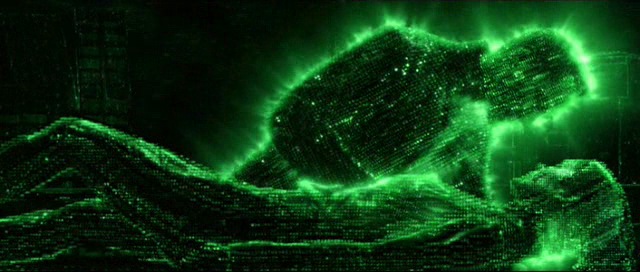
This would be ANALOGOUS TO saying that a necessary, eternal, boundless, immaterial, uncreated hypostatic (person) being can originate a "wake-induced lucid dream" about a world, continually sustaining it, and then enter that w.i.l.d. by way of "taking on" a particularized, authentic "dream life" within it...without ceasing to be necessary, eternal, boundless, immaterial, and uncreated.
Now, as I've just described things...does that make any kind of sense to you? How possible of a scenario to you might this be? Is this in any way even CONCEIVABLE to you?
Lord Jesus Christ, Son of God, have mercy on me, a sinner. Post Edited (One Love) : 10/30/2011 8:59:58 AM (GMT-5) | | Back to Top | | |
|
One Love
Registered Member
Date Joined Jan 2003
Total Posts : 13888
| Posted 10/30/2011 8:41 AM (GMT -6) | | | Is this conceivable to anyone ELSE?
If you say yes, then try reading Hebrews 1:3-4, John 1, and Colossians 1:17 from that lens.
See how it fits.
------------------------
WHO…
BEING
(pres. ptc)
the brightness of his glory
and the express image of his substance/essence
and
CARRYING/UPHOLDING
(pres. ptc) all things by the word of his power
SAT DOWN
(Aor Ind) on the right hand of the majesty on high
HAVING MADE
(Aor Ptc) cleansing of our sins
HAVING BECOME
(Aor Ptc) so much better than angels…
-------------------------------------------------
"In the beginning was the Word, and the Word was with God, and the Word was God. He was in the beginning with God. All things were made through him, and without him was not any thing made that was made. In him was life, and the life was the light of men. The light shines in the darkness, and the darkness has not overcome it."
-------------------------------
"He is the image of the invisible God, the firstborn of all creation. For by him all things were created, in heaven and on earth, visible and invisible, whether thrones or dominions or rulers or authorities—all things were created through him and for him. And he is before all things, and in him all things hold together."
Lord Jesus Christ, Son of God, have mercy on me, a sinner. Post Edited (One Love) : 10/30/2011 8:46:38 AM (GMT-5) | | Back to Top | | |
|
Similitude
Registered Member
Date Joined Apr 2004
Total Posts : 4968
| Posted 10/30/2011 9:05 AM (GMT -6) | | D: Mentally, "taking away" Creation and seeing what we were "left with" here? Ok. Let's do that again. So, here and now, there is only the uncreated reality. The Boundless, Uncreated, Eternal Personal Presence of Divine Self-Relationship, the perichoretic hypostatic activity of the Father, His Co-Eternal Word, and His Holy Spirit. I don't think you would disagree with me on this. Moreover, since we would agree that however God exists in this sans Creation here and now, he exists NECESSARILY...we'd have to say that this is UNCHANGABLY how the Triune God is.
J: Let's start here. First of all, as I remember, you and/or Tom don't believe there was space sans creation. Therefore, I don't know what you mean by "boundless." Second of all, I don't assume that what SOFA existed, sans creation, constitutes what is essential to the godhead. E.g., I, like you, believe that the persons of the godhead experienced bliss without suffering sans creation. But now I think the Father experiences suffering--otherwise He couldn't speak of actually being longsuffering. Thus, the lack of suffering sans creation is not indicative of an essential attribute of the Father, to my mind. Consequently, I don't derive essential attributes of divinity that way.
What I say is essential to the godhead (not necessarily to all persons of the godhead, but the godhead as a whole) is what our teleological thought correlatively implies is essential to it PLUS whatever else revelation tells me is essential. And in that order .... We couldn't even make sense of revelation if we didn't already naturally conceive of a Designer of creation that is not part of creation. This claim is what both Rom. 1 and philosophy compel me to believe.
| | Back to Top | | |
|
One Love
Registered Member
Date Joined Jan 2003
Total Posts : 13888
| Posted 10/30/2011 9:05 AM (GMT -6) | | |
Lord Jesus Christ, Son of God, have mercy on me, a sinner. Post Edited (One Love) : 10/30/2011 9:45:37 AM (GMT-5) | | Back to Top | | |
|
One Love
Registered Member
Date Joined Jan 2003
Total Posts : 13888
| Posted 10/30/2011 9:10 AM (GMT -6) | | Jeff:
Let's start here. First of all, as I remember, you and/or Tom don't believe there was space sans creation. Therefore, I don't know what you mean by "boundless."
All I'm saying is that that God the Word's personal presence is omni-present. Creation occurs within God the Word's immaterial boundlessness.
*******************************
Jeff:
Second of all, I don't assume that what SOFA existed, sans creation, constitutes what is essential to the godhead. E.g., I, like you, believe that the persons of the godhead experienced bliss without suffering sans creation. But now I think the Father experiences suffering--otherwise He couldn't speak of actually being longsuffering. Thus, the lack of suffering sans creation is not indicative of an essential attribute of the Father, to my mind. Consequently, I don't derive essential attributes of divinity that way.
Let's skip the longsuffering stuff. Put that to the side. The necessary SOFA that we are talking about is uncreatedness and the necessity, boundlessness, immateriality, and eternality directly associated with it. Do you get THAT part?
Lord Jesus Christ, Son of God, have mercy on me, a sinner. Post Edited (One Love) : 10/30/2011 9:15:04 AM (GMT-5) | | Back to Top | | |
|
One Love
Registered Member
Date Joined Jan 2003
Total Posts : 13888
| Posted 10/30/2011 9:13 AM (GMT -6) | | Jeff:
What I say is essential to the godhead (not necessarily to all persons of the godhead, but the godhead as a whole) is what our teleological thought correlatively implies is essential to it PLUS whatever else revelation tells me is essential. And in that order .... We couldn't even make sense of revelation if we didn't already naturally conceive of a Designer of creation that is not part of creation. This claim is what both Rom. 1 and philosophy compel me to believe.
Ok. The Designer of Creation, AS UNCREATED, antedates and grounds Creation...and is NOT a part of that Creation. Fine. What we are saying is that this "Designer of Creation" that you are talking about IS the Necessary, Unchangably Boundless, Immaterial, Uncreated Eternal God the Word/Son/Logos and didn't ceasing being so when he took on humanity through Mary.
Whenever the Eastern Church says "the Word became flesh", THIS is what it means!
Lord Jesus Christ, Son of God, have mercy on me, a sinner. Post Edited (One Love) : 10/30/2011 9:26:05 AM (GMT-5) | | Back to Top | | |
|
One Love
Registered Member
Date Joined Jan 2003
Total Posts : 13888
| Posted 10/30/2011 9:20 AM (GMT -6) | | | This is what evangelical kenoticists don't understand:
By saying that God the Son/Word/Logos in no way transcends his human nature post-Incarnation and pre-Resurrection by self-limiting choice, they effectively say that God the Son/Word/Logos can ACTUALLY choose to divest himself of his NECESSARY uncreatedness, boundlessness, and co-eternality with God the Father...of whom the Son/Word/Logos is the perfect image. If God the Son/Word/Logos could choose not to exercise boundlessness and co-extensive omni-presence with God the Father...that would make those traits CONTINGENT, not NECESSARY.
This is pure theological and metaphysical NONSENSE.
Lord Jesus Christ, Son of God, have mercy on me, a sinner. Post Edited (One Love) : 10/30/2011 9:27:37 AM (GMT-5) | | Back to Top | | |
|
One Love
Registered Member
Date Joined Jan 2003
Total Posts : 13888
| Posted 10/30/2011 9:29 AM (GMT -6) | | Watch this, now...
We, then, following the holy Fathers, all with one consent, teach people to confess one and the same Son, our Lord Jesus Christ, the same perfect in Godhead and also perfect in manhood; truly God and truly man, of a reasonable [rational] soul and body; consubstantial [co-essential] with the Father according to the Godhead, and consubstantial with us according to the Manhood; in all things like unto us, without sin;
begotten before all ages of the Father according to the Godhead, and in these latter days, for us and for our salvation, born of the Virgin Mary, the Mother of God, according to the Manhood; one and the same Christ, Son, Lord, only begotten, to be acknowledged in two natures, inconfusedly, unchangeably, indivisibly, inseparably; the distinction of natures being by no means taken away by the union, but rather the property of each nature being preserved, and concurring in one Person and one Subsistence, not parted or divided into two persons, but one and the same Son, and only begotten God (μονογενῆ Θεὸν), the Word, the Lord Jesus Christ; as the prophets from the beginning [have declared] concerning Him, and the Lord Jesus Christ Himself has taught us, and the Creed of the holy Fathers has handed down to us.
----------------------
God the Son/Word/Logos takes on a particularized creaturely existence within his "focus of will" on Creation's overall existence...such that, as Tom said..."God commits to relating to THIS fetus, in every stage of its history, in such a way that the Son’s subjectivity assumes this space as his own hypostatically." In doing this, the Necessary, Unchangably Boundless, Immaterial, Uncreated Eternal God the Word NEVER CEASES being Necessary, Unchangably Boundless, Uncreated, Immaterial, or CO-Eternal with God the Father or the Holy Spirit.
Lord Jesus Christ, Son of God, have mercy on me, a sinner. Post Edited (One Love) : 10/30/2011 9:38:47 AM (GMT-5) | | Back to Top | | |
| 97 posts in this thread.
Viewing Page : 1 2 3 4 |
| Forum Information | Currently it is Monday, November 09, 2026 5:59 PM (GMT -6)
There are a total of 97,718 posts in 6,040 threads.
In the last 3 days there were 0 new threads and 0 reply posts. View Active Threads
|
Forum powered by dotNetBB v2.42EC SP3
dotNetBB © 2000-2026 |
|
|