 |
| Open Theism Discussion Board > Public Forums > General Chat > Yannaras and Lossky | Forum Quick Jump
|
 | 
Similitude
Registered Member
Date Joined Apr 2004
Total Posts : 4968
| Posted 12/17/2006 1:29 PM (GMT -6) |   | | The problem for me, Tom, is conceiving apprehension in terms of conscious apprehension. To say that a knower consciously apprehends with zero duration seems to say that one can be conscious for a duration of zero. But as I've said before, that seems like saying a circle can have a diameter of zero. It just doesn't compute to me.
I think that's probably why the scripture speaks in terms of purposes and choices and other such events. This is what the human mind can actually grasp. I try to build my theology in terms of these concepts because I don't see how anything in philosophy or theology really hinges on eternal foreknowledge of all contingencies. If it's true, great. But I still can't see what it explains that is inexplicable otherwise (is there something that only eternal foreknowledge explains?). That combined with the fact that I can't grasp it anyway just renders it superflous to me.
You say God doesn't require a medium. Granted, but that just adds to my point. I have no idea how unmediated apprehension works. I might as well posit that there is some eternal, infinite medium by which pure spirit can apprehend which is equally mysterious--one that mediates across our whole universe faster than the fastest entities in creation such that God is always on top of the game. No matter which way I go, I can't understand it.
But the difference in positing God's eternal foreknowledge and positing God's awareness of His own creation is this: the creation seems to require design as its very ground of existence. Thus, I must assume that the designer knows somehow to achieve whatever satisfaction He intended to receive from this creation. And I can't, as a mere human, legitimately rule out incomprehensible modes of activity on the grounds of my own limited categorical perspective.
But it seems I can rule out conscious states of zero duration. We could say that God's apprehension is not conscious. But I see no point in straining my brain over such matters when the eternality of foreknowledge doesn't explain anything to me that is otherwise inexplicable.
So I allow for mystery, as does POW. But it doesn't create tension for me since I hold that whatever is mystery is unnecessary to a coherent theology. I suspect that my creaturehood will render me forever unable to truly grasp all there is about God. But maybe there are things that are beyond our grasp about created reality too. Maybe there are specifics about creation that our categories only grasp in more generic terms.
E.g., are there non-blind, non-volitional causes? I don't know. I tend to think so. But only because I question the continual sustaining power of God as necessary to maintain the sheer existence of creation. If creation is being continually sustained by God, then I would, for the sake of parsimony, posit that the godhead is the only causal agent besides created volitional egos. In which case, maybe there aren't different kinds of forces (i.e., causal sources) like the physicists seem to say. Maybe it makes no difference so long as we hold to the existence of some causal agency, generically, to account for change; and hold to design to account for the axioms of induction (parsimony/analogy/etc) and morality (right/wrong/desert/etc).
Heather's concern about the "bigger kid on the block" was the one thing in our Safe Haven discussions that made me think God must be infinite and exhaustively knowledgeable about reality. But if God has risked at all, I think I need to allow that God may have risked things I may not even be aware of. And if this is the case, maybe God is not paralyzed by a lack of exhaustive knowledge.
But I'm perfectly fine with it if God does know exhaustively. But I don't know how to account for such knowledge. The only kind of knowledge I can understand is categorical knowledge and discursive knowledge that builds on the categorical knowledge. These, however, can not account for the certainty of exhaustive knowledge. There would always be the possibility that there is a "missing" category that renders some reality/relation unapprehendable. Thus, exhaustive knowledge must not be categorical. But I don't have any idea what else it could be. I have absolutely no analogy for such knowledge.
And it seems the only reason why we would require such knowledge is to avoid risk. But who am I to say what risk God would take if He was not exhaustively knowledgeable? Would He sit there paralyzed in fear? I don't see why He would. So again, when I can't understand a thing, and I don't see how positing it explains anything, I just don't worry about it.
My epistemology builds out trying to posit what is required to account for my own epistemological competence. Humans don't seem to be able to question their epistemological competence. The question is, and always has been, what must exist to account for our competence. To my mind, our competence depends on a competent designer. But God can not ground His own competence in design since He was not created, supposedly.
| | Back to Top | | |
|
One Love
Registered Member

Date Joined Jan 2003
Total Posts : 13888
| Posted 12/17/2006 5:29 PM (GMT -6) | | Reality is perspectival.
Reality is relational.
Reality is dispositional.
Reality is superpositional.
Reality is fractal.
Reality is triune.
Yeah.
"All authority in heaven and on earth has been given to Me.
Therefore (YOU) go and introduce all peoples into the Way, baptizing them in the name of the Father and of the Son and of the Holy Spirit, and intstructing them in following everything I have commanded you. (Great Commandments!)
And surely I am with you always, even to the very end of the age."
| | Back to Top | | |
|
One Love
Registered Member
Date Joined Jan 2003
Total Posts : 13888
| Posted 12/17/2006 6:40 PM (GMT -6) | | Jeff,
Do you have categorical knowledge of your perspective (in the form of your own consciousness...or do you immediately prehend your existence as being perspectival?
"All authority in heaven and on earth has been given to Me.
Therefore (YOU) go and introduce all peoples into the Way, baptizing them in the name of the Father and of the Son and of the Holy Spirit, and intstructing them in following everything I have commanded you. (Great Commandments!)
And surely I am with you always, even to the very end of the age."
| | Back to Top | | |
|
One Love
Registered Member
Date Joined Jan 2003
Total Posts : 13888
| Posted 12/18/2006 10:14 AM (GMT -6) | | Jeff,
Imagine that you had FULL AWARENESS of every quantum event in your human superpositional (dispositional) "field of force" at all points in time...BECAUSE your FULL SENTIENCE literally permeated and grounded all of those quantum events.
If this was the case, you would ALWAYS be aware of all things within your "field of force" at ANY TIME. Meaning that temporal sequence would not have to occur for you to have "knowledge" of your human field.
All "zero duration" means is PERFECT SIMULTANEITY.
And yes, God knows all things that can be known SIMULTANEOUSLY.
Meaning that God IS God's ETERNAL PERSPECTIVE (God's necessary essential existence and God's contingent expressive existence) with simultaneity.
We don't have these experiences of perfect simultaneity as humans very often.
But the QUANTUM WORLD experiences it all the time.
(See double-slit experiment, zero-point energy, vacuum fluctuations, etc...)
And the quantum world is as much REALITY as what we CONSCIOUSLY perceive!
Contingent Reality is SUPERPOSITIONAL because Necessary Reality is DISPOSITIONAL.
God knows reality as it IS. And it is ALL of God's perspective!
Yes, B. God IS the supercomputer! 
"All authority in heaven and on earth has been given to Me.
Therefore (YOU) go and introduce all peoples into the Way, baptizing them in the name of the Father and of the Son and of the Holy Spirit, and intstructing them in following everything I have commanded you. (Great Commandments!)
And surely I am with you always, even to the very end of the age."
| | Back to Top | | |
|
PotOnWheel
Registered Member

Date Joined Jul 2001
Total Posts : 9890
| Posted 12/18/2006 11:01 AM (GMT -6) | |
Exousia said...
Yes, B. God IS the supercomputer!
According to Lossky it is a 'yes,' but according to Zizioulas it is a 'no.' **
So... the jury is still out. 
---------------------------------
** See "Being with God: Trinity, Apophaticism, and Divine Human Communion" by Aristotle Papanikolaou, University of Notre Dame Press, 2006 http://www.amazon.com/Being-God-Apophaticism-Divine-Human-Communion/dp/0268038317
WORTH EVERY PENNY.
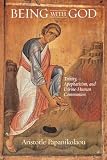 Book Description
"Being With God is an exceedingly important and well-written book on Orthodox theology of the Trinity. It not only explains the work of two major contemporary Orthodox theologians; it also lends vital insight into the nature and character of contemporary Orthodox theology in general." —Vigen Guroian, Department of Theology, Loyola College in Maryland
"This is a splendid work of hard-won insights into crucial figures in the development of contemporary theology. Aristotle Papanikolaou makes an original contribution that will be of great interest not only to students in the area of Eastern Orthodox theology but to anyone studying Christian anthropology, metaphysics, trinitarian thought, or comparative theological method." —Mark McIntosh, Department of Theology, Loyola University of Chicago
The central task of Being With God is an analysis of the relation between apophaticism, trinitarian theology, and divine-human communion through a critical comparison of the trinitarian theologies of the Eastern Orthodox theologians Vladimir Lossky (1903–58) and John Zizioulas (1931–), arguably two of the most influential Orthodox theologians of the past century. Aristotle Papanikolaou shows how an ontology of divine-human communion is at the center of both Lossky's and Zizioulas's theological projects. He also shows how, for both theologians, this core belief is used as a self-identifying marker against "Western" theologies.
Papanikolaou maintains, however, that Lossky and Zizioulas hold profoundly different views on how to conceptualize God as the Trinity. Their key difference is over the use of apophaticism in theology in general and especially the relation of apophaticism to the doctrine of the Trinity. For Lossky, apophaticism is the central precondition for a trinitarian theology; for Zizioulas, apophaticism has a much more restricted role in theological discourse, and the God experienced in the eucharist is not the God beyond being but the immanent life of the trinitarian God. --This text refers to the Hardcover edition.
about the Author
ARISTOTLE PAPANIKOLAOU is assistant professor of theology at Fordham University.

(o)Post Edited (PotOnWheel) : 12/18/2006 10:05:53 AM (GMT-6) | | Back to Top | | |
|
One Love
Registered Member
Date Joined Jan 2003
Total Posts : 13888
| Posted 12/18/2006 11:21 AM (GMT -6) | | Seems like another potential BOTH/AND to me.
Thesis---Antithesis
Synthesis.
We'll see.
"All authority in heaven and on earth has been given to Me.
Therefore (YOU) go and introduce all peoples into the Way, baptizing them in the name of the Father and of the Son and of the Holy Spirit, and intstructing them in following everything I have commanded you. (Great Commandments!)
And surely I am with you always, even to the very end of the age."
| | Back to Top | | |
|
One Love
Registered Member
Date Joined Jan 2003
Total Posts : 13888
| Posted 12/18/2006 11:32 AM (GMT -6) | | | Send all the information that you feel would be helpful, B!
| | Back to Top | | |
|
PotOnWheel
Registered Member
Date Joined Jul 2001
Total Posts : 9890
| Posted 12/18/2006 1:42 PM (GMT -6) | |
Exousia said...
Send all the information that you feel would be helpful, B!
Send to where?
...............................
(o)Post Edited (PotOnWheel) : 12/18/2006 12:45:58 PM (GMT-6) | | Back to Top | | |
|
One Love
Registered Member
Date Joined Jan 2003
Total Posts : 13888
| Posted 12/19/2006 4:39 AM (GMT -6) | | Zizioulas friggin rules.
The Theology of John Zizoulas - Introduction
by Douglas Knight
www.douglasknight.org/resources/?p=134#more-134
As I was reading just this bit, I thought about what I've said...
Reality is perspectival.
Reality is relational.
Reality is dispositional.
Reality is superpositional.
Reality is fractal.
Reality is triune.
As I've been doing some reading on ol' Zizoulas, I saw ALL OF THIS represented in some of Z's thoughts!
The unity in diversity theme...it's ALL THERE!
Check this out...
-------------------------------
Zizioulas’ central concern is human freedom and the relation of freedom and community. Freedom is not restricted, but enabled, by our relationships with other persons, Zizioulas argues, for the community in which God includes us is the place in which our personal identity and freedom come into being. God is intrinsically communion and free, and his communion and freedom he shares with us. The Father, Son and Holy Spirit are the source of the communion of the universal Church, and the promise of real freedom for the world. This communion is being actualized by God in the world in the community of the Church. The persons gathered into this communion will come to participate in the freedom of God, and through them the world will participate in this freedom too.
Zizioulas’ account of human beings is at odds with a great part of the Western intellectual tradition, for which it is a basic prejudice that we cannot both be together and free. This tradition conceives man as an isolated unit, separable from all other beings, and believes that each of us must assert ourselves against others, and against society as a whole. The individual struggles against the many, but cannot ultimately secure his or her own identity, and it is not even certain whether otherness and plurality of the world will survive in the long run.
Zizioulas points to a quite different understanding of communion and freedom. They are the promise made by God to man, and the goal of the present and ongoing work of God for, and with, man. Mankind is not yet in possession of freedom. The real freedom and diversity promised to humanity has been inaugurated in the Church, the communion in which all diversity and otherness is being perfected, and through which the diversity and very existence of creation, comes. The first major insight that Zizioulas offers us is that communion and freedom are not opposed.
Communion means both oneness and otherness, difference as well as unity. The Father, Son and Holy Spirit are the criterion and guarantor of this otherness. Only these divine persons are truly other and the source of all otherness. It is they who establish and confirm us as different from God, and distinct from one another. The divine persons are the guarantee that there is any distinct thing at all, and that the diversity represented by this creation is not an aberration, but will continue and flourish. God has planted his communion as a community in the world, as evidence of his intention to sustain us and promote our variety and otherness. This community is the Church, the sign and inaugurating event of this diversity and unity.
Communion is not at the expense of freedom, but freedom and communion together come from God, and taken from God, may be freely enjoyed by man. The existence of the Church and the event of the eucharistic gathering are two aspects of the act and work of God. The Church gives thanks to God for all that comes, and will come, from him, and as it does so it receives these things on behalf of the world. By taking them willingly, as a gift from one person to one another, created things cease to be brute givens that we can do nothing about, and become tokens of a relationship of consenting parties, freely in this relationship. The Church declares publicly that God is the source of all things, that he is freely for us, and that he extends his freedom to us so we may participate in it. By confession of God we concede that we have not made the world in which we find ourselves, and that we are the recipients, not originators, of our existence. This declaration releases us to receive the life that is offered us. By becoming avowed and willing recipients, we become participants and co-creators with God, and so come to share in this freedom.
Zizioulas equally runs against the grain of the Western tradition with a second insight: One does not come before the many, so being is not somehow more fundamental than plurality: diversity is not a merely temporary phenomenon that must eventually disappear. Equally, the many are not more fundamental than the one: the general and collective do not outweigh the particularity of any single entity. A world full of particular things and unique people will endure against all threats to its existence.
A third insight offered by Zizioulas is that being (which we may equally call ‘substance’ or ‘nature’) does not precede relation. It is not the case that something first is what it is, and then that it enters various relationships; rather being and relationship are simultaneous. The consequences that flow from these three insights are vast and varied. But these are not merely ideals, but express realities now being actualized for the world in the Church. The Church is the act of God, actualizing communion and diversity, unity and wholeness, particularity and freedom, for us.
The radical nature of Zizioulas’ work comes from his determination to speak from within the Christian tradition. Zizioulas wants the Church to learn from earlier generations of the Christian community, so their neglected views and voices can be heard in the contemporary discussion. Our present self-understanding pits the individual against the multitude and against the institution, but the experience and resources of the Church help free us from such an impoverishing dualism. Zizioulas believes that the patristic tradition represents a vital tradition in European thought which uniquely does not subordinate one to many, or freedom to nature.
This is what's getting me.
Greg's trinitarian process metaphysic goes HAND IN GLOVE with Zizoula's idea of the Trinity...who applies Maximus's ideas of the Trinity!
Straight up.
Logoi. Sumbebekos. Dispositions. Unity-in-diversity. Freedom. Eschatological essence. Relationality.
I love it.
There is even the FRACTAL quality! Here's another quote...
Zizioulas shows us that God witnesses to himself by putting his community here in the world. The Church not only points towards this whole, it is this whole. God has established his ‘whole’, publicly before all the world, and its wholeness is demonstration of its truth. The very existence of the Church, the gathering of all parts, demonstrates that a barrier has been broken. This world is no longer a place of antagonistic parts: all parts begin to orient themselves on Christ, the irreconcilable are reconciled and renewed by him, until each becomes an instantiation of the whole.
Now...
What is a fractal?
"A complex geometric pattern exhibiting self-similarity in that small details of its structure viewed at any scale repeat elements of the overall pattern."
-American Heritage Science Dictionary
Yeah...sounds familiar, huh?
God is MOVING...
"All authority in heaven and on earth has been given to Me.
Therefore (YOU) go and introduce all peoples into the Way, baptizing them in the name of the Father and of the Son and of the Holy Spirit, and intstructing them in following everything I have commanded you. (Great Commandments!)
And surely I am with you always, even to the very end of the age."
| | Back to Top | | |
|
One Love
Registered Member
Date Joined Jan 2003
Total Posts : 13888
| Posted 12/19/2006 4:53 AM (GMT -6) | | Lossky's tight too!
Created Being
jbburnett.com/resources/lossky/lossky-createdbeing.pdf
"All authority in heaven and on earth has been given to Me.
Therefore (YOU) go and introduce all peoples into the Way, baptizing them in the name of the Father and of the Son and of the Holy Spirit, and intstructing them in following everything I have commanded you. (Great Commandments!)
And surely I am with you always, even to the very end of the age."
| | Back to Top | | |
|
One Love
Registered Member
Date Joined Jan 2003
Total Posts : 13888
| Posted 12/19/2006 5:04 AM (GMT -6) | | Look at Zizioula's and Lossky's stuff.
Now...Remember the stuff Tom talked about?
about FREEDOM?
Yes, to this day whenever Moses is read a veil lies over their minds; but when a man turns to the Lord the veil is removed. Now the Lord is the Spirit, and where the Spirit of the Lord is, there is freedom. And we all, with unveiled face, beholding the glory of the Lord, are being changed into his likeness from one degree of glory to another; for this comes from the Lord who is the Spirit.
Where the Spirit is, there is FREEDOM.
And FREEDOM and LOVING RELATIONSHIP go hand in hand...
And the Spirit is EVERYWHERE...
So...
Wherever the Spirit is, there is ALWAYS AN OPEN POSSIBILITY FOR LOVING RELATIONSHIP (Communion)...because the Spirit IS the dispositional reality of God...and God IS communion.
Yeah...
Isn't everything just coming together? 
"All authority in heaven and on earth has been given to Me.
Therefore (YOU) go and introduce all peoples into the Way, baptizing them in the name of the Father and of the Son and of the Holy Spirit, and intstructing them in following everything I have commanded you. (Great Commandments!)
And surely I am with you always, even to the very end of the age."
| | Back to Top | | |
|
PotOnWheel
Registered Member
Date Joined Jul 2001
Total Posts : 9890
| Posted 12/19/2006 6:46 AM (GMT -6) | | Personally I'm queezy at the word "fractal. They are great for programing basic computer programing language to make cool designs. But I don't like the implications of the infinity they imply -- too hindu-ish.
And since Zizioulas' focus in the EUCHARIST as the Church-constituted (my phrasing); and ithat communion that is not a fractile thing. Its a VINE AND BRANCHES thing. (Even in your quote.)
Zizioulas points to a quite different understanding of communion and freedom. They are the promise made by God to man, and the goal of the present and ongoing work of God for, and with, man. Mankind is not yet in possession of freedom. The real freedom and diversity promised to humanity has been inaugurated in the Church, the communion in which all diversity and otherness is being perfected, and through which the diversity and very existence of creation, comes.
(o)Post Edited (PotOnWheel) : 12/19/2006 5:57:30 AM (GMT-6) | | Back to Top | | |
|
One Love
Registered Member
Date Joined Jan 2003
Total Posts : 13888
| Posted 12/19/2006 12:36 PM (GMT -6) | | LIFE is eucharistic.
ALL is sacramental.
Because Christ really is ALL...
than any occasion you experience can be a moment to INTAKE the reality of Christ...
and RECEIVE God's grace in that intaking.
When I BREATHE, I feel like I am taking in Christ for my VERY LIFE...
and correspondingly, I'm grateful to Christ for every conscious breath I take.
I'm beginning to relate to Christ EVERY TIME I take something in to sustain my existence in any way!
And I cannot relate to Christ WITHOUT relating to Christ's Body in some real way...for Christ IS Christ's Body!
And I understand that I participate in a GREAT MYSTERY of Christ's Reign with COUNTLESS OTHERS...
(There is ALWAYS worship and glorification going on, even if WE don't see it!)
And I think about this whenever I CONSCIOUSLY REFLECT on my eating, drinking, breathing, communicating, etc.
Whenever I think about how DEPENDENT I am in the world, I know that I am dependent upon NOTHING ELSE but Christ!
Christ (The Head and the Body) is ALL. And I relive this reality...whenever I take a conscious BREATH!
What is this BUT living "eucharistically"?
"All authority in heaven and on earth has been given to Me.
Therefore (YOU) go and introduce all peoples into the Way, baptizing them in the name of the Father and of the Son and of the Holy Spirit, and intstructing them in following everything I have commanded you. (Great Commandments!)
And surely I am with you always, even to the very end of the age."
Post Edited (Exousia) : 12/19/2006 12:16:14 PM (GMT-6) | | Back to Top | | |
|
PotOnWheel
Registered Member
Date Joined Jul 2001
Total Posts : 9890
| Posted 12/19/2006 3:16 PM (GMT -6) | | Maybe...
Maybe you do.
I'm NOT going to doubt you.
But.. since we Americans like having our notion of "the universal (invisible) church" we just as easily can delude ourselves. We can.
As much as it is very worthwhile to realize that all of life should be "lived eucharistically," even so, we don't always to that. Were we to actually do it, we would not need the long road back to the table... or even then, maybe we still would.
THE Euchatist is celebrated by the Body, and IN FACT *constitutes* the Body. (Why some churches celebrate it so infrequently is beyond me.)
Maybe you mean this too. Probably!
But. . . our idealistic notions of "living eucharistically" all too easily are americanized into an invisible eucharist.......in fact it does not exist.
What WE require is A PATH; and, the Trinity walks that path with us.
..................................
Btw -- The point of Papanikolaou's book is "the realism of divine-human communion." THAT is what Zizioulas and Lossky share in common, despite some otherwise opposite views.
(o)Post Edited (PotOnWheel) : 12/20/2006 9:49:03 AM (GMT-6) | | Back to Top | | |
|
PotOnWheel
Registered Member
Date Joined Jul 2001
Total Posts : 9890
| Posted 12/19/2006 7:23 PM (GMT -6) | | HERE'S MORE READING THAT YOU WILL LIKE, D.:
... I'm enjoying this site!...
(o) Post Edited (PotOnWheel) : 12/19/2006 6:31:43 PM (GMT-6) | | Back to Top | | |
|
PotOnWheel
Registered Member
Date Joined Jul 2001
Total Posts : 9890
| Posted 12/19/2006 7:29 PM (GMT -6) | |
HERE'S A SHORT POST ON THE ABOVE SITE:
The Church is a participation in divine being
Thursday, May 11th, 2006
Here is another excerpt from ‘The Critics of ‘Being as Communion'’, Alan Brown chapter’s in Personhood and the Church: The Theology of John Zizoulas, due to appear at the end of this year:
“Baptism is a new birth in which the human being is newly hypostasised in the mode of being of Jesus Christ. This ontological re-constitution and in-corporation is not, however, a re-constitution and in-corporation into a separated and individualized hypostasis, but rather one into the hypostasis of the one who is the only-begotten of the Father, existing in and only in an absolute perichoretic reciprocity with the Father and the Holy Spirit. As such, the communion of the Church is a participation (an already eschatological participation) in the mode of divine being itself, the mode of catholic, koinonetic love. Consequently, for Zizioulas, it is not possible to ‘project’ the mode of being of the Church onto the divine being, since the mode of being of the Church already is the mode of being of divine being;
For Zizioulas, there are not ‘two communions’, one divine and one human – rather there is one divine communion, in which humans participate, this participation being the ecclesial mode of being that is the Church.”
Posted in Metropolitan John Zizioulas
(o)Post Edited (PotOnWheel) : 12/19/2006 6:36:47 PM (GMT-6) | | Back to Top | | |
|
PotOnWheel
Registered Member
Date Joined Jul 2001
Total Posts : 9890
| Posted 12/19/2006 7:49 PM (GMT -6) | | | UNBELIEVABLE!
Check this out, D., T.:
These are the notes that were taken from the lectures of Professor I. Zizioulas (current Metropolitan of Pergamus and Chairman of the Athens Academy) at the Poemantic Division of the Thessaloniki University’s School of Theology, during the academic year 1984-1985.
They are published with the blessing and the permission of the reverend Metropolitan.
The notes were published with the caring and the responsibility of the students, for use during their examinations.
Aristotelian University of Thessaloniki
Published by : Publication Services Because of its size, this series of Dogmatics will be presented by us in segments, in the hope that the entire text that we have in hand will be made available very soon.
It is with immense joy, that we are hosts to this significant piece of work in our website. We consider this presentation an honor, and acknowledge the extremely significant opus of the reverend Metropolitan of Pergamus. We are referring to the hand-typed notes of the reverend Metropolitan’s lessons at the University of Thessaloniki, which benefited us so much, that we wished to make them more broadly accessible. It is our fervent desire that you study these notes, which exude the fragrance of the Orthodox faith and are delivered with scientific precision, in a simple and comprehensible manner. We wish to thank with all our heart those who toiled and participated in the acquisition of these notes for us. May the blessing of God and Father of our Lord Jesus Christ be with every person who seeks Him.
Α. ON DOGMATICS AND DOGMAS
1. Definition – Sources – Content and Method of Dogmatics:
a. Form and character of Dogmatics
b. Dogmatics as Hermeneutics (Interpretational)
c. The Dogmatics method
2. The term: «Dogma» and its significance
3. The affiliation of dogmas to the Holy Scriptures
4. The work of the Holy Spirit in the phrasing of the dogmas
5. The work of the Church in the phrasing of the dogmas
6. The prestige and the authority of the dogmas
Β. ON COGNIZANCE AND FAITH
I. On cognizance:
1. Cognizance of things
2. Cognizance of God
3. Cognizance through the Son and Logos
4a. Cognizance «in persona» part 1: The element of Freedom
4b. Cognizance «in persona» part 2: The element of Love
II. On faith
C. ON GOD
1. The biblical premises
2. Basic principles of Patristic teaching:
a. Up to the Cappadocian Fathers
b. The contribution of the Cappadocians
c. Augustine’s views
d. Discerning between "Theology" and "Providence"
e. Existential interpretation
D. SUPPLEMENT
1. Discernments of the Cappadocians on the “being” of God:
a. The “whatever”, the “what” and the “how” of God
b. “Essence”, “energy” and “persona”
2. The transferal of the terms “essence”, “Energy” and “Persona” into Theology (The problem of freedom)
a. The prerequisites of the Patristic Synthesis
b. The contribution of the Cappadocian Fathers – The patristic notion of the persona
c. Augustin’s theology and the problem of the Filioque
d. The theological problem of the Filioque
e. The Filioque in Theology and in Providence
f. The dogma of creation
1. The problem of Gnosticism
2. The correction of Platonic ideas by the Christian faith
Ε. ON CREATION, SALVATION, CHRISTOLOGY AND ECCLESIOLOGY
1. The dogma regarding Creation
2. Creation from nil
3. Existential consequences of the dogma on Creation
4. The consequences of man’s downfall
5. Christology
6. Ecclesiology
E. ECCLESIOLOGICAL TOPICS
1. Introduction
2. Orthodox Ecclesiology topics :
A. The eschatological identity of the Church
B. “Therapeutic” or “Liturgical” Ecclesiology :
a. The synthesis of Saint Maximus the Confessor
b. Questions
C. The Trinitarian basis of Ecclesiology
D. Imagery in ontology
Questions
Ε. Formation and structure of the Church
F. The Local and worldwide Church – The Synodic institution
G. The functions of the Church
Questions
3. Commentary on Western Ecclesiology :
Α. The dialectics of “the one” and “the many”
The priority of a universal Church
Β. The problem of priority between Christology and Pneumatology (of the Spirit)
Ecclesiological consequences
C. History and Eschatology
Questions
| | Back to Top | | |
|
PotOnWheel
Registered Member
Date Joined Jul 2001
Total Posts : 9890
| Posted 12/19/2006 7:59 PM (GMT -6) | | |
QUOTE.............................................
http://www.leithart.com/archives/002006.php
Divine Energies and Orthodox Soteriology
In his new Being with God, Aristotle Papanikolaou points to differences between Vladimir Lossky and John Zizioulas on the issue of divine energies. For Lossky, the doctrine of divine energies is designed to "protect the real character of communion with God" in theosis while also insisting that union with God does not mean union with His essence. By union with the Body of Christ, one shares in the work of Christ and receives a deified human nature. But this reception of deified nature is followed by growth toward perfect, which involves participation in the energies of God. As Papanikolaou puts it, "Personhood is the goal; the means are the energies of God conveyed through the person of the Holy Spirit. One assimilates more fully in personal existence the energies of God already present throughout the creation." Lossky insists that theotic union cannot take place through union with the essence, but he also rejects "the use of hypostasis, which indicates exclusively distinction within God's being." Further, to understand theosis under the rubric of hypostasis would be to deny the uniqueness of the union of divine and human in Christ. Lossky writes, "Even though we share the same human nature as Christ and receive in Him the name of Sons of God, we do not ourselves become the divine hypostasis of the Son by the fact of the Incarnation. We are unable, therefore, to participate in either the essence or the hypostasis of the Holy Trinity." Another distinction is needed to explain human participation in God - the distinction of esence and energies, the later being "forces proper to and inseparable from God's essence, in which He goes forth from Himself, manifests, communicates, and gives Himself."
Zizioulas, however, with his emphasis on the personal/communal character of being, does not give the energies nearly so prominent a role in theosis. He argues that when the energies are made "the controlling theological concept" then it makes "superfluous, if not suspect, any logos of person" (this latter phrase from Zizioulas). Papanikolaou summarizes Zizioulas's point:
First, he "emphatically affirms that an energy is never apersonal. The energies of God are communicated only through the persons of the Trinity. This emphasis on the personal character of energies is indicative of the primacy of an ontology of personhood and communion in Zizioulas's thought. Second, salvation is not described for Zizioulas as an increase in participation in the divine energies, but as the transformation of being into true personhood in the person of Christ. For Zizioulas, the essence/energies distinction is 'nothing else essentially, but a device created by the Greek Fathers to safeguard the absolute transcendence of God without alienating Him from the world.' The energies are God's actions in the world and are saving events. The ultimate saving event, though not excluding the divine energies, is not simply a matter of God's action, but a relational event of communion that constitutes human personhood as true personhood in the image of Christ."
Papanikolaou suggests that in subordinating the doctrine of energies to a communion ontology, and by insisting that hypostasis is not only a description of distinction in God but the site of divine-human encounter, Zizioulas is "initiating a revolution of his own in contemporary Eastern Orthodox theology."
posted by Peter J. Leithart on Wednesday, April 19, 2006 at 11:13 AM
UNQUOTE.................................
(o)Post Edited (PotOnWheel) : 12/19/2006 10:17:48 PM (GMT-6) | | Back to Top | | |
|
PotOnWheel
Registered Member
Date Joined Jul 2001
Total Posts : 9890
| Posted 12/20/2006 11:26 AM (GMT -6) | |
might-be-don said...
Exousia says, "I'm beginning to relate to Christ EVERY TIME I take something in to sustain my existence in any way! "
You are beginning to see why I have taken the stance I did on communion. It cannot be packaged up into some bread and wine on Sunday morning.
peace, don
Don, CLICK here!
(o) | | Back to Top | | |
|
Similitude
Registered Member
Date Joined Apr 2004
Total Posts : 4968
| Posted 12/25/2006 7:56 PM (GMT -6) | | Exousia: Imagine that you had FULL AWARENESS of every quantum event in your human superpositional (dispositional) "field of force" at all points in time...BECAUSE your FULL SENTIENCE literally permeated and grounded all of those quantum events.All "zero duration" means is PERFECT SIMULTANEITY.
And yes, God knows all things that can be known SIMULTANEOUSLY.
Jeff: I don't know how God can totally ground our LFW choices. So if I make an LFW choice that God does not cause/foreknow, then He must come to know it by whatever mode of apprehension He has. If that mode is a conscious mode, I'm stuck with the inconceivability of zero-duration-consciousness. I don't know what it means to be conscious for absolute zero time duration.
There are things about quantum mechanics that many deem counter-intuitive, too. Some physicists hold out for deeper explanations that are consistent with our categories, just as some physicists hold for a Lorentzian explanation of relativity to escape the counter-intuitive implications of Einstein's relativity. Unless things have changed recently, there's not even a generally accepted or testable hypothesis that reconciles relativity and quantum mechanics.
Consequently, I don't assume science is "complete" enough to have trumped the validity of human categories. If it ever does prove them incompetent, I don't know how we could truly know anything since all we know is grounded, regulated, and/or conditioned by our categories. So I rest on the tentative nature of science when the very trustworthiness of our categories is at stake.
And since I can't conceive of a state that has zero duration, I can't conceive of a conscious state that has zero duration. So I just rest with the fact that God knows everything He needs to know to accomplish His purposes in creation, even if I can't understand how or how fast. My theology, then, is not dependent upon understanding it. Certain truths like these seem to be brute facts that must be posited to generate a coherent world-view. But I see no need in trying to be so specific about such brute facts as to run aground of my categorical understanding.
| | Back to Top | | |
| 50 posts in this thread.
Viewing Page : 1 2 |
| Forum Information | Currently it is Monday, November 09, 2026 4:37 PM (GMT -6)
There are a total of 97,718 posts in 6,040 threads.
In the last 3 days there were 0 new threads and 0 reply posts. View Active Threads
|
Forum powered by dotNetBB v2.42EC SP3
dotNetBB © 2000-2026 |
|
|