 |
| Open Theism Discussion Board > Public Forums > Theological Q&A > The Heart of Christmas | Forum Quick Jump
|
| 
Tom
Registered Member

Date Joined Jul 2001
Total Posts : 10353
| Posted 12/25/2009 1:02 PM (GMT -6) |   | “God is thus manifest in those who possess this grace, taking shape according to the specific character of the virtue of each through love for humankind, and condescending to be named from humankind. For it is the most perfect work of love and the goal of its activity, to contrive through the mutual exchange of what is related that the names and properties of those that have been united through love should be fitting to each other. So the human being is made God, and God is called and appears as human, because of the one and undeviating wish and movement of both…. God takes form in each, through his great love for humankind, out of the virtue that is present in each through the ascetic struggle…in accordance with which and through which God receives his likeness to human beings.”
Maximus, Letter No. 2—On Love
The greatest revelation and experience of divine love for us is on the other side of the deepest recognition of our nothingness, in the realization that in THIS nothingness God loves, that in THIS admission of groundlessness (nothingness = groundlessness) the soul finally feels the support of solid ground under its feet, something it could never feel anywhere else. And it’s God. And in THIS God, the ground of all, “condescends to be named from us.” He named from us! Imagine. We who are nothing! And he permits the sensible “shape” and “form” (my own exact words over the past two years) of his being in the world to be determined “according to the specific character of the virtue of each.”
Whatever one can ‘say’ to describe it, in the end it’s meant to be ‘felt’.
Tom
"Man is a person not by nature but by spirit. By nature he is only an individual." Nicolas BerdyaevPost Edited (Tom) : 12/25/2009 12:22:50 PM (GMT-6) | | Back to Top | | |
 |
One Love
Registered Member

Date Joined Jan 2003
Total Posts : 13888
| Posted 12/25/2009 1:03 PM (GMT -6) | | Amen, bro. Amen.
I. D. G. A. F.
Christ is All.
"God resists the proud, and give His grace to the humble." | | Back to Top | | |
|
One Love
Registered Member
Date Joined Jan 2003
Total Posts : 13888
| Posted 12/26/2009 4:56 AM (GMT -6) | | | | |
|
One Love
Registered Member
Date Joined Jan 2003
Total Posts : 13888
| Posted 12/28/2009 1:10 AM (GMT -6) | | Guess who...
1. Love is a good disposition of the soul by which one prefers no being to the knowledge of God. It is impossible to reach the habit of this love if one has any attachment to earthly things.
2. Love is begotten of detachment, detachment of hope in God, hope of patient endurance and long-suffering, these of general self-mastery, self-mastery of fear of God, and fear of faith in the Lord.
3. The one who believes the Lord fears punishment; the one who fears punishment becomes master of his passions; the one who becomes master of his passions patiently endures tribulations; the one who patiently endures tribulations will have hope in God; hope in God separates from every earthly attachment; and when the mind is separated from this it will have love for God.
4. The one who loves God prefers knowledge of him to all things made by him and is constantly devoted to it by desire.
5. If all things have been made by God and for his sake, then God is better than what has been made by him. The one who forsakes the better and is engrossed in inferior things shows that he prefers the things made by God to God himself.
6. The one who has his mind fixed on the love of God disdains all visible things and even his own body as alien.
7. If the soul is better than the body and God incomparably better than the world which he created, the one who prefers the body to the soul and the world to the God who created it is no different from idolaters.
8. The one who separates his mind from love and devotedness toward God and keeps it tied to any sensible thing is the one who prefers the body to the soul and things that are made to God their Creator.
9. If the life of the mind is the illumination of knowledge and this is born of love for God, then it is well said that there is nothing greater than love.
10. When in the full ardor of its love for God the mind goes out of itself, then it has no perception at all either of itself or of any creatures. For once illumined by the divine and infinite light, it remains insensible to anything that is made by him, just as the physical eye has no sensation of the stars when the sun has risen.
11. All the virtues assist the mind in the pursuit of divine love, but above all does pure prayer. By it the mind is given wings to go ahead to God and becomes alien to all things.
12. When through love the mind is ravished by divine knowledge and in going outside of creatures has a perception of divine transcendence, then, according to the divine Isaiah, it comes in consternation to a realization of its own lowliness and says with conviction the words of the prophet:
Woe is me for I am stricken at heart; because being a man having unclean lips, I dwell in the midst of a people with unclean lips and I have seen with my eyes the King, the Lord of hosts.
| | Back to Top | | |
|
Tom
Registered Member
Date Joined Jul 2001
Total Posts : 10353
| Posted 12/28/2009 2:56 AM (GMT -6) | | |
1. Love is a good disposition of the soul by which one prefers no being to the knowledge of God. It is impossible to reach the habit of this love if one has any attachment to earthly things.
Tom: I could have the same attachment to earthly things that God has, believing my attachment to them is a manifestation of God in me. If you just mean we shouldn’t be “as attached to” earthly things, or attached to them “in the same way” we are to God, then OK. But you have to say that. You can’t deny ALL attachment to earthly things, for in a relational ontology, all things ARE attached.
2. Love is begotten of detachment, detachment of hope in God, hope of patient endurance and long-suffering, these of general self-mastery, self-mastery of fear of God, and fear of faith in the Lord.
Tom: I have no idea what was just said. Might as well have been Chinese.
3. The one who believes the Lord fears punishment; the one who fears punishment becomes master of his passions; the one who becomes master of his passions patiently endures tribulations; the one who patiently endures tribulations will have hope in God; hope in God separates from every earthly attachment; and when the mind is separated from this it will have love for God.
Tom: That goes a bit into explaining how ‘detachment’ works. But a) set this in context to the essential relationality and connectedness of all things (i.e., essential attachment) of all things. You can’t perceive things truthfully if you think you’re absolutely unattached to all things but God, but you CAN be attached to God “in a way” you aren’t attached to all other things. And b) I don’t really like the emphasis on fear. I can’t make heads or tails of the NT’s use of it. “Fear him who has power to case both body and soul into hell,” says Jesus. OK. But “perfect love casts our all fear,” says Paul. And Jesus wanted to reform the disciples’ own model of discipleship and relation to God by telling them, “I call you no more ‘servants’ but ‘friends’,” etc.
4. The one who loves God prefers knowledge of him to all things made by him and is constantly devoted to it by desire.
Tom: Better.
5. If all things have been made by God and for his sake, then God is better than what has been made by him. The one who forsakes the better and is engrossed in inferior things shows that he prefers the things made by God to God himself.
Tom: Would this work as an argument for preferring the life of the mother over the child (if the Mom’s is unconscious and can’t make her own decision) in the event one has to choose between mother and child? I mean, if what makes is better than what’s made is true… hehe
6. The one who has his mind fixed on the love of God disdains all visible things and even his own body as alien.
Tom: If you disdain it you’re still attached to it (one could argue). True detachment isn’t disdaining, it’s true attachment. The choice isn’t between attachment and detachment. It’s between true attachment and false attachment, between relation and misrelation. But there’s not “a-relation” that obtains between existing things. Hence “detachment” cannot be a perceived “arelation.” It can’t be a failure to perceive created things. Remember, the material creation is to find its fulfillment in OUR perception of it (as logikoi).
7. If the soul is better than the body and God incomparably better than the world which he created, the one who prefers the body to the soul and the world to the God who created it is no different from idolaters.
Tom: I agree that ‘preferring’ the body to the soul and the world to God is idolatry, but that’s partly because idolaters miss the essential relationality of all things. I just don’t make the comparison he’s making I guess. I mean, I wouldn’t say “the soul is better than the body.” A human being IS embodied sentience.
8. The one who separates his mind from love and devotedness toward God and keeps it tied to any sensible thing is the one who prefers the body to the soul and things that are made to God their Creator.
Tom: Right. So when he talks about being ‘attached to’ the world he’s only thinking of all the illegitimate ways of misrelating to things, one is “tied to the world” by “separating one’s mind from love of God.” That’s misrelating to the world and God.
I want to get beyond talking about created entities in all the way we misrelate to them and talk about them in all the way we can relate to then within the larger relation to God. Created things are perceived as created, as good (as God saw them in Genesis), and enjoyed. You can’t enjoy X without relating to X. But all true relations are forms of attachment.
9. If the life of the mind is the illumination of knowledge and this is born of love for God, then it is well said that there is nothing greater than love.
Tom: James Taylor right! ;o)
10. When in the full ardor of its love for God the mind goes out of itself, then it has no perception at all either of itself or of any creatures. For once illumined by the divine and infinite light, it remains insensible to anything that is made by him, just as the physical eye has no sensation of the stars when the sun has risen.
Tom: Bad analogy. WTF are the starts there FOR then? Ha! I can never join Maxim in this. He has his moments of sheer brilliance (like the Nyssen when he developed a new way of looking at infinity) and others where he just misses it. This is one of the latter.
11. All the virtues assist the mind in the pursuit of divine love, but above all does pure prayer. By it the mind is given wings to go ahead to God and becomes alien to all things.
Tom: Ugh.
12. When through love the mind is ravished by divine knowledge and in going outside of creatures has a perception of divine transcendence, then, according to the divine Isaiah, it comes in consternation to a realization of its own lowliness and says with conviction the words of the prophet:
Tom: Divine transcendence which has “no perception at all of creatures” is functionally the same as pantheism. If the stars are REALLY there then they’re there to BE PERCEIVED by us and enjoyed, otherwise you just have functional pantheism. The light doesn’t erase the created beauty of the stars, D. Do NOT buy this! The light illuminates things by reflecting off them and so makes possible the truest perception of their form and enjoyment of their derived beauty. God doesn’t want to hide the starts from us. He wants to show them off. But he wants always to be seen in and through them. This doesn’t require that we fail to perceive created things as created. It just means that ‘to perceive a thing as created’ is at the same time ‘to perceive the creator’. No to conflate them. Not to extinguish the former in the blinding light of the latter and mistakenly call this love. But to perceive them both in the difference, like the way I can’t look at my kids without perceiving Anita.
Maxim gets MOST of the objectionable yuckiness of Origen out of his system I guess, but not all of it. 
Tom
"Man is a person not by nature but by spirit. By nature he is only an individual." Nicolas Berdyaev | | Back to Top | | |
|
One Love
Registered Member
Date Joined Jan 2003
Total Posts : 13888
| Posted 12/28/2009 4:47 AM (GMT -6) | | Hmmm. I think you forget something, Tom. Maximus' view is grounded in his personal experience of the uncreated light of God. He is speaking about something he's SEEN and lived. Now, I know I've shown the description of this...
From theoria wiki.
As it is the contemplation of the present (insight) while in the present rather than the past (knowledge) or future (unknown), it is ultimately the experience of the hypostases of God. Or in other words, Theoria means primacy of experience, observation over speculative, discursive rational analysis (Orthodox Empirical theology). This illumination as photismos, a light that permeates all things and is without source, a light that illuminates not only the physical world but also the darkness within mankind, this light is also called the Tabor light. The Trinity who, in essence is incomprehensible the Trinities' being or essence or substance is not obtainable or knowable (or it would not truly be incomprehensible). As the Trinity is the three realities of the single God at once. Each reality or hypostasis critical to the ontology of being (ousia) and or existence (hypostasis)
------------------------------------------------------------------
From Tabor Light wiki
According to the Hesychast tradition of Eastern Orthodox spirituality, a completely purified saint who has attained divine union experiences the vision of divine radiance that is the same 'light' that was manifested to Jesus' disciples on Mount Tabor at the Transfiguration. This experience is referred to as theoria. Barlaam held this view of the hesychasts to be polytheistic inasmuch as it seemed to postulate two eternal (ousia) substances, essences, natures, beings, a visible (hypostases and energies) and an invisible (ousia), God.
Gregory Palamas defended Hesychasm in the 1340s at three different synods in Constantinople, and he also wrote a number of works in its defense. In these works, Gregory Palamas uses a distinction, already found in the 4th century in the works of the Cappadocian Fathers, between the energies or operations (Gr. energeies) of God and the essence (ousia) of God. Gregory taught that the energies or operations of God were uncreated. He taught that the essence of God can never be known by his creature even in the next life, but that his uncreated energies or operations can be known both in this life and in the next and convey to the Hesychast in this life and to the righteous in the next life a true spiritual knowledge of God (theoria). In Palamite theology, it is the uncreated energies of God that illumine the Hesychast who has been vouchsafed an experience of the Uncreated Light.
------------------------------------------------------------------ From hesychasm wiki...
The Hesychast usually experiences the contemplation of God as light, the Uncreated Light of the theology of St Gregory Palamas. The Hesychast, when he has by the mercy of God been granted such an experience, does not remain in that experience for a very long time (there are exceptions—see for example the Life of St Savas the Fool for Christ (14th Century), written by St Philotheos Kokkinos (14th Century)), but he returns 'to earth' and continues to practise the guard of the mind.
The Uncreated Light that the Hesychast experiences is identified with the Holy Spirit. Experiences of the Uncreated Light are allied to the 'acquisition of the Holy Spirit'. Notable accounts of encounters with the Holy Spirit in this fashion are found in St Symeon the New Theologian's account of the illumination of 'George' (considered a pseudonym of St Symeon himself); in the 'conversation with Motovilov' in the Life of St Seraphim of Sarov (1759 – 1833); and, more recently, in the reminiscences of Elder Porphyrios (Wounded by Love pp. 27 – 31).
------------------------------------------------------------------
And don't forget James Loder talking about this experience pretty forthrightly...
Beyond vision, in the fourth and final phase of the journey of intensification, is the numinous, imageless passage into the absolute unity of all things. Here no-thingness (cf. Eckhart's Ohne bild) is experienced as more real that than the reality of the ordinary state, even after self-consciousness returns to phase 1. Although imageless, its impact most often leaves the after-image of radiant white light, so vivid it cannot be described except perhaps by a kind of via negativa. For this phase there is no language, only silence--favete linguis (hold your tongue), says Kierkegaard. For this phase there is still differentiated self-consciousness, but beyond that only a reaction of awe as before the Holy who both fascinates and overpowers at the same time. This corresponds to the vision of God in Augustine, Hildegaard, Teresa (of Avila), Eckhart, and several others.
The neurological foundation of this experience is the profoundly significant capacity of the brain to present to consciousness not only an ordered content but the very way in which that content is itself presented: i.e., the order itself. In this case, it is the whole or totality in itself that is communicated. Clearly this is not a reductive account, but only a claim that the human organism is made so as to support and entertain an encounter with an imageless sense of the Absolute Unity of Being. The numinous impact of this is, of course, like that of the encounter with the Holy in the Hebrew and Greek Scriptures. If mythic vision and cosmic consciousness were the consequences of the third phase, then here the consequence is that one may now see the cosmos from a standpoint beyond it, while still within it.
The benevolent detachment from the world which is the consequence of this experience has the effect of making the world becomes a matter of choice rather than one of defensive survival. All that is needed for ultimate survival has been given and far more, so engagement with the world are a matter of decision in what can only be called a state of blessedness.
-----------------------------------------------------
And reposting the following.
Use the imagination. Imagine that there is a brilliant bright white light that exists at each point of space-time in the universe that represents the Creator Spiritus at work in creatio continua.
Now what would that look like?
At the center of our being is a point of nothingness which is untouched by sin and by illusion, a point of pure truth, a point or spark which belongs entirely to God, which is never at our disposal, from which God disposes of our lives, which is inaccessible to the fantasies of our own mind or the brutalities of our own will. This little point of nothingness and of absolute poverty is the pure glory of God in us. It its so to speak his name written on us, as our poverty, as our indigence, and our dependence, as our sonship. It is like a pure diamond , blazing with the invisible light of heaven. It is in everybody, and if we could see it we would see these billions or points of light coming together in the face and blaze of a sun that would make all the darkness and cruelty of life vanish completely…The gate of heaven is everywhere.
Thomas Merton
--------------------------------------------------------------
So, when Maximus says...
When in the full ardor of its love for God the mind goes out of itself, then it has no perception at all either of itself or of any creatures. For once illumined by the divine and infinite light, it remains insensible to anything that is made by him, just as the physical eye has no sensation of the stars when the sun has risen.
...he is NOT using a mere analogy. He is speaking about the ramifications of theoria.
One who hasn't experienced the "white light" of the uncreated light cannot understand the fullness of Maximus' words. And if one doesn't ASSUME the realities of hesychasm and theoria at the base of Maximus' words and thoughts...well...
Post Edited (One Love) : 12/28/2009 4:03:18 AM (GMT-6) | | Back to Top | | |
|
One Love
Registered Member
Date Joined Jan 2003
Total Posts : 13888
| Posted 12/28/2009 5:17 AM (GMT -6) | | The Uncreated Light: An Iconographiocal Study of the Transfiguration In the Eastern Church
by Solrunn Ness
Section II: Vision of Light
"The Uncreated Light"
Pp. 103-105
----------------------------------
Since the uncreated light is immaterial, it is not necessarily available to sensory perception. In order to comprehend this light, the natural senses must be cleansed by grace. "This spiritual light is thus not only the object of the vision, " Gregory (Palamas) explains further, "but it is also the power by which we see; it is neither a sensation nor an intellection, but is a spiritual power (...)" It was therefore said of the witness who saw Abba Arsenios illuminated by uncreated fire that "the brother was worthy to look upon such things." His senses had already been cleansed.
Gregory emphasizes that the createed man is not necessarily able to fathom the uncreated energies of God:
Do you not see that these divine energies are in God, and remain invisible to the created faculties? Yet the saints see them, because they have transcended themselves with the help of the Spirit."
-----------------------------------------------------------
The "saints that see them" INCLUDES Maximus the Confessor, who experienced this. Feel me, Tom?
Post Edited (One Love) : 12/28/2009 4:25:31 AM (GMT-6) | | Back to Top | | |
|
One Love
Registered Member
Date Joined Jan 2003
Total Posts : 13888
| Posted 12/28/2009 5:35 AM (GMT -6) | | More Maximus. Now, Tom, think of these from the perspective of a HESYCHASTIC person who's experienced the "uncreated light"...and always relates to Creation from that experience.
-------------------------
1. The one who truly loves God also prays completely undistracted, and the one who prays completely undistracted also truly loves God. But the one who has his mind fixed on any earthly thing does not pray undistracted; therefore the one who has his mind tied to any earthly thing does not love God.
2. The mind which dallies on a thing of sense certainly has some passion about it, such as desire or sorrow or anger or resentment; and unless he disdains the thing he cannot be freed from that passion.
3. When the passions hold sway over a mind they bind it together with material things, and separating it from God make it to be all-engrossed in them. But when love of God is in control, it releases it from the bonds and persuades it to think beyond not only things of sense but even this transient life of ours.
4. The purpose of the commandments is to make simple the thoughts of things; the purpose of reading and contemplation is to render the mind clear of any matter or form; from this ensues undistracted prayer.
5. The active way does not suffice by itself for the perfect liberation of the mind from the passions to allow it to pray undistracted unless various spiritual contemplations also relieve it. The former frees the mind only from incontinence and hatred while the latter rid it also of forgetfulness and ignorance, and in this way it will be able to pray as it ought.
6. There are two supreme states of pure prayer, one corresponding to those of the active life, the other to the contemplatives. The first arises in the soul from the fear of God and an upright hope, the second from divine desire and total purification. The marks of the first type are the drawing of one’s mind away from all the world’s considerations, and as God is present to one, as indeed he is, he makes his prayers without distraction or disturbance. The marks of the second type are that at the very onset of prayer the mind is taken hold of by the divine and infinite light and is conscious neither of itself nor of any other being whatever except of him who through love brings about such brightness in it. Then, when it is concerned with the properties of God, it receives impressions of him which are clear and distinct.
-------------------------------------
How about this? The Snowglobe thing. Asher here...
First, I like the formulation that you have mentioned a few times about God being the walls, ceiling and floor of our consciousness. That is fitting to me and not only do I not have a problem with it, I think it is fantastic...and beautiful. So, with that as the backdrop, I was thinking about all this and the idea of a snowglobe came to me. A snowglode that has lots of flecks of "snow" that we can shake and see bustling about in swirls and eddies. And that is very similar to the day to day moment by moment consciousness of most people. Their consciousness is shaken and there is a blur of snow every way you look. If by "emptying" your mind, what you mean is allowing all the snow (which is not necessarily bad in itself...in fact it can also be quite beautiful) to settle to the bottom of the snowglobe and allow the interior to clear...that you now have a certain kind of vision that you would not have if you keep shaking the globe and setting the snow flecks moving in the fluid streams. So, both visions have value...but to even see the clear vision you must allow the snow to settle. So you are not evacuating the globe of the snow as in an actual emptying...but you are emptying the FIELD OF VISION of the flecks of snow so that you can see what is there when the snow settles. And if God IS the walls, ceiling, floor, and even the background fluid of our consciousness then what you see when the snow settles IS God"
And I was thinking since I wrote him that...that once you experience the empty field of vision and God in that...that that experience then fills, as in negative space, your further experiences when the snow is swirling...you are "filled" with "emptiness"...and that informs day to day experiences of the snow flecks...so, the snow is of value and the clear vision when the snow is settled is of value...and we move from glory to glory like D's Image for "Epektasis"
Ok. Imagine that the walls, ceiling, floor, and background fluid of the globe begins shining bright white whenever the snow settles totally. And continues being such after you swirl the snow again. Let's further say that the snow now REFLECTS the shining white light of the walls, ceiling, floor, and background fluid...the light which wasn't there before). What would be seen in the snowglobe?
Yeah...

Post Edited (One Love) : 12/28/2009 5:06:13 AM (GMT-6) | | Back to Top | | |
|
One Love
Registered Member
Date Joined Jan 2003
Total Posts : 13888
| Posted 12/28/2009 5:54 AM (GMT -6) | | The perfect is the enemy of the good.
--Voltaire
The reverse? The good is the enemy of the perfect.
I'd say that vision of created things is "good", just like Adam and Eve were created "good". But just like Adam and Eve weren't PERFECT in their originally created state, neither is straight perception of created things...as "good" as that is. And excessively focusing on the "good" takes away from perception of the perfect: spiritual perception and enjoyment of the uncreated light of God.
In his anti-hesychastic works Barlaam held that knowledge of worldly wisdom was necessary for the perfection of the monks and denied the possibility of the vision of the divine life.
Post Edited (One Love) : 12/28/2009 4:58:56 AM (GMT-6) | | Back to Top | | |
|
One Love
Registered Member
Date Joined Jan 2003
Total Posts : 13888
| Posted 12/28/2009 9:55 AM (GMT -6) | | Tom:
T: But Maximus is still isn’t yet perfected/glorified either. So who’s to say the experience of the uncreated light that blinds us to all else isn’t ON THE WAY TO something even MORE perfect? You’d have to be standing on the other side of glorification to say so. But Maxy isn’t there.
Seeing the uncreated light IS on the way to something else: making relics! (BECOMING the light; Deified flesh)
********************************************
Tom:
I mean, should Maximus assume that because he had a moment in which his earthly perception of things was overwhelmed and whitewashed by some experience of God in which he saw and perceived nothing but that light that there’s nothing further beyond that? Perhaps there’s MORE, something in which things settled and created entities reemerge within this new perspective. I think so. In fact, for Maximus to write about it he has to reemerge...he SEES the scroll in front of him, he SEES the quill and ink.
"...there is in intensification a drive toward establishing inner coherence between the Divine Presence, accompanying vision, the consumming passion, and the public world of ego equilibrium. Since this drive can be far stronger than socialization, it is the backbone of true prophecy; this coherence constitutes that integrity of prophetic claims which grants them strength to prevail agains the pervasive power of the status quo corporate mind. Thus, it is not the "white light" itself nor the vision alone, nor the passionate self, nor the cleverness of the ego, but the inner drive toward coherence among all four that makes this journey of intensification such a power force in human existence. As such, this coherence, when it is actualized, as in the [happy] passion of faith, is one of the most powerful antidotes to existential negation in despair, depression, guilt, illness, and delusion that can be found anywhere--and, conveniently, it is already latent in the human psyche."
James Loder
The Knight's Move
pp. 274-275
This "antidote" is probably what kept Maximus going after exile, maligning, and mutilation by the Church he loved. Ya think?  At any rate, I hope you see the point. It's not about stilling the snowglobe and NEVER SWISHING IT AGAIN. Nope. It's about seeing all the snow as "reflectors" of the light generated by the floor, walls, and liquid in the snowglobe.
*****************************************
D: Think of these from the perspective of a HESYCHASTIC person who's experienced the "uncreated light"...and always relates to Creation from that experience.
T: My point exactly. Creation is related to. And it’s not mistakenly thought to be God. The non-God (created) status of things isn’t lost. Their being created is part of what’s perceived. None of this ceases to take up room in our perceptions. But earlier you (well, Maxy) said NOTHING else is even perceived or in view. Now you say all else IS seen from within this experience. Which is it? It can’t be both. We either perceive created things AS created (albeit reflectors of divine beauty) or we don’t.
Alexei V. Nesteruk
Light from the East: Theology, Science, and the Eastern Orthodox Tradition
Page 28
"Detachment from Nature and the Love of Nature"
----------------------------------------
Though fascinated by the natural world and appreciating its great beauty, the Fathers clearly understood that if the mind were to be distracted by the puzzles of nature and to consider them as ends in themselves, then the knowledge of nature would itself become an obstacle in trying to know God. Thus a tension was created between the appreciation of nature and the danger of being trapped by its investigation. On the one hand, the natural world is accepted and affirmed, while, on the other, it is renounced as having no meaning without its spiritual ground. The necessity to rise above nature in order to find God was always experienced as the difficulty of being detached from a natural world that at the same time was highly appreciated.
In the contemplation of the logoi of creation (Maximus), the Greek Fathers found an ingenious way of resolving this tension, freeing themselves from the demands of nature, on the one hand, while enjoying nature, on the other. They never experienced any fear of nature, which was the creation of a God "who loves mankind." Their detachment from the material world provided a paradoxical freedom to treat this world in a way that never subverted their spiritual vision of reality, that is, their faith. The secret of the Greek Fathers' freedom to enjoy nature was their detachment from it. Their spiritual vision of nature freed them to love and appreciate nature without condemning its created origin and without fearing its demands, for the natural world, like all of creation, is good because everything done by God through his Word (Logos) is good.
Basically, Tom, we are to perceive the created through our "spiritual vision" of the UNCREATED (logoi). And we are to preserve this vision the only way we can: "seeing" all things in, through, and with God's Spirit.
Post Edited (One Love) : 12/28/2009 9:15:30 AM (GMT-6) | | Back to Top | | |
|
One Love
Registered Member
Date Joined Jan 2003
Total Posts : 13888
| Posted 12/28/2009 10:17 AM (GMT -6) | | How about this, Tom?
Once a person sees the created only in terms of the uncreated (ie seeing Creation through it's uncreated logoi grounded in uncreated light), this vision does NOT mean that the created is not perceived at all...more than it means that the created is perceived from the standpoint of it's truest ground.
Post Edited (One Love) : 12/28/2009 9:20:48 AM (GMT-6) | | Back to Top | | |
|
One Love
Registered Member
Date Joined Jan 2003
Total Posts : 13888
| Posted 12/28/2009 10:26 AM (GMT -6) | | |
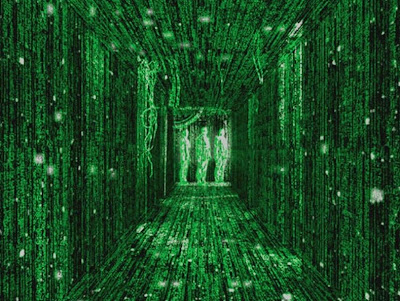
Analogy: It would be like being in the Matrix...and seeing in "Matrix-vision" where other people could not. Still see the same things, but from a different perspective.
| | Back to Top | | |
|
One Love
Registered Member
Date Joined Jan 2003
Total Posts : 13888
| Posted 12/28/2009 1:09 PM (GMT -6) | | | | |
|
Tom
Registered Member
Date Joined Jul 2001
Total Posts : 10353
| Posted 12/28/2009 1:29 PM (GMT -6) | | I like the Matrix analogy. But I would never say the Matrix is "only and all" that I see or recognize. It's there in/with all I see, but I see other realities that are, strictly speaking, non-matrix realities. So I just don't see how we can claim that "nothing other than God" is perceived. If our perceptions are true, then seeing only God would mean God is all that exists. And that's pantheism. So our perceptions follow the ontology. We perceive the truth. I'm not suggesting the absence of God in the perception of things. But when you say God is "all we perceive" and we "do not perceive ANYTHING ELSE," that means the absence of things in the perception of God, and that can't be the truth about a non-pantheistic world.
God is all in all, yes. But God is not all. If you agree to this distinction and if you believe it qualifies our truest perceptions, then how would you describe the experienced difference (in perceptions) between that of a pantheist and what you're describing (assuming you're not describing a pantheist's experience)? If our experience doesn't reduce to functional pantheism, then it's because we perceive the difference between God and things, though there's no perceiving one apart from perceiving the other. THAT is the Matrix, as I see it.
T
"Man is a person not by nature but by spirit. By nature he is only an individual." Nicolas BerdyaevPost Edited (Tom) : 12/28/2009 12:39:46 PM (GMT-6) | | Back to Top | | |
|
One Love
Registered Member
Date Joined Jan 2003
Total Posts : 13888
| Posted 12/28/2009 1:52 PM (GMT -6) | | Ok. Thinking in terms of negative space...
 If I "only" perceive the faces, don't I implicitly perceive something else too, via negative space? Yep. I "see" the vase. I can interpret the "other reality" in terms of what I focus on.
Negative space can be used to depict a subject in a chosen medium by showing everything around the subject but not the subject itself. Usage of negative space will produce a silhouette of the subject.
Now imagine the "vase" represents created effects of the uncreated logoi and light... and the "faces" are uncreated logoi and light. By only focusing on the faces, one STILL SEES the vase. I think this is what the mystics mean. A background/foreground interplay.
No pantheism. See that?
Post Edited (One Love) : 12/28/2009 1:11:54 PM (GMT-6) | | Back to Top | | |
|
One Love
Registered Member
Date Joined Jan 2003
Total Posts : 13888
| Posted 12/28/2009 9:25 PM (GMT -6) | | Tom:
I don’t really like the emphasis on fear. I can’t make heads or tails of the NT’s use of it. “Fear him who has power to case both body and soul into hell,” says Jesus. OK. But “perfect love casts our all fear,” says Paul. And Jesus wanted to reform the disciples’ own model of discipleship and relation to God by telling them, “I call you no more ‘servants’ but ‘friends’,” etc.
Does this help at all?
My thought. Fear of punishment is a starting place of "being sensitive" to God's holy Presence. But yirah doesn't END there. With maturity, fear of punishment ("God's gonna get me!" kind of sensitivity to Divine Presence) becomes the awe of a Holy Father. (Holy, holy, holy! kind of sensitivity to Divine Presence). Perfect love casts out all fear of punishment ...which is a sign of immaturity and mistrust..and not awe of a loving Father. THAT gives CONFIDENCE!
God is love. Whoever lives in love lives in God, and God in them. This is how love is made complete among us so that we will have confidence on the day of judgment: In this world we are like Jesus. There is no fear in love. But perfect love drives out fear, because fear has to do with punishment. The one who fears is not made perfect in love.
And check it...Even though Jesus called his disciples friends...that DIDN'T stop the "awe" and "reverence" factor. (My Lord and My God!)
See what I'm saying?
And interestingly enough...
1) "Fear of the Lord is the beginning of Wisdom."
and...
2)The one who believes the Lord fears punishment; the one who fears punishment becomes master of his passions; the one who becomes master of his passions patiently endures tribulations; the one who patiently endures tribulations will have hope in God; hope in God separates from every earthly attachment; and when the mind is separated from this it will have love for God.
It seems that Maximus's whole process of detachment BEGINS with fear of punishment ...and moves to "hope in God" Goes along...
Post Edited (One Love) : 12/28/2009 8:42:46 PM (GMT-6) | | Back to Top | | |
|
One Love
Registered Member
Date Joined Jan 2003
Total Posts : 13888
| Posted 12/28/2009 9:53 PM (GMT -6) | | Also, I think this will help.
Bitul is the spiritual state associated with the inner experience of chochmah, whereby one's consciousness opens up to a continuous flow of Divine wisdom and new insight through one's nullifying his sense of autonomous and self-sustained being. Bitul is the experience of ayin, of being nothing within the omnipresent radiance of God's infinite light. In general, there are two identified levels of bitul:
Bitul b'metziut ("existential nullification" ) constitutes the absolute form of bitul whereby one loses all sense of independent existence. This is the state of bitul in the world of Atzilut, whose consciousness, permeated by the supernal level of chochmah (Abba mekanen b'Atzilut), is solely that of God's omnipresence.
Bitul hayesh ("nullification of [one's] somethingness" ) constitutes a lower form of bitul whereby one is consciously involved in the process of nullifying the outer layer of self (ego). This is accomplished by the concentrated effort to experience the continual recreation of all reality, including oneself, as "something from nothing." This impresses upon one's consciousness that there is no independent reality attached to one's sense of "somethingness." This is the state of bitul present within the three lower worlds of Beriah, Yetzirah and Asiyah, while its conscious experience is dependent upon one's Divine service. Divine consciousness in the three lower worlds derives from the chochmah of malchut d'Atzilut, referred to as the lower chochmah, thus giving rise to the lower level of bitul.
Ok. Translating..
Let "Bitul b'metziut" equal human perception of the Creator Spirit's continual creative activity "from God's Perspective." (ie the uncreated light and logos)
Let "Bitul hayesh" equal equal human perception of the Creator Spirit's continual creative activity from the perspective of human self-reference (ie the created effects/energies)
Both perspectives are only made possible by the Holy Spirit's interaction with the human spirit...as the human spirit is empowered to "see" God's energies self-referentially as a continually-created being. God gives us His Spirit so that we can see ourselves and God from GOD'S self-understanding and perspective. Enter "Logos-Vision" (analogous to the Matrix-Vision)
I think that saints that have had the hesychastic experience speak from this kind of mental place...and it comes out sounding quasi-pantheistic or quasi-gnostic. (ie Meister Eckhart's idea that creation was a mere "nothing" and things like that)
Post Edited (One Love) : 12/28/2009 9:03:33 PM (GMT-6) | | Back to Top | | |
|
Asher
Registered Member
Date Joined Apr 2003
Total Posts : 477
| Posted 12/28/2009 11:31 PM (GMT -6) | | I have had too many experiences myself not to think there is something to all this...BUT...and I am searching for terms to explain how, where , and why I disagree with some of the things D is saying...though I strongly agree with you D in some aspects...so, from wikipedia a quote from the article on Christian mysticism, "Christian mysticism aspires to apprehend spiritual truths inaccessible through intellectual means"...here is where I differ from D and the Christian mystics...it's not so much that the mystics do not use any intellectual means...I think they do use some intellectual means...but some mystical teachings are illogical, some contradictory, and sometimes (I guess in the thralls of their mystic visions) just sloppy intellectually, and then sometimes their teachings are disjointed from other theological structure and they cannot logically be integrated into more firmly established theological corpus.
Look at some of the things I said in my snowglobe post:
"If by "emptying" your mind, what you mean is allowing all the snow (which is not necessarily bad in itself...in fact it can also be quite beautiful) to settle to the bottom of the snowglobe and allow the interior to clear...that you now have a certain kind of vision that you would not have if you keep shaking the globe and setting the snow flecks moving in the fluid streams. So, both visions have value...but to even see the clear vision you must allow the snow to settle. So you are not evacuating the globe of the snow as in an actual emptying...but you are emptying the FIELD OF VISION of the flecks of snow so that you can see what is there when the snow settles."
1) "emptying" is of the field of vision, not of the entire consciousness. It is intensified focus. A focus that may have to be trained for to achieve, using any number of certain practices. It is not passive, it is active...there is something you are looking for all the while trying to keep at rest your more normal experiences of "seeing" in your consciousness. Let the normal seeing of the snow rest and concentrate on God alone and on being open to whatever God wants. When the snow swirls a little (because you have directed your consciousness to it...maybe even unintentionally) return again with your consciousness to a state of focus. With continued practice the snow becomes less and less disturbed when meditating in this way.
2) the snow is not a bad thing...the snow is a good thing...the snow, as a good thing, is not an enemy of the perfect as long as the snow is recognized as snow and the Perfect as the Perfect. The Perfect created a world in which the snow exists and men have minds to perceive the snow. And we are suppose to perceive the snow.
3) There is the vision of the snow, there is the clear vision when the snow is settled, and there is a newly restructured vision of the snow that incorporates the grounding state of consciousness that at first cannot be seen without letting the snow settle.
So, yeah, I am in some sense a mystic...but I disagree with just about every mystic I have read. Not they do not have these experiences, but in where they then take these experiences conceptually. For example:
Maximus 1."Love is a good disposition of the soul by which one prefers no being to the knowledge of God. It is impossible to reach the habit of this love if one has any attachment to earthly things."
Tom "I could have the same attachment to earthly things that God has, believing my attachment to them is a manifestation of God in me. If you just mean we shouldn’t be “as attached to” earthly things, or attached to them “in the same way” we are to God, then OK. But you have to say that. You can’t deny ALL attachment to earthly things, for in a relational ontology, all things ARE attached."
Here I am in TOTAL agreement with Tom.
2. "Love is begotten of detachment, detachment of hope in God, hope of patient endurance and long-suffering, these of general self-mastery, self-mastery of fear of God, and fear of faith in the Lord."
Tom: I have no idea what was just said. Might as well have been Chinese.
Use the force Tom!
Yoda "Fear is the path to the dark side. Fear leads to anger, anger leads to hate, hate leads to suffering"
restatement of Maximus: Faith in the Lord begets/causes/leads to fear(respect) of God, fear(respect) begets self-mastery, self-mastery leads to patient endurance and long-suffering, endurance begets hope, hope in God causes detachment, detachment issues forth in love.
Detachment...this is where things get sticky. I kind of get what Maximus is saying, but as I have said, and as Tom has said...why can't things be said more clearly...
I think he means that the fullest expression of love has no preferences. That it cannot be swayed, it is impartial. There are no hooks in it that move it nearer anything rather than something else...save God. There is nothing within it's constitution that can be appealed to. It is just love. So, why can't we call it being properly attached to everything...giving everything it's due, instead of calling it detachment.
But if he does mean that we are to have NO attachment to anything except God...then I again agree with Tom. It is nonsensical.
5. If all things have been made by God and for his sake, then God is better than what has been made by him. The one who forsakes the better and is engrossed in inferior things shows that he prefers the things made by God to God himself.
Sure, we all probably sometimes have not had a proper balance and our perception of God wanes while something else fills our focus...but how many fully forsake God for inferior things? All things have been made by God...but many of those things were made for OUR sake, God has no need of them. We can make use of inferior things without preferring those things to God. It's overstatements like this that muddy the waters.
And in all these other Maximus quotes I have similar sentiments to Tom as well.
Do not love the world or the things in the world. If any one loves the world, love for [God] the Father is not in him. For all that is in the world, the lust of the flesh and the lust of the eyes and the pride of life, is not of the Father but is of the world. And the world passes away, and the lust of it; but he who does the will of God abides for ever.
God so loved the world that he gave his only begotten Son...
Clarity is much needed here. There are obviously two senses of world, one of which is good the other not.
God created an ordered cosmos, in harmony, and subjected to Himself in love.
Rebellious angels and men have fashioned a competing cosmos...hoping to establish their own order, and independent of God and His cosmos.
Tower of Babel...OK God, flood the world..we'll build a tower that rises above the waters. We'll build great cities to unite and cooperate against You. We'll do what we want, when we want and take neither God nor other men into account.
Do not love the world or the things in the world...DOES NOT MEAN TO REJECT THE THINGS GOD INTENDED FOR MAN TO USE.
How can a Christianity that gives more esteem to embodiment than probably any other religion or philosophy, also hate the implications of embodiment. That's what I see the mystics doing...lots of times.
D, "Once a person sees the created only in terms of the uncreated (ie seeing Creation through it's uncreated logoi grounded in uncreated light), this vision does NOT mean that the created is not perceived at all...more than it means that the created is perceived from the standpoint of it's truest ground"
See, THIS I can get on board with. But this doesn't mean the same thing as all the detachment talk. At a minimum someone would have to be taught that detachment just means this. And that is so different to the definition of detachment, that the wording only becomes an obstacle.
"how about overemphasis for pedagogical purposes?"
If you say upfront that that is what you are doing, then OK...otherwise "overemphasis for pedagogical purposes" is one of the worst forms of ATTACHMENT! | | Back to Top | | |
| 31 posts in this thread.
Viewing Page : 1 2 |
| Forum Information | Currently it is Monday, November 09, 2026 2:24 PM (GMT -6)
There are a total of 97,718 posts in 6,040 threads.
In the last 3 days there were 0 new threads and 0 reply posts. View Active Threads
|
Forum powered by dotNetBB v2.42EC SP3
dotNetBB © 2000-2026 |
|
|