 |
| Open Theism Discussion Board > Public Forums > Theological Q&A > Vive la difference! | Forum Quick Jump
|
 | 
One Love
Registered Member

Date Joined Jan 2003
Total Posts : 13888
| Posted 3/20/2008 5:18 PM (GMT -6) |   | | Bruce,
"The Inner Kingdom" is a subheading in "Chapter 3: God as Creator" of Ware's The Orthodox Way
And yes, I constantly RE-READ that book. And I typed all of that section. 
Whoever knows and recognizes how near God’s Kingdom is to him may say with Jacob, “God is in this place, and I knew it not.”
Meister Eckhart, "The Nearness of the Kingdom"
Once, having been asked by the Pharisees when the kingdom of God would come, Jesus replied, "The coming of the kingdom of God is not something that can be observed, nor will people say, 'Here it is,' or 'There it is,' because the Kingdom of God is within you.
| | Back to Top | | |
|
Tom
Registered Member

Date Joined Jul 2001
Total Posts : 10353
| Posted 3/20/2008 6:20 PM (GMT -6) | | |
Tom: For me, the meaning of an individual’s existence is established and expressed through SYNGERY, God and the individual relating, mutually, sharing, in ways God and no other individual relate, that determines the particular meaning of the individual’s existence.
D: I try to have every conscious thought believing this "dialogue" occurs in my heart...
"Father, compose your World through my being!"
"Son, compose your world (freely chosen to be My World) through My being (which is inseparable from My Spirit)"
...Only a Father's Child relating to the Father in all things by Father's Spirit.
See what I'm saying?
Tom: I do see what you’re saying D. And I’m gonna try to be really careful here, because I don’t want to dismiss this dialogue that occurs in your heart. I want to embrace it, but I want to try to ADD to it, or maybe EXPAND upon it if I can.
First, I do pray this. I do look for God to guide me in specific ways that he knows is best for the fallen world I live in, for my growth and conformity to Christ’s image, and for the healing reflection of his presence to be communicated through me to the world. God does compose through us. No question about it, and I want to be part of that composition and offer myself to be his instrument in the world. That’s why I was a missionary for 22 years. I really do share this passion, D. So that’s right up front.
Second, the prayers you and I pray to God are informed by our theology, our understanding of God, of his purposes for us, and our hope to become what God wants us to be. So when we pray, “God, compose your world through my being,” we’re disposing ourselves within our theology/worldview, a worldview that believes God does the composing while we are the canvas or perhaps the medium through which God determines his own self-expression.
So far so good. Third—and this is where we differ—I have a worldview/theology that doesn’t view the God-world relationship exclusively in terms of the immediately preceding paragraph, that is, in terms of God being the only one composing and us being only compositions. That's part of the relationship, yes. I don’t doubt that. But there’s more, and that more is especially relative to the ultimate destiny of divine-human relationality. This is where we part waves. (And if it means I have to part waves with the entire Orthodox tradition, that’s fine with me. I sure HOPE there’s some small obscure corner of Orthodoxy where they tolerate wackos like me. But if not, adios amigos.)
When you pray “God compose your world through my being,” I imagine your prayer is informed by the assumption, the belief, that the composer-composition view of divine-human relationality is all there is to such relationality, all the theology there is to inform our hopes, prayers, and expectations. That’s not the case in my view. In my understanding, God is ultimately concerned about our becoming composers like God. You might say, creation is about composing composers. And if we think about it, one could easily argue that this ends up ascribing much more glory and greatness to God than otherwise. It’s a great thing to build and play a piano if you're Mozart. It’s a much greater thing for Mozart to build and apprentice piano players who play as beautifully as Mozart. It’s great for God to create us and play upon us, through us; to compose and then alone determine each and every particular note I play, you play, etc. But it’s much greater and glorious (I think) for God to create creators who in their turn compose. The latter is by far the more admirably creative act.
This, in my view, is nowhere to be found as I mean it here (but am poorly expressing it) in your theology as I understand it. When you talk about synergy, you talk about the free surrender to God of the exercise of the will—the END of any independent exercise of that will: “God, I freely give up composing or even trying to compose or create. That’s all despairing misrelation. I repent of it. I want you, Father, to do all the creating through me.” It sounds noble. But my understanding of God encourages me to believe God will do everything in his power to guide you OUT of such a relational posture. In my view, you abandon synergy. The only semblance of synergy left is your constantly renewing the surrender of your will. And I view it this way because of my understanding of what God wants. Ultimately, I believe, the surrender which God wills is our exercising our will in composing and freely elaborating upon his themes.
So what to do with praying “Father, compose your world through my being”? Well, I do two things. First, I understand that it has its place. There are contexts in which this is precisely what God wants. I honestly think those contexts have to do mainly with our navigating our way successfully through this present evil age and being agents of God’s healing power in the world. In this sense your prayer represents a wartime posture. But ultimately that should give way (once we are perfected and free only to love and live in a world equally perfected) to a peacetime posture: “Father, here are the arrangements of my heart you have taught me to compose. It gives me joy and is my purpose to bring you joy as you desire.” That sounds far more Trinitarian to me. It’s time to offer, to express, to worship, to create, to compose. That’s our destiny; not forever to relate in a manner expressly required by our present fallen condition, but to relate in a manner appropriate to a truly risk-free existence now capable only of love.
Second, there is a sense in which the latter posture, that of freely determining creative creaturely expression, continues forever to fulfill the heart cry of YOUR prayer, D. God is composing his world through our being composers. All one needs to suppose is that this is what God wants. Our composing freely upon his themes IS the world God wanted to compose. In other words, I’m suggesting to you that God will finally answer your prayer so that you don’t have to keep praying it. You’re freely creative expressions of love (coloring that picture for Daddy) IS THE ANSWER TO YOUR PRAYER.
Finally, you say:
‘Tom Belt’ is not there.
‘Anita’s Husband’ is not there.
‘Jamila's Father’ is not there.
Only a Father's Child relating to the Father in all things by Father's Spirit.
I don’t want to be understood as disagreeing in the sense that I want to assert these identities over and against, or in competition with, the identity of “Father’s child.” Not at all. What I want to do is completely disagree with the assumptions that motivate these “not’s” and this “only,” this either/or thinking.
D, when we’re perfectly aligned with the divine will (whether in the context of the present evil age or in the age to come when all we’ll be is free to love), I don’t see why all other creaturely relationships must evaporate from our field of perception. I think this is a huge mistake and I beg you to reconsider. Why in the world think that is either necessary or that God wants it? To me that’s a wholesale forfeiture of a great deal of diversity that ADDS to the beauty of ecclesial existence in Christ. Why think Christ can’t or wouldn’t want to embrace and sanctify these relationships? They are the ‘where’ and ‘when’ of creaturely existence wherein we DO this freely creative composing of love God wants us to do. Why is my identity as “Father’s child” jeopardized if I perceive my mother AS my mother, as the one who brought about the physical arrival into this world of “Father’s child”? Or my role in bringing about my daughter’s arrival into the world, or my neighbor’s role in being my neighbor? You’ve got beliefs motivating you here that I just don’t share.
What jeopardizes my identity as “Father’s child” is my attempting to GET LIFE and establish the meaning of my existence from these various relationships. But there’s no reason why these relationships per se have to be interpreted as either threatening to or undermining of my identity in Christ. I can have those relationships and perceive their creaturely origins and histories without seeking to get my life and happiness from them. They can now become what such relationships were always supposed to be, the context in which ecclesial existence in all its created diversities and colors and ways of relating gets expressed and celebrated. Come on dude. Lighten up!
But to just say, “Nope. There’s no self-perception for me as Jamila’s father. That would have to mean I’m failing to perceive myself as God’s son. It’s either/or.” Balderdash! You’re asking me to give up a LOT of beauty and diversity Bro. Can’t do it.
So do YOU see what I’M saying now?
------------------------------
Somebody: 9. The Divine Will is one, but differentiates like white light through a prism into the unique rays that form the core of our personal individuality. Trace our will back to its Source and you find the One Will from which we all arise. In that Source we have our global unity. Our individual uniqueness achieves full-flower in our participation in the Great Uniqueness, in the Great Heart of Love.
Tom: This can be construed as contrary or compatible to what I’ve just expressed. My guess is that the intention is to describe a model of divine-human relationality that’s contrary to what I’ve expressed. Taken apart, it essentially says that “the divine will differentiates to form the core of our personal individuality.” I’m not sure what that means, but it sounds to me like God’s doing all the composing, that there’s no synergy of exercised will wherein we forever self-determine in the creative expression of love and worship.
But I don’t want my insistence upon free, creaturely, self-determination to be thought of as being less than fully surrendered creaturely existence, including the full surrender of our wills to God. I don’t see myself as disagreeing with this. And there’s full ‘participation’ (participation occurring when an entity is defined by its relationship to another entity) in the divine life of the Trinity. I just don’t reason that being defined by the divine life (viz., participating in that life) means being determined in every respect by the divine will.
It’s 2:30 AM. Gotta go.
Tom
Bruce, I know we're all busy. If you can take special care in tracking with this post I appreciate it. I'm beyond 'choosing sides'. That's not what I'm looking for. I hope you perceive what I'm aiming at. Let me know if you don't.
Post Edited (Tom) : 3/20/2008 6:41:34 PM (GMT-5) | | Back to Top | | |
|
One Love
Registered Member
Date Joined Jan 2003
Total Posts : 13888
| Posted 3/20/2008 8:29 PM (GMT -6) | | Tom:
D, when we’re perfectly aligned with the divine will (whether in the context of the present evil age or in the age to come when all we’ll be is free to love), I don’t see why all other creaturely relationships must evaporate from our field of perception I think this is a huge mistake and I beg you to reconsider.
Tom, what do you think the hesychastic experience of STILLNESS consists of? What do you think Meister Eckhart was talking about when he spoke about this kind of reality?
Until we are FREE OF IDENTIFYING our "selves" with creaturely relationships, we cannot be free to LOVE FULLY AND UNCONDITIONALLY (in the "now" ) in all creaturely relationships.
DISPASSION. EQUANIMITY.
It frees us to be IN the world...but not OF the world...like God.
I wouldn't be so about this...if I didn't experience this stuff myself. The process WORKS.
-----------------
Nothing hinders the soul so much in attaining to the knowledge of God as time and place. Therefore, if the soul is to know God, it must know Him outside time and place, since God is neither in this or that, but One and above them. If the soul is to see God, it must look at nothing in time; for while the soul is occupied with time or place or any image of the kind, it cannot recognize God.
Meister Eckhart. "The Nearness of the Kingdom"
--------------------------
So the Jesus prayer begins as an oral prayer like any other. But the rhythmic repetition of the same short phrase enables the hesychast, by the very simplicity of the words which he uses, to advance beyond all language and images into the mystery of God. In this way, the Jesus Prayer develops, with God's help, into what Western writers call "prayer of loving attention" or "prayer of simple gaze", where the soul rests in God without a constantly varying succession of images, ideas, and feelings. Beyond this there is a further stage, when the hesychast's prayer ceases to be the result of his own efforts, and becomes--at any rate from time to time--what Orthodox writers call "self-acting" and Western writers call "infused". It ceases, in other words, to be "my" prayer and becomes to a greater or lesser extent the prayer of Christ in me.
Kallistos Ware, Orthodox Way.
Whoever knows and recognizes how near God’s Kingdom is to him may say with Jacob, “God is in this place, and I knew it not.”
Meister Eckhart, "The Nearness of the Kingdom"
Once, having been asked by the Pharisees when the kingdom of God would come, Jesus replied, "The coming of the kingdom of God is not something that can be observed, nor will people say, 'Here it is,' or 'There it is,' because the Kingdom of God is within you.
Post Edited ("I am-in-I Am") : 3/20/2008 9:39:16 PM (GMT-5) | | Back to Top | | |
|
One Love
Registered Member
Date Joined Jan 2003
Total Posts : 13888
| Posted 3/20/2008 9:33 PM (GMT -6) | | | Tom.
"Balderdash"?

Whoever knows and recognizes how near God’s Kingdom is to him may say with Jacob, “God is in this place, and I knew it not.”
Meister Eckhart, "The Nearness of the Kingdom"
Once, having been asked by the Pharisees when the kingdom of God would come, Jesus replied, "The coming of the kingdom of God is not something that can be observed, nor will people say, 'Here it is,' or 'There it is,' because the Kingdom of God is within you.
| | Back to Top | | |
|
One Love
Registered Member
Date Joined Jan 2003
Total Posts : 13888
| Posted 3/20/2008 9:34 PM (GMT -6) | | | God is so super real. When I think about how close I was to becoming an atheist...
Damn.
Greg came through so many times. Thanks, God!
and...
I will ever be thankful to you, too, Doc.

Whoever knows and recognizes how near God’s Kingdom is to him may say with Jacob, “God is in this place, and I knew it not.”
Meister Eckhart, "The Nearness of the Kingdom"
Once, having been asked by the Pharisees when the kingdom of God would come, Jesus replied, "The coming of the kingdom of God is not something that can be observed, nor will people say, 'Here it is,' or 'There it is,' because the Kingdom of God is within you.
Post Edited ("I am-in-I Am") : 3/20/2008 9:37:01 PM (GMT-5) | | Back to Top | | |
|
One Love
Registered Member
Date Joined Jan 2003
Total Posts : 13888
| Posted 3/20/2008 9:41 PM (GMT -6) | | Come on, Tom. You remember the "Mephi" days. You remember how I was on the Carlie thread. You know how much despair I was in...and how close I came to leaving the faith. Straight disbelieving in the Bible's truth...Christ's resurrection and everything.
If this transformation my ego's going through ain't Christ doing something, I don't know what is.
The SPIRIT'S in this, man.
The Bottomless Rabbit Hole.
Whoever knows and recognizes how near God’s Kingdom is to him may say with Jacob, “God is in this place, and I knew it not.”
Meister Eckhart, "The Nearness of the Kingdom"
Once, having been asked by the Pharisees when the kingdom of God would come, Jesus replied, "The coming of the kingdom of God is not something that can be observed, nor will people say, 'Here it is,' or 'There it is,' because the Kingdom of God is within you.
| | Back to Top | | |
|
PotOnWheel
Registered Member

Date Joined Jul 2001
Total Posts : 9890
| Posted 3/20/2008 10:16 PM (GMT -6) | |
"I am-in-I Am" said...
Bruce,
"The Inner Kingdom" is a subheading in "Chapter 3: God as Creator" of Ware's The Orthodox Way
And yes, I constantly RE-READ that book. And I typed all of that section. It's a book BY ITSELF too!
by Kallistos Ware, Kallistos - 2000 - Religion - 230 pages
books.google.com/books?isbn=0881412090... |
Amazon.com: The Inner Kingdom: The Collected Works (Ware, Kallistos, Works. Vol. 1.) (Ware, Kallistos, Works. Vol. 1.): Kallistos Ware,Bishop of Diokleia ...
www.amazon.com/Inner-Kingdom-Collected-Kallistos-Works/dp/0881412090 - 214k - Cached - Similar pages |
(o) | | Back to Top | | |
|
PotOnWheel
Registered Member
Date Joined Jul 2001
Total Posts : 9890
| Posted 3/20/2008 10:26 PM (GMT -6) | |
Tom said...
Bruce, I know we're all busy. Just got back from church.
I'll try to pull out that book, Tom.
What I remember most vividly about Ziz. is the concept of pneumatically-conditioned Christology. Frankly, it's worth my while to ask you and D. if you've addressed that: keeps the individuality (in the christological concrete specific) while also out-sourcing aspects of self through sharing with others (paralleling the pneumotological).
Ask me to explain this -- and ask me about a sculpture I made called "Diplomacy."
(o) | | Back to Top | | |
|
PotOnWheel
Registered Member
Date Joined Jul 2001
Total Posts : 9890
| Posted 3/20/2008 10:40 PM (GMT -6) | | DESERVES TO BE BIG!
Liturgy « Glory to God for All Things
Zizioulas bypasses the choice between a Christological or Pneumatological ecclesiology by emphasizing their unity-in-distinction. ...fatherstephen.wordpress.com/category/liturgy/page/2/ - 111k - Cached - Similar pages |
Fr. Stephen's blog is a blessing.
Y'all tell me what you think of this, now
I'm going to add my expertise now. I teach art to some kids who can't use pointy scissors, and to others who's art will blow your sox off! Red-orange Crayola crayons are orange crayons that have a strong red caste to them. Orange-red are red crayons with a strong orange caste to them.
So, unity in distinction. . .to me. . .means that the distinction is primary (I'm guessing that is the Christological part) while the unity (which I'm guessing is the overarching unifier) comes from the Pneumatological.
That's my guess.
| | Back to Top | | |
|
PotOnWheel
Registered Member
Date Joined Jul 2001
Total Posts : 9890
| Posted 3/20/2008 10:45 PM (GMT -6) | | http://fatherstephen.wordpress.com/2007/10/12/and-now-for-a-little-meat-met-john-zizioulas-and-the-church/
And Now for a Little Meat! Met. John Zizioulas and the Church
If you are not familiar with Met. John Zizioulas’ work, then you have missed some of the best writing by an English-speaking Orthodox writer. Not that having read him you’ll understand what you have just read. But the following small article was sent to my by my dear friend, the Pontificator, whom many of you know from (now-demised) blog. I appreciate the head’s up. The article was publish elsewhere.
John Zizioulas (Being as Communion) reflections on his work by this title.
John Zizioulas, like de Lubac, also recovers the early church’s teaching on the Eucharist for the purpose of revitalizing ecclesiology, emphasizing that the celebration was not simply memorializing what had been accomplished. First and foremost, it was celebrating the fact that it was caught up in “an eschatological act” (21). The Eucharist constituted the being of the Church. It also helped bring together the work of Christ and the Holy Spirit. It could hold both the historical form and the divine reality together without confusion. The Eucharist was not simply an institution (22), but an event out of the working of the Holy Spirit to bring history into eternity with God.
Like de Lubac, Zizioulas wants to check individualism in the church.
The eucharistic community makes the Church eschatological. It frees it from the causality of natural and historical events, from limitations which are the result of the individualism implied in our natural biological existence (22).
The Eucharist cannot happen in isolation, but only when everyone is present. That is, Zizioulas has no regard for private masses because of the communal nature of the Eucharist. He characterizes the Eucharist not as a sacrament along side the word, but as
the eschatologization of the historical word, the voice of the historical Christ, the voice of the Holy Scripture which comes to us, no longer simply as ‘doctrine’ through history, but as life and being through the eschaton. It is not the sacrament completing the word, but rather the word becoming flesh, the risen Body of the Logos (22-23).
Zizioulas locates ecclesiology quite explicitly in the economic Trinity, identifying the humanity as the imago dei not within a universal human nature as de Lubac does, but only within “the work of Christ and the Spirit in history” (19).
Zizioulas bypasses the choice between a Christological or Pneumatological ecclesiology by emphasizing their unity-in-distinction. “The separation between Christology and ecclesiology vanishes in the Spirit (111).” To distinguish the Spirit from the Son, he writes:
Now if becoming history is the particularity of the Son in the economy, what is the contribution of the Spirit? Well, precisely the opposite: it is to liberate the Son and the economy from the bondage of history . . . The Spirit is the beyond history, and when he acts in history he does so in order to bring into history the last days, the eschaton (130).
It is also the Spirit that allows Christ to have a “corporate personality,” such that Christology is given a communal form – “with Christ having a ‘body,’ i.e. to speak of ecclesiology, of the Church as the Body of Christ” (131).
The two aspects of Pneumatology not only determine but also constitute ecclesiology. “[T]hese aspects must qualify the very ontology of the Church. The Spirit is not something that ‘animates’ a Church that already somehow exists. The Spirit makes the Church be” (132). This leads Zizioulas in a surprisingly premature way to the practical question to which he holds off on an answer: “what ecclesial structures and institutions exist which help the Church to maintain the right balance between local and universal?” (133). We will return to the framing of this question in our critique.
This Pneumatological Christology is significant for conciliarity. The oneness of the church is understood to coincide with its multiplicity. There is no council or synod that acts as a mirror image of the Pope for Orthodoxy. The relationship between the local and universal Church is worked out along the lines of his understanding of the being of God as a communion of persons. There is a double principal at work for Zizioulas, for on the one hand the institution has no prior existence or authority beyond “the event of communion,” while on the other hand the communion of the church cannot be prior to its unity. “The institution which expresses this communion must be accompanied by an indication that there is a ministry safeguarding the oneness which the communion aims at expressing” (135).
A Pneumatological Christology is also significant to the relationship between the bishop and the church, and the maintenance of relationship between the “one” and the “many.” “In the case of the local Church is represented through the ministry of the bishop, while the “many” are represented through the other ministries and the laity” (136). The “one” and the “many” are interdependent. In so far as the “one” is dependent on the “many,” there can be no ordination or episcopacy apart from the community. In so far as the “many” are dependent on the “one,” there can be “no baptism” or “ordination without the presence of the bishop” (137).
Finally, the ecclesial institutions of the bishop and the laity “have to be attached to the eucharist,” (138) thus emphasizing not only the communion but the eschatology of the Church. He describes the institutions as being “reflections of the Kingdom” in two ways. First, they “iconic,” in that “their ontology does not lie in the institution itself,” nor due they owe anything to “historical expedience” (138) but to Christ alone. Zizioulas does not advocate neglecting the needs of people, but he does not see these as having any fundamental structural bearing.
We turn to the function of truth in the Church. Zizioulas describes the Eucharist as “the Locus of Truth” (115). Christ is the experience of truth as the one who comes into our history and dwells within us (115). There is no truth of Christ apart from the community that we might locate within the individual mind (rationalism) or soul (mysticism). Christ is not the truth “in a community, but as a community” (115). The truth of Christ takes on a eucharistic historical form, which differentiates it from mere fact. History as such is known in “charismatic-pentacostal events” which do not submit to “a linear development” (116). Not surprisingly, this creates a new understanding of the infallibility of the Church as dependent on communion of the bishops and the community. Regarding the formulation of truth in dogmas, the aim of definition and anathema was to preserve “Eucharistic communion” (117). Zizioulas goes on: “Thus it may be said that the credal definitions carry no relationship with truth in themselves, but only in their being doxological acclamations of the worshiping community” (117).
The Eucharist reveals the renewal of creation, such that humanity is given the task of priesthood to it. Here we begin to see a characteristic blurring of divine and human agency:
Man’s responsibility is to make a Eucharistic reality out of nature, i.e. to make nature, too, capable of communion. If man does this, then truth takes up its meaning for the whole cosmos, Christ becomes a cosmic Christ, and the world as a whole dwells in truth, which is none other than communion with its Creator. Truth thereby becomes the life of all that is (119).
Finally, “a Eucharistic concept of truth shows how truth becomes freedom” (120). Whereas freedom as choice often assumes an individualist concept of being, the freedom “given by the Christ-truth to creation is precisely this freedom from division and individualization, creating the possibility of otherness within communion” (121). Those who “gather together in the eucharist realize their freedom under the form of affirmation alone: it is not the ‘yes’ and the ‘no’ together which God offers in Christ, but only the ‘yes,’ which equates to the Eucharistic ‘Amen” (121).
Because this notion of freedom is so otherworldly, Zizioulas admits that it may seem impractical and unrealistic. However, he reprimands Protestants for this reaction:
You do not do justice to truth’s ontological content by implying that our fallen state of existence is all there is. The individualization of existence by the fall makes us seek out security in objects or various ‘things,’ but the truth of communion does not offer this kind of security: rather, it frees us from slavery to objective ‘things’ by placing things and ourselves within a communion-event (122).
+++
I am on a mission trip this weekend - so read a little Zizioulas and discuss among yourselves! - Fr. Stephen
This entry was posted on October 12, 2007 at 6:41 pm and is filed under Liturgy, Orthodox Christianity, Orthodox Doctrine, The Church, The Sacraments, religion. You can follow any responses to this entry through the RSS 2.0 feed. You can leave a response, or trackback from your own site.
| | Back to Top | | |
|
Tom
Registered Member
Date Joined Jul 2001
Total Posts : 10353
| Posted 3/21/2008 2:38 AM (GMT -6) | | |
Clay: I'll try to pull out that book, Tom.
Tom: Yeah, by this evening, OK?
-----------------
D, I see you liked my ‘balderdash’! Nice.
Tom: D, when we’re perfectly aligned with the divine will (whether in the context of the present evil age or in the age to come when all we’ll be is free to love), I don’t see why all other creaturely relationships must evaporate from our field of perception I think this is a huge mistake and I beg you to reconsider.
D: Until we are FREE OF IDENTIFYING our “selves” with creaturely relationships, we cannot be free to LOVE FULLY AND UNCONDITIONALLY (in the “now”) in all creaturely relationships.
Tom: But you love “in those relationships” then. That’s my point. You have them. Those relationships don’t vanish from view, they don’t evaporate from our field of perception. You’re not reading me rightly. Maybe you’re scanning the surface and then reacting to something I say you think threatens the notion that God alone really defines who we are. But I didn’t suggest creaturely temporal relationships define or determine who we essentially are.
I asked some questions too. Like why think the evisceration of creaturely relations is either necessary or that God wants it? In what does the diverse beauty of fully relational created reality obtain if not in creaturely relationships? Why think Christ can’t or wouldn’t want to embrace and sanctify these relationships? Why is my identity as “Father’s child” jeopardized if I perceive my mother AS my mother, as the one who brought about the physical arrival into this world of “Father’s child”?
You answered with something entirely unrelated to my point and questions (Until we’re FREE OF IDENTIFYING our “selves” with creaturely relationships…). But that’s not what I’m suggesting.
So on your view, D, God just serves up a lobotomy to each of us? No healing of memories, no sanctifying of creation’s relationships, no redemption of the past? Just the erasing of all these from our memory and field of perception. Theosis in the end is just brain surgery. Instead of purging the viruses from the hard drive, healing it, God just gives us a military wipe and low-level reformatting of our hard drive so that NOTHING that was there remains.
Yuck.
D: BUT…DISPASSION. EQUANIMITY.
Tom: Neither of which entails a lobotomy.
D: It frees us to be IN the world...
Tom: It erases the world.
D: I wouldn't be so about this...if I didn't experience this stuff myself. The process WORKS.
Tom: I’m sorry, but I don’t believe that your relationships to others in this world are NOT perceived by you for what they are—creaturely relationships. That’s all. I am not suggesting we ‘get life’ or define who we essentially are by these relationships. I’m suggesting we GET that FROM God but then BRING that TO others.
-----------------
MeisterMan: Nothing hinders the soul so much in attaining to the knowledge of God as time and place.
Tom: There is no “atemporal nowhere” for creaturely existence to have experiences. Time and place are gifts and graces in which we eternally HAVE our becoming. There’s no stepping outside them.
MeisterMan: Therefore, if the soul is to know God, it must know Him outside time and place…
Tom: Does not compute. Meister never left time or place, never had his existence atemporally off in nowheresville. There is no leaving the creaturely context of creaturely existence. Creation doesn't step outside itself, outside its createdness, in order to be fully what God intends creation to be.
MeisterMan: …since God is neither in this or that, but One and above them. If the soul is to see God, it must look at nothing in time; for while the soul is occupied with time or place or any image of the kind, it cannot recognize God.
Tom: There is an important truth to what he’s saying which I want to affirm along with you. Zizy makes the same point. We cannot ground our longing for permanent hypostatic existence, for abiding personal meaning, by appealing to any other created entity or creaturely relationship since all created realities are in the same place we are, i.e., in need of some uncreated source in which to ground the permanence and meaning of the sort of personal existence we are inevitably driven to seek out. But this says nothing about perceiving and celebrating created relationships per se. But it’s one thing to say we do not find our true selves in creaturely relations independent of God. It's another to claim that the creaturely relations are erased from view for those who DO get their true identity from God.
I guess we really see, feel, perceive, explain, understand the world differently. And we each have experiences we think confirm these worldviews. Apart from both believing in the Cross and the Triune God (and we don’t really agree on everything there either) I don’t think there’s much else we share.
Dang.
Tom
Post Edited (Tom) : 3/21/2008 5:10:23 AM (GMT-5) | | Back to Top | | |
|
One Love
Registered Member
Date Joined Jan 2003
Total Posts : 13888
| Posted 3/21/2008 6:18 AM (GMT -6) | | Tom:
So on your view, D, God just serves up a lobotomy to each of us? No healing of memories, no sanctifying of creation’s relationships, no redemption of the past? Just the erasing of all these from our memory and field of perception. Theosis in the end is just brain surgery. Instead of purging the viruses from the hard drive, healing it, God just gives us a military wipe and low-level reformatting of our hard drive so that NOTHING that was there remains.
Dude, you so don't understand the experience, I don't even know where to begin to help this.
You seem to be thinking of this as some twisted parody of "nirvana" which some people consider the "destroyer of psychic worlds". Lobotomizing, like you say.
This couldn't be FARTHER from the truth...and I can tell that only people who haven't had the experience would say such a thing. (The mystics say THIS too!) No wonder these things are so misunderstood.
***********************
Tom:
D: I wouldn't be so about this...if I didn't experience this stuff myself. The process WORKS.
Tom: I’m sorry, but I don’t believe that your relationships to others in this world are NOT perceived by you for what they are—creaturely relationships. That’s all. I am not suggesting we ‘get life’ or define who we essentially are by these relationships. I’m suggesting we GET that FROM God but then BRING that TO others.
God worked on me through hesychastic practice to DISENGAGE from directly identifying my personhood with my thoughts and emotions. I HAVE embodied human experience...but I'm not HAD by embodied human experience. (Loder is masterful on this point!) There were times when I'd be immersed in a "holy darkness" where creaturely relationships (in reflective human consciousness) were RELATIVIZED as composite self-relational thoughts, impressions, emotions, and interpretation of my mind. Long story short, this freed my "I" from OVERIDENTIFYING with any ROLES that I find myself playing in God's world. (earthly father, husband, son, etc) This is how I became free from SEEING my very SELF as being a "Black male in America" I was able to be FREED from the social programming that my parents, family, and friends from my Waco, Tx background gave me. Racism is rampant in Waco. I've been called "nigger" more times than I care to say. My mother used to tell me this all the time...when I was in single-digit ages...
"Dwayne, you will ALWAYS be a Black man. Don't let anyone try to take that from you. And you will always have to work twice as hard to get half as much as White people. You will always be defending your race against oppression. Remember that. Nothing in this world will ever change that...and don't lose your Black identity."
Can you imagine what this good-intentioned, but crazily unbiblical belief did to my ego-formation? Can you imagine how many times I identified my very PERSONHOOD as being "Black"...and all the emotional hell it caused me?
Hesychasm, by God's grace, FREED me from this.
I wish I could explain this better...but other mystics already have!
************************************
Tom:
MeisterMan: …since God is neither in this or that, but One and above them. If the soul is to see God, it must look at nothing in time; for while the soul is occupied with time or place or any image of the kind, it cannot recognize God.
Tom: There is an important truth to what he’s saying which I want to affirm along with you. Zizy makes the same point. We cannot ground our longing for permanent hypostatic existence, for abiding personal meaning, by appealing to any other created entity or creaturely relationship since all created realities are in the same place we are, i.e., in need of some uncreated source in which to ground the permanence and meaning of the sort of personal existence we are inevitably driven to seek out. But this says nothing about perceiving and celebrating created relationships per se. But it’s one thing to say we do not find our true selves in creaturely relations independent of God. It's another to claim that the creaturely relations are erased from view for those who DO get their true identity from God.
What I'm claiming, Tom, is that hesychasm FREES a human being's "I am-ness" from being IDENTIFIED with it's ego periphery, which is BASED ON "creaturely relationships" internalized by the ego development matrix. In moments of deep contemplation, the "I am-ness" becomes implicit (as Ware and Willard have BOTH attested to) and we see ourselves as ultimately "God-sourced, God-rooted" (Ware). From this state of NON-ATTACHMENT and EQUANIMITY, the human being's "I am-ness" can choose to FULLY PARTICIPATE in the "creaturely relations"...without being FOOLED into believing that their personhood is BASED or GROUNDED in creaturely relations.
Practical example. When I see "my wife", I now see only Christ via her humanity. (As you've done to the least of these, you've done to Me) I relate to her as "my wife", using her name and all that. But I really...REALLY only see Christ in all human beings. This is becoming my default setting. "My sons"? Same thing. They are "little Christs" in the making by God's Grace...just like me. "My mother and father"? Same thing. Again, I STILL relate to them in the context of our "biological hypostases" (meaning the mutually understood contexts of our family structures.) But I didn't have the eyes to see ANYONE like this while I was still addicted to my human egoic way of seeing things.
So, I hope that you see, Tom. I'm not talking about DESTROYING THE EGO, where effective spiritual psychosis would take place. (This is what YOUR description is talking about, in my mind) I'm talking (following Loder) of RELATIVIZING THE EGO such that the personality of a human being is CENTERED on the Divine Presence as it rests perichoretically in that Presence.
Whoever knows and recognizes how near God’s Kingdom is to him may say with Jacob, “God is in this place, and I knew it not.”
Meister Eckhart, "The Nearness of the Kingdom"
Once, having been asked by the Pharisees when the kingdom of God would come, Jesus replied, "The coming of the kingdom of God is not something that can be observed, nor will people say, 'Here it is,' or 'There it is,' because the Kingdom of God is within you.
Post Edited ("I am-in-I Am") : 3/21/2008 6:27:54 AM (GMT-5) | | Back to Top | | |
|
One Love
Registered Member
Date Joined Jan 2003
Total Posts : 13888
| Posted 3/21/2008 6:33 AM (GMT -6) | | I got it.
You've seen the Matrix Trilogy, Tom.
Ok.
Imagine "Thomas Anderson" having the self-realization of "Neo"...while REMAINING "Mr. Anderson" who still "payes his taxes and helps the landlady take out her garbage."
Imagine if "Thomas Anderson" had an "Neo-ic" understanding of the Matrix while never leaving the Matrix itself...or his LIFE in the Matrix.
He would be IN his "lived world"...but definitely not OF his "lived world". The Matrix would never be able to tell him who he was...even though he would LIVE IN AND BY the "rules" of the Matrix. The "I am-ness" of the human being named "Thomas Anderson" would not be ultimately grounded on any of the interpretations presented to his brain by the Matrix.
Does this help?
---------------
Sidebar: I find it very interesting that in "The Matrix", the Oracle's main thing was about the sign above her kitchen door. "Know Thyself" Which is exactly what Socrates talked about. And THE FATHERS OF THE CHURCH as well (Ware).
Whoever knows and recognizes how near God’s Kingdom is to him may say with Jacob, “God is in this place, and I knew it not.”
Meister Eckhart, "The Nearness of the Kingdom"
Once, having been asked by the Pharisees when the kingdom of God would come, Jesus replied, "The coming of the kingdom of God is not something that can be observed, nor will people say, 'Here it is,' or 'There it is,' because the Kingdom of God is within you.
Post Edited ("I am-in-I Am") : 3/21/2008 6:37:43 AM (GMT-5) | | Back to Top | | |
|
One Love
Registered Member
Date Joined Jan 2003
Total Posts : 13888
| Posted 3/21/2008 6:43 AM (GMT -6) | | Tom:
Like why think the evisceration of creaturely relations is either necessary or that God wants it? In what does the diverse beauty of fully relational created reality obtain if not in creaturely relationships? Why think Christ can’t or wouldn’t want to embrace and sanctify these relationships? Why is my identity as “Father’s child” jeopardized if I perceive my mother AS my mother, as the one who brought about the physical arrival into this world of “Father’s child”?
What I'm saying, Tom, is that, through epicletic living (which is inseparable from ascesticism of some type), one's personhood is solidlybased on the Uncreated Father/Son relationship (Abba, Father!) ...and from that basis, one's "integrated personhood" FULLY PARTICIPATES in all of it's "worlds", meaning relational contexts in the lived world of creaturely relationships.
Whoever knows and recognizes how near God’s Kingdom is to him may say with Jacob, “God is in this place, and I knew it not.”
Meister Eckhart, "The Nearness of the Kingdom"
Once, having been asked by the Pharisees when the kingdom of God would come, Jesus replied, "The coming of the kingdom of God is not something that can be observed, nor will people say, 'Here it is,' or 'There it is,' because the Kingdom of God is within you.
| | Back to Top | | |
|
One Love
Registered Member
Date Joined Jan 2003
Total Posts : 13888
| Posted 3/21/2008 6:50 AM (GMT -6) | | 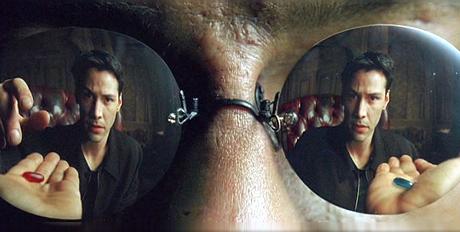
Whoever knows and recognizes how near God’s Kingdom is to him may say with Jacob, “God is in this place, and I knew it not.”
Meister Eckhart, "The Nearness of the Kingdom"
Once, having been asked by the Pharisees when the kingdom of God would come, Jesus replied, "The coming of the kingdom of God is not something that can be observed, nor will people say, 'Here it is,' or 'There it is,' because the Kingdom of God is within you.
| | Back to Top | | |
|
One Love
Registered Member
Date Joined Jan 2003
Total Posts : 13888
| Posted 3/21/2008 6:53 AM (GMT -6) | | 
Whoever knows and recognizes how near God’s Kingdom is to him may say with Jacob, “God is in this place, and I knew it not.”
Meister Eckhart, "The Nearness of the Kingdom"
Once, having been asked by the Pharisees when the kingdom of God would come, Jesus replied, "The coming of the kingdom of God is not something that can be observed, nor will people say, 'Here it is,' or 'There it is,' because the Kingdom of God is within you.
| | Back to Top | | |
|
One Love
Registered Member
Date Joined Jan 2003
Total Posts : 13888
| Posted 3/21/2008 6:58 AM (GMT -6) | | "Greater things than these shall you do..."

Whoever knows and recognizes how near God’s Kingdom is to him may say with Jacob, “God is in this place, and I knew it not.”
Meister Eckhart, "The Nearness of the Kingdom"
Once, having been asked by the Pharisees when the kingdom of God would come, Jesus replied, "The coming of the kingdom of God is not something that can be observed, nor will people say, 'Here it is,' or 'There it is,' because the Kingdom of God is within you.
| | Back to Top | | |
|
One Love
Registered Member
Date Joined Jan 2003
Total Posts : 13888
| Posted 3/21/2008 7:14 AM (GMT -6) | | Tom:
MeisterMan: Therefore, if the soul is to know God, it must know Him outside time and place…
Tom: Does not compute. Meister never left time or place, never had his existence atemporally off in nowheresville. There is no leaving the creaturely context of creaturely existence. Creation doesn't step outside itself, outside its createdness, in order to be fully what God intends creation to be.
Ok. Loder...
In the ongoing interplay between the human spirit and the Holy Spirit, there is is a vital exchange--continuously alive, bringing forth fundamentally new orders of being and understanding. Yet the new orders do not violate or contravene the paradoxical unity of the two spirits. The kinetic moments of convergence presupposed by the model are a kind of epiclesis--the moment in the celebration of the Eucharist when by an act of the Holy Spirit the elements become the body and blood of Christ. Repeatedly enacted, the moment is a "leap" between the human and the Divine, the Divine and the human , which in all situations brings forth transformation--if not a transubstantiation--of the fallen orders of mind, life, and creation.
The final point to be stressed here is the twist. As a physical model of the decisive kine tic moment, the twist depicts a temporal event via spatial terms but without spatializing it. Thus, the twist in the model bears a fundamental truth about the relationsh between the two spirits: in this interplay time eludes space and all its presumed determinants, and via transformation a new order of fundamental determinants emerges. In the context of irreversible thermodynamics it is not time per se that is irreversible, but time's determinants. The fallen and shattered teacup can't reassemble itself on the table; the filmstrip of events does not run backward. However, time stripped of its determinants (as can only happen in reflective human consciousness, an inveterably "open system" [I am's Note:The practice of HESYCHASM! ], ) appears to be reversible in the spontaneous creation of a new order of determinants.
Theologically, the experience of that "reversibility" in faith is a new being in Christ. However, as we will see, this notion involves "God's time." In this context, what appears to be reversibility may instead be highly accelerated motion toward the eschatological future in Christ--a wrinkle in time and foretaste of the redemption of all things.
James Loder, Knignt's Move. 121-122.
-----------------------------------------------
Beyond vision, in the fourth and final phase of the journey of intensification, is the numinous, imageless passage into the absolute unity of all things. Here no-thingness (cf. Eckhart's Ohne bild) is experienced as more real that than the reality of the ordinary state, even after self-consciousness returns to phase 1. Although imageless, its impact most often leaves the after-image of radiant white light, so vivid it cannot be described except perhaps by a kind of via negativa. For this phase there is no language, only silence--favete linguis (hold your tongue), says Kierkegaard. For this phase there is still differentiated self-consciousness (Tom!), but beyond that only a reaction of awe as before the Holy who both fascinates and overpowers at the same time. This corresponds to the vision of God in Augustine, Hildegaard, Teresa (of Avila), Eckhart, and several others.
The neurological foundation of this experience is the profoundly significant capacity of the brain to present to consciousness not only an ordered content but the very way in which that content is itself presented: i.e., the order itself. In this case, it is the whole or totality in itself that is communicated. Clearly this is not a reductive account, but only a claim that the human organism is made so as to support and entertain an encounter with an imageless sense of the Absolute Unity of Being. The numinous impact of this is, of course, like that of the encounter with the Holy in the Hebrew and Greek Scriptures. If mythic vision and cosmic consciousness were the consequences of the third phase, then here the consequence is that one may now see the cosmos from a standpoint beyond it, while still within it. The benevolent detachment from the world which is the consequence of this experience has the effect of making the world becomes a matter of choice rather than one of defensive survival. All that is needed for ultimate survival has been given and far more, so engagement with the world are a matter of decision in what can only be called a state of blessedness.
Loder. Knight's Move. 273
Whoever knows and recognizes how near God’s Kingdom is to him may say with Jacob, “God is in this place, and I knew it not.”
Meister Eckhart, "The Nearness of the Kingdom"
Once, having been asked by the Pharisees when the kingdom of God would come, Jesus replied, "The coming of the kingdom of God is not something that can be observed, nor will people say, 'Here it is,' or 'There it is,' because the Kingdom of God is within you.
Post Edited ("I am-in-I Am") : 3/21/2008 7:27:23 AM (GMT-5) | | Back to Top | | |
|
Tom
Registered Member
Date Joined Jul 2001
Total Posts : 10353
| Posted 3/21/2008 7:17 AM (GMT -6) | | | | |
|
One Love
Registered Member
Date Joined Jan 2003
Total Posts : 13888
| Posted 3/21/2008 7:31 AM (GMT -6) | | Bottom line:
All of the experiences that I've been having have been DOCUMENTED and DISCUSSED far longer than I even knew these things to be true. Right now, I have in my hand a Christian spirtual formation book..."Conformed to His Image: Biblical and Practical Approaches to Spiritual Formation" by Kenneth Boa. Straight up TEXTBOOK.
And IT talks about these kinds of experiences!
I'm not just making this up. Again, I'm Johnny-Come-Lately to ALL of this.
And I've been COMPLETELY SURPRISED by the depth of reality in these things.
Seriously.
Whoever knows and recognizes how near God’s Kingdom is to him may say with Jacob, “God is in this place, and I knew it not.”
Meister Eckhart, "The Nearness of the Kingdom"
Once, having been asked by the Pharisees when the kingdom of God would come, Jesus replied, "The coming of the kingdom of God is not something that can be observed, nor will people say, 'Here it is,' or 'There it is,' because the Kingdom of God is within you.
| | Back to Top | | |
|
One Love
Registered Member
Date Joined Jan 2003
Total Posts : 13888
| Posted 3/21/2008 7:34 AM (GMT -6) | | I don't know how to say things any clearer. I've got Ware. I've got Zizy. I've got Nesteruk. I've got Willard. I've got Loder. I've even got Lossky (insofar as he virtually equated Christian mysticism with dogmatics).
I really don't know how better to explain this.
Whoever knows and recognizes how near God’s Kingdom is to him may say with Jacob, “God is in this place, and I knew it not.”
Meister Eckhart, "The Nearness of the Kingdom"
Once, having been asked by the Pharisees when the kingdom of God would come, Jesus replied, "The coming of the kingdom of God is not something that can be observed, nor will people say, 'Here it is,' or 'There it is,' because the Kingdom of God is within you.
Post Edited ("I am-in-I Am") : 3/21/2008 8:08:37 AM (GMT-5) | | Back to Top | | |
|
Tom
Registered Member
Date Joined Jul 2001
Total Posts : 10353
| Posted 3/21/2008 8:49 AM (GMT -6) | | D: Dude, you so don't understand the experience…
Tom: Nor do you understand mine (so it seems). So what do we do? If there’s no agreed upon measure of consistency or language or logic where we can meet in the middle, then it’s just us throwing our experiences at each other and claiming “If you only had this experience you’d understand.” As soon as a person wants to articulate an experience, she’s got to do it in a way that communicates given certain rules. I’m just trying my best to go on your descriptions of things.
D: You seem to be thinking of this as some twisted parody of "nirvana" which some people consider the "destroyer of psychic worlds". Lobotomizing, like you say. This couldn't be FARTHER from the truth...
Tom: Then you need to work on articulating your experience, D, because when you say things like…
‘Tom Belt’ is not there.
‘Anita’s Husband’ is not there.
‘Jamila's Father’ is not there.
Only a Father's Child relating to the Father,
…all in response to simple questions about whether or not we’ll perceive and celebrate creaturely relationships, what would you like people to think?
I’m trying hard to judge your view at its best. To be told that God’s plans for me include emptying my perceptions and experience of the world of any recognition of creaturely relationships that constitute the joys and graces of my earthly existence is, well, the word ‘labotomy’ came to mind. I was just grasping for a word picture. If you don’t want to know how your articulation of things comes across to people, I can keep it to myself!
---------------------------------
Tom: I’m sorry, but I don’t believe that your relationships to others in this world are NOT perceived by you for what they are—creaturely relationships. That’s all. I am not suggesting we ‘get life’ or define who we essentially are by these relationships. I’m suggesting we GET that FROM God but then BRING that TO others.
D: God worked on me through hesychastic practice to DISENGAGE from directly identifying my personhood with my thoughts and emotions. I HAVE embodied human experience...but I'm not HAD by embodied human experience.
Tom: Good point. I agree with a certain qualification, and that is this—it might sound to some as if you’re saying you derive your personhood in unconscious experiences (no ‘thoughts’ or ‘emotions’, the stuff of the conscious life). Personally, I don’t fault the rational or emotional nature of human being per se. That’s our mode of personal existence, not our personhood. So sure, we don’t derive our IDENTITY, our essential selves, our ‘who’, from any of the creaturely relationships found in the finite world, including our own experience of self-consciousness (or any thought or emotion, as you say). What is there in anything I said that makes you think I’m saying we DO get our essential identities from these? You obvious think that’s what I’m saying. But I’ve been pretty careful. I’m only talking about perceiving and celebrating creaturely relations. Can you agree with this or not?
On your experience as a black man, I perfectly follow you. And it’s obvious that you’re free of the burden and dysfunction your Mom programmed into you as a child.
Let me make a VERY careful and sensitive observation, in total love for you, OK? Here goes. Yes, your essential identity as a Spirit-born son of God isn’t derived from ANY of the contingent, finite creaturely conditions that define your existence as a human being. The abiding value and meaning of your existence is rooted in a personal love that is eternal and unchanging, not subject to any of the vicissitudes of created existence. That’s sealed and shut and yours in Christ.
BUT is it possible D that in moving out of the depth of your pain and narcissism, you’ve swung too far in the opposite direction, now wanting nothing to do with a ‘self’ that is something or someone distinct from God (who IS the source of your healing), nothing to do with recognizing, affirming, and celebrating created earthly diversities? I’m thinking of the passage in Revelation where the redeemed appear in glory before God IN THEIR linguistic, racial and ethnic diversities. See it? From every nation, tribe, tongue, etc. God likes these differences. God created them. God likes the black skin in which the son that YOU are in Christ resides. It’s not your identity per se, true, but it is a created aspect to be celebrated. I see you as denying it's essential goodness, as creating a world inside your head where you go and REALLY live where you’re not a black male. My suggestion is that now that you’re free from needing to get your life and personal identity from being black, you can pick your being black back up and see it as an opportunity to celebrate the given created diversity that’s wonderful. Do you think your skin color will change in heaven? Do you think no one will notice? That’s what I’m trying to say. It sounds to me like you’re saying all such distinctions have no place in the Kingdom. We won't even perceive them. What a shame.
Don’t throw the baby out with the bathwater.
-------------------------------
D: What I'm claiming, Tom, is that hesychasm FREES a human being's "I am-ness" from being IDENTIFIED with it's ego periphery, which is BASED ON "creaturely relationships" internalized by the ego development matrix. In moments of deep contemplation, the "I am-ness" becomes implicit (as Ware and Willard have BOTH attested to) and we see ourselves as ultimately "God-sourced, God-rooted" (Ware). From this state of NON-ATTACHMENT and EQUANIMITY, the human being's "I am-ness" can choose to FULLY PARTICIPATE in the "creaturely relations"...without being FOOLED into believing that their personhood is BASED or GROUNDED in creaturely relations.
Tom: Exactly what I’m saying. I’ve lived this for years D. Screw the fancy lingo, the white lights and psychobabble, this is normal life for me, heshychasm or not. Call it what you want. There's nothing mystical to it. I mean this honestly. I have for years essentially seen myself as beloved and born of the Spirit, eternally secure in Christ, and not depending for my value in God’s eyes upon any of the creaturely relationships of my life. That’s been my default go-to self-perception for years, as I’ve said all along.
Now, I do have issues I’m working through, yes. The world challenges me on this constantly, and sometimes I slip and forget who I really am. But there’s growth. So I’m not perfected yet, and you know this. But fundamentally, this is my experience. So if you and I equally derive our identities in Christ, and we know this, why do you think I read you as having such disdain for creaturely relations (‘no Tom’ ‘no husband’, ‘no Father of Jamila’, no no no) while you read my saying that we’ll perceive, recognize and celebrate our created differences and relations as seeking to get my identity from the world? Why, when all I did was celebrate created diversities and relationships, did you run to “No, no, it's not that, it's this”?
I think it’s because of our biographies. I’ve pretty much enjoyed life and relationships all 48 years I’ve lived. I never got dumped on consistently with debilitating dysfunctions about my race or gender, etc., while the created differences and relations that constituted YOUR history were a nightmare. So I can see why you’re gun-shy when it comes to incorporating the recognition and celebration of created diversity, like your being black, right into the enjoyment of who you are in Christ. You hold these relations at a distance. You mistrust them. They pose a threat to you. What I’m saying, D, is that for those who are secure in who they are in Christ, they can run back out into the fields and REALLY celebrate being a husband, a father, a black male; they can bring who they are in Christ to these relations as BEAUTIFUL expressions of created diversity. In fact, my more important point is that there’s no living as a Spirit-born children of God outside these created relations. You can derive your identity in Christ, yes, but you can’t extract your living out that identity from the unique creaturely embodied package that’s yours. Now that you’re healed, why not pick these back up and repossess them as the gift graces they are! You are black. You’ll always be black. And that’s a good thing now. You don’t derive your identity from it, but neither can you express your identity apart from it. That’s what I’m saying.
D: Practical example. When I see "my wife", I now see only Christ via her humanity. (As you've done to the least of these, you've done to Me) I relate to her as "my wife", using her name and all that. But I really...REALLY only see Christ in all human beings.
Tom: Well, I tried!
D: So, I hope that you see, Tom. I'm not talking about DESTROYING THE EGO, where effective spiritual psychosis would take place. (This is what YOUR description is talking about, in my mind) I'm talking (following Loder) of RELATIVIZING THE EGO such that the personality of a human being is CENTERED on the Divine Presence as it rests perichoretically in that Presence.
Tom: Don’t know Loder, and I get lost when the lingo goes academic. I just know that when I read “NO Tom, NO husband of Anita, NO etc.” and “I ONLY see Christ in others,” I see the destruction of the ego you say you’re not destroying. I’m not sure what you’d have to add if you did want to come right out and destroyed egos. I don’t see any joyful celebration of created diversity (your being black, your being married, your having sons, etc.) in your language. It’s like you’re gritting your teeth and tolerating these relations as an intrusion into who you really are all in the hope that someday you won’t have to deal with anything like them again.
Just being honest in love.
Tom
| | Back to Top | | |
|
Similitude
Registered Member
Date Joined Apr 2004
Total Posts : 4968
| Posted 3/21/2008 9:00 AM (GMT -6) | | However, time stripped of its determinants (as can only happen in reflective human consciousness, an inveterably "open system" [I am's Note:The practice of HESYCHASM! ], ) appears to be reversible in the spontaneous creation of a new order of determinants.
Jeff: Alan is always talking about some theory of time (b-theory, is it?). This idea (above) of reversible time would be inconsistent with that theory of time that Greg/Tom/Alan use in their defense of OT wouldn't it?
I for one can not find a way to see how the theory of time that Alan etal use is knowably true unless God is eternally temporal. But since EO doesn't subscribe to that view of time, I can see how they might posit the possibility of the reversibility of time. But then we are dealing with the rationality of OT as well as other metaphysical differences, by implication. Am I misunderstanding the EO position on time, here?
| | Back to Top | | |
| 96 posts in this thread.
Viewing Page : 1 2 3 4 |
| Forum Information | Currently it is Monday, November 09, 2026 12:06 PM (GMT -6)
There are a total of 97,718 posts in 6,040 threads.
In the last 3 days there were 0 new threads and 0 reply posts. View Active Threads
|
Forum powered by dotNetBB v2.42EC SP3
dotNetBB © 2000-2026 |
|
|