 |
| Open Theism Discussion Board > Public Forums > Theological Q&A > Vive la difference! | Forum Quick Jump
|
| 
PotOnWheel
Registered Member

Date Joined Jul 2001
Total Posts : 9890
| Posted 3/21/2008 9:34 AM (GMT -6) |   |
Tom said...
Clay: I'll try to pull out that book, Tom.
Tom: Yeah, by this evening, OK?
----------------- If I'm successful it will be sooner than later.
(o) | | Back to Top | | |
 |
PotOnWheel
Registered Member
Date Joined Jul 2001
Total Posts : 9890
| Posted 3/21/2008 9:50 AM (GMT -6) | | DESERVING
Liturgy « Glory to God for All Things
Zizioulas bypasses the choice between a Christological or Pneumatological ecclesiology by emphasizing their unity-in-distinction. ...fatherstephen.wordpress.com/category/liturgy/page/2/ - 111k - Cached - Similar pages |
Y'all tell me what you think of this, now

If you are not familiar with Met. John Zizioulas’ work, then you have missed some of the best writing by an English-speaking Orthodox writer. Not that having read him you’ll understand what you have just read. But the following small article was sent to my by my dear friend, the Pontificator, whom many of you know from (now-demised) blog. I appreciate the head’s up. The article was publish elsewhere.
John Zizioulas (Being as Communion) reflections on his work by this title.
John Zizioulas, like de Lubac, also recovers the early church’s teaching on the Eucharist for the purpose of revitalizing ecclesiology, emphasizing that the celebration was not simply memorializing what had been accomplished. First and foremost, it was celebrating the fact that it was caught up in “an eschatological act” (21). The Eucharist constituted the being of the Church. It also helped bring together the work of Christ and the Holy Spirit. It could hold both the historical form and the divine reality together without confusion. The Eucharist was not simply an institution (22), but an event out of the working of the Holy Spirit to bring history into eternity with God.
Like de Lubac, Zizioulas wants to check individualism in the church.
The eucharistic community makes the Church eschatological. It frees it from the causality of natural and historical events, from limitations which are the result of the individualism implied in our natural biological existence (22).
The Eucharist cannot happen in isolation, but only when everyone is present. That is, Zizioulas has no regard for private masses because of the communal nature of the Eucharist. He characterizes the Eucharist not as a sacrament along side the word, but as
the eschatologization of the historical word, the voice of the historical Christ, the voice of the Holy Scripture which comes to us, no longer simply as ‘doctrine’ through history, but as life and being through the eschaton. It is not the sacrament completing the word, but rather the word becoming flesh, the risen Body of the Logos (22-23).
Zizioulas locates ecclesiology quite explicitly in the economic Trinity, identifying the humanity as the imago dei not within a universal human nature as de Lubac does, but only within “the work of Christ and the Spirit in history” (19).
Zizioulas bypasses the choice between a Christological or Pneumatological ecclesiology by emphasizing their unity-in-distinction. “The separation between Christology and ecclesiology vanishes in the Spirit (111).” To distinguish the Spirit from the Son, he writes:
Now if becoming history is the particularity of the Son in the economy, what is the contribution of the Spirit? Well, precisely the opposite: it is to liberate the Son and the economy from the bondage of history . . . The Spirit is the beyond history, and when he acts in history he does so in order to bring into history the last days, the eschaton (130).
It is also the Spirit that allows Christ to have a “corporate personality,” such that Christology is given a communal form – “with Christ having a ‘body,’ i.e. to speak of ecclesiology, of the Church as the Body of Christ” (131).
The two aspects of Pneumatology not only determine but also constitute ecclesiology. “[T]hese aspects must qualify the very ontology of the Church. The Spirit is not something that ‘animates’ a Church that already somehow exists. The Spirit makes the Church be” (132). This leads Zizioulas in a surprisingly premature way to the practical question to which he holds off on an answer: “what ecclesial structures and institutions exist which help the Church to maintain the right balance between local and universal?” (133). We will return to the framing of this question in our critique.
This Pneumatological Christology is significant for conciliarity. The oneness of the church is understood to coincide with its multiplicity. There is no council or synod that acts as a mirror image of the Pope for Orthodoxy. The relationship between the local and universal Church is worked out along the lines of his understanding of the being of God as a communion of persons. There is a double principal at work for Zizioulas, for on the one hand the institution has no prior existence or authority beyond “the event of communion,” while on the other hand the communion of the church cannot be prior to its unity. “The institution which expresses this communion must be accompanied by an indication that there is a ministry safeguarding the oneness which the communion aims at expressing” (135).
A Pneumatological Christology is also significant to the relationship between the bishop and the church, and the maintenance of relationship between the “one” and the “many.” “In the case of the local Church is represented through the ministry of the bishop, while the “many” are represented through the other ministries and the laity” (136). The “one” and the “many” are interdependent. In so far as the “one” is dependent on the “many,” there can be no ordination or episcopacy apart from the community. In so far as the “many” are dependent on the “one,” there can be “no baptism” or “ordination without the presence of the bishop” (137).
Finally, the ecclesial institutions of the bishop and the laity “have to be attached to the eucharist,” (138) thus emphasizing not only the communion but the eschatology of the Church. He describes the institutions as being “reflections of the Kingdom” in two ways. First, they “iconic,” in that “their ontology does not lie in the institution itself,” nor due they owe anything to “historical expedience” (138) but to Christ alone. Zizioulas does not advocate neglecting the needs of people, but he does not see these as having any fundamental structural bearing.
We turn to the function of truth in the Church. Zizioulas describes the Eucharist as “the Locus of Truth” (115). Christ is the experience of truth as the one who comes into our history and dwells within us (115). There is no truth of Christ apart from the community that we might locate within the individual mind (rationalism) or soul (mysticism). Christ is not the truth “in a community, but as a community” (115). The truth of Christ takes on a eucharistic historical form, which differentiates it from mere fact. History as such is known in “charismatic-pentacostal events” which do not submit to “a linear development” (116). Not surprisingly, this creates a new understanding of the infallibility of the Church as dependent on communion of the bishops and the community. Regarding the formulation of truth in dogmas, the aim of definition and anathema was to preserve “Eucharistic communion” (117). Zizioulas goes on: “Thus it may be said that the credal definitions carry no relationship with truth in themselves, but only in their being doxological acclamations of the worshiping community” (117).
The Eucharist reveals the renewal of creation, such that humanity is given the task of priesthood to it. Here we begin to see a characteristic blurring of divine and human agency:
Man’s responsibility is to make a Eucharistic reality out of nature, i.e. to make nature, too, capable of communion. If man does this, then truth takes up its meaning for the whole cosmos, Christ becomes a cosmic Christ, and the world as a whole dwells in truth, which is none other than communion with its Creator. Truth thereby becomes the life of all that is (119).
Finally, “a Eucharistic concept of truth shows how truth becomes freedom” (120). Whereas freedom as choice often assumes an individualist concept of being, the freedom “given by the Christ-truth to creation is precisely this freedom from division and individualization, creating the possibility of otherness within communion” (121). Those who “gather together in the eucharist realize their freedom under the form of affirmation alone: it is not the ‘yes’ and the ‘no’ together which God offers in Christ, but only the ‘yes,’ which equates to the Eucharistic ‘Amen” (121).
Because this notion of freedom is so otherworldly, Zizioulas admits that it may seem impractical and unrealistic. However, he reprimands Protestants for this reaction:
You do not do justice to truth’s ontological content by implying that our fallen state of existence is all there is. The individualization of existence by the fall makes us seek out security in objects or various ‘things,’ but the truth of communion does not offer this kind of security: rather, it frees us from slavery to objective ‘things’ by placing things and ourselves within a communion-event (122).
+++
I am on a mission trip this weekend - so read a little Zizioulas and discuss among yourselves! - Fr. Stephen
This entry was posted on October 12, 2007 at 6:41 pm and is filed under Liturgy, Orthodox Christianity, Orthodox Doctrine, The Church, The Sacraments, religion. You can follow any responses to this entry through the RSS 2.0 feed. You can leave a response, or trackback from your own site.
(o) | | Back to Top | | |
|
One Love
Registered Member

Date Joined Jan 2003
Total Posts : 13888
| Posted 3/21/2008 11:07 AM (GMT -6) | | Thanks for your honesty, Tom. Here's my response.
I've already WRESTLED with what you are talking about. Multiple times. Despondency. Dissociation. (NOT non-attachment). There are many perils to the hesychastic life...for real. And what YOU are talking about is one of those pitfalls. Some people leave God's World for a pseudo-spiritual set of experiences that don't lead to communal, eucharistic living as individuals-in-community.
However...
I can safely say that what you're talking about is NOT where "I" am, praise God. You said this:
is it possible D that in moving out of the depth of your pain and narcissism, you’ve swung too far in the opposite direction, now wanting nothing to do with a ‘self’ that is something or someone distinct from God (who IS the source of your healing), nothing to do with recognizing, affirming, and celebrating created earthly diversities?
Nope. I am right where Kierkegaard (and Loder) talked about. I am a self who, in willing to relating myself to myself and willing to be myself rests transparently in the Divine Power that constantly creates (and re-creates) me. Loder again...I hope this doesn't lose you too much...
Let us now summarize the experiential appropriation of trinitarian life by way of the same three levels Torrance used to describe the emergence fo the doctrine of the Trinity. First, the spontaneous creative work of consciousness which is both autobiographical (involving the "I" ) and symbolically constructed (not merely awareness as shared with lower animals) is, as we have suggested, implicitly but not sufficiently perichoretic. It is already the bearer of despair. Second, intentional efforts to created a new frame of knowledge vis-a-vis any given situation or problem, as in Einstein's productive thought, approaches ever more profoundly, but still insufficiently, the perichoretic potential in the mind and self of the knower. Even great creative efforts do not elude despair. Third, for Kierkegaard, is the decisive level in which the Divine Presence is able, in turn, to indwell the self via the Holy Spirit. That is, the Holy Spirit generates an open-ended reality that replicates in human nature the Divine nature of the Trinity. Here the image indwells its Original and, at the same time, and because of that indwelling, becomes a reflection of it. The transparently grounded self is thus sustained as such by the Divine nature and at the same time is transcended by it as Original transcends image.
The Divine Presence (Christ's Holy Spirit) lives our lives AS US while being in relationship WITH US...as our human "hearts" exist in continuous "poverty-of-spirit" in epicletic faith. Christ-the-Logos gets to live in and through "Dwayne Polk" AS "Dwayne Polk", complete with all of "Dwayne's" creaturely relationships in God's World (the so-called "ordinary" world)...while "I" (the "creaturely "I" my human hypostasis, ego periphery) freely relates to the Divine Presence in every Present Moment of Creation, freely obeys the Divine Will, and becomes a "clean mirror" of the divine nature: love.
God "chooses" me. I "choose" God.
SYNERGY.
I'm not trying to move away from creaturely particularity or the social relationships informed by our biological hypostases. Not at all. (I'm certainly not trying to run from my skin color or any cultural ramifications that may have! Ha!  ) I'm saying that Christ-the-Logos wants to UTTERLY GROUND that free creaturely particularity, such that the whole Universe is seen as a big Theophany. The Universal encompasses the Particular...but doesn't annihilate it. Rather it empowers the FULFILLMENT of the Particular.
***********************
Tom:
I’m only talking about perceiving and celebrating creaturely relations. Can you agree with this or not?
Sure. Hopefully you can understand WHY I'm agreeing with you. (Mundane esctasy)
**************************
Tom:
I just know that when I read “NO Tom, NO husband of Anita, NO etc.” and “I ONLY see Christ in others,” I see the destruction of the ego you say you’re not destroying. I’m not sure what you’d have to add if you did want to come right out and destroyed egos. I don’t see any joyful celebration of created diversity (your being black, your being married, your having sons, etc.) in your language. It’s like you’re gritting your teeth and tolerating these relations as an intrusion into who you really are all in the hope that someday you won’t have to deal with anything like them again.
Man...you really didn't read what I posted from Loder did you?
If mythic vision and cosmic consciousness were the consequences of the third phase, then here the consequence is that one may now see the cosmos from a standpoint beyond it, while still within it. The benevolent detachment from the world which is the consequence of this experience has the effect of making the world becomes a matter of choice rather than one of defensive survival. All that is needed for ultimate survival has been given and far more, so engagement with the world are a matter of decision in what can only be called a state of blessedness.
The EXACT OPPOSITE of what you think is happening is what's happening. I'm MORE into the radical particularities of this world (and individual human beings) than I've ever been before. My ego defenses, which were INORDINATE because of my problematic past, have been RELAXING and less BINDING upon my ability to live as a full human being. I feel this "state of blessedness" from the "benevolent detachment". Loder on mundane ecstasy...repost...
--------------------------
James Loder has a concept he calls " mundane ecstasy." (It's actually similar to the idea of sahaja and jivanmukta. ) He gives a good simple description about mundane ecstasy in "The Transforming Moment" page 223 (Parentheses and emphases mine) Ecstasy: In general usage, a transcendent, "standing-outside-of" the ordinary limits of reality under the impetus of a benevolent spiritual presence. This usage is intended here, except where the term is combined with "mundane." Then it denotes a "standing-outside-of" simultaneous with a "standing-more-deeply-within" the everyday, or the two-dimensional reality. (ie Self and the Lived World) In mundane ecstasy, therefore, ordinary existence can be perceived four-dimensionally (ie Self, Lived World, Void, and the Holy)In my mind, it's a reality of e nstasy and ecstasy at the same time where one REALLY participates in God's World at all times. As one lives epicletically in the "Present Moment", she allows the Eternal/Being into the Temporal/Becoming of life. ----------------------------
Actually, let me get a quote from Dallas Willard. From "Renovation of the Heart: Putting on the Character of Christ". Chapter 12: The Children of Light and the Light of the World. Page 220. This is EXACTLY what's up. Emphases Willard.
Soul: Finally as you come to know these people--though those who know only the human powers of the flesh will never be able to understand them (1 Corinthians 2:14) --you see that all of the above (I am's note: characteristics of the Children of Light) is not just at the surface. It is deep, and in a certain obvious sense, it is effortless. It flows. That is, the things we have been describing are not things the children of light are constantly trying to do, gritting their teeth and carrying on. Instead, these are the features of life that well up out of a soul that is at home in God.
This is the outcome of spiritual formation in Christlikeness. Again, it doesn't mean perfection, but it does mean we have here a person whose soul is whole: a person who, through the internalized integrity of the law of God and the administrations of the gospel and the Spirit, has a restored soul. Such a soul effectively interfaces God and the full person and enables every aspect of the self to function as God intended.
It's like that, homie. For real.
Trained into godliness.
Whoever knows and recognizes how near God’s Kingdom is to him may say with Jacob, “God is in this place, and I knew it not.”
Meister Eckhart, "The Nearness of the Kingdom"
Once, having been asked by the Pharisees when the kingdom of God would come, Jesus replied, "The coming of the kingdom of God is not something that can be observed, nor will people say, 'Here it is,' or 'There it is,' because the Kingdom of God is within you.
Post Edited ("I am-in-I Am") : 3/21/2008 11:15:10 AM (GMT-5) | | Back to Top | | |
|
Tom
Registered Member

Date Joined Jul 2001
Total Posts : 10353
| Posted 3/21/2008 11:09 AM (GMT -6) | | | | |
|
One Love
Registered Member
Date Joined Jan 2003
Total Posts : 13888
| Posted 3/21/2008 12:08 PM (GMT -6) | | By the way....great stuff, B!
Whereas freedom as choice often assumes an individualist concept of being, the freedom “given by the Christ-truth to creation is precisely this freedom from division and individualization, creating the possibility of otherness within communion”
Hayell, yeah...
Whoever knows and recognizes how near God’s Kingdom is to him may say with Jacob, “God is in this place, and I knew it not.”
Meister Eckhart, "The Nearness of the Kingdom"
Once, having been asked by the Pharisees when the kingdom of God would come, Jesus replied, "The coming of the kingdom of God is not something that can be observed, nor will people say, 'Here it is,' or 'There it is,' because the Kingdom of God is within you.
| | Back to Top | | |
|
One Love
Registered Member
Date Joined Jan 2003
Total Posts : 13888
| Posted 3/21/2008 6:14 PM (GMT -6) | | Thanks for the edification, B. Lord be with us all.
God bless you richly, bro. Thanks for everything.
Whoever knows and recognizes how near God’s Kingdom is to him may say with Jacob, “God is in this place, and I knew it not.”
Meister Eckhart, "The Nearness of the Kingdom"
Once, having been asked by the Pharisees when the kingdom of God would come, Jesus replied, "The coming of the kingdom of God is not something that can be observed, nor will people say, 'Here it is,' or 'There it is,' because the Kingdom of God is within you.
| | Back to Top | | |
|
Tom
Registered Member
Date Joined Jul 2001
Total Posts : 10353
| Posted 3/22/2008 2:03 AM (GMT -6) | | Clay: But I don't know what your debate with D is.
Tom: You early said this in response to me (and Hart): “DITTO: ‘Our gift to God is our renditions of the gift of his themes. That’s the music he wants to hear’.”
THAT is my essential debate with D. We become gift-givers and well as gift-receivers. What we’ve been debating the last couple of pages, however, has been the place/role of created diversity and difference within our experience of God and the world.
I’m sorry you don’t see my issues, though you see things clearly enough to agree with D.  I guess that’s nice. 
Tom
| | Back to Top | | |
|
PotOnWheel
Registered Member
Date Joined Jul 2001
Total Posts : 9890
| Posted 3/22/2008 8:24 AM (GMT -6) | |
Tom said...
Clay: But I don't know what your debate with D is. "I don't know..." is rhetorical, and expresses that these things are not on the top of my thinking or feeling. (Lent is, and family, and reading liturgical Psalms.) That's all I mean.
I'm going to turn off the computer and go read.
| | Back to Top | | |
|
One Love
Registered Member
Date Joined Jan 2003
Total Posts : 13888
| Posted 3/22/2008 9:04 PM (GMT -6) | | |

I Feel Like Dying
Lil Wayne
http://www.youtube.com/watch?v=vuyEgvCVYd8&feature=related

"Whoever finds their life will lose it, and whoever loses their life for my sake will find it. "
-- Christ-the-Logos
"Very truly I tell you, unless a kernel of wheat falls to the ground and dies, it remains only a single seed. But if it dies, it produces many seeds. Those who love their life will lose it, while those who hate their life in this world will keep it for eternal life. Whoever serves me must follow me; and where I am, my servant also will be. My Father will honor the one who serves me. "
-- Christ-the-Logos
Whoever knows and recognizes how near God’s Kingdom is to him may say with Jacob, “God is in this place, and I knew it not.”
Meister Eckhart, "The Nearness of the Kingdom"
Once, having been asked by the Pharisees when the kingdom of God would come, Jesus replied, "The coming of the kingdom of God is not something that can be observed, nor will people say, 'Here it is,' or 'There it is,' because the Kingdom of God is within you.
Post Edited ("I am-in-I Am") : 3/22/2008 11:10:12 PM (GMT-5) | | Back to Top | | |
|
One Love
Registered Member
Date Joined Jan 2003
Total Posts : 13888
| Posted 3/22/2008 9:11 PM (GMT -6) | | Totally random...
Lil Wayne reminds me of someone...

Actually, two people..
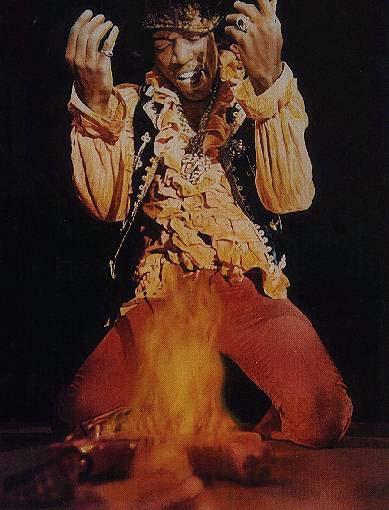
Two of my favorite artists...
Whoever knows and recognizes how near God’s Kingdom is to him may say with Jacob, “God is in this place, and I knew it not.”
Meister Eckhart, "The Nearness of the Kingdom"
Once, having been asked by the Pharisees when the kingdom of God would come, Jesus replied, "The coming of the kingdom of God is not something that can be observed, nor will people say, 'Here it is,' or 'There it is,' because the Kingdom of God is within you.
| | Back to Top | | |
|
PotOnWheel
Registered Member
Date Joined Jul 2001
Total Posts : 9890
| Posted 4/14/2008 5:51 AM (GMT -6) | | | | |
|
PotOnWheel
Registered Member
Date Joined Jul 2001
Total Posts : 9890
| Posted 4/14/2008 5:53 AM (GMT -6) | | plato's_playdough said...DESERVING Zizioulas [color=red>bypasses the choice between a Christological or Pneumatological ecclesiology by emphasizing their .]...</B>
<SPAN class=a>fatherstephen.wordpress.com/category/liturgy/page/2/ - 111k - <NOBR>]Similar pages</A></NOBR>
|
</P> Y'all tell me what you think of this, now <BLOCKQUOTE dir=ltr style="MARGIN-RIGHT: 0px"> <H2> And Now for a Little Meat! Met. John Zizioulas and the Church</H2> <BLOCKQUOTE> If you are not familiar with Met. John Zizioulas’ work, then you have missed some of the best writing by an English-speaking Orthodox writer. Not that having read him you’ll understand what you have just read. But the following small article was sent to my by my dear friend, the Pontificator, whom many of you know from (now-demised) blog. I appreciate the head’s up. The article was publish . John] <FONT color=#0066cc>Being as Communion</A> reflections on his work by this title. John Zizioulas, like de Lubac, also recovers the early church’s teaching on the Eucharist for the purpose of revitalizing ecclesiology, emphasizing that the celebration was not simply memorializing what had been accomplished. First and foremost, it was celebrating the fact that it was caught up in “an eschatological act” (21). The Eucharist constituted the being of the Church. It also helped bring together the work of Christ and the Holy Spirit. It could hold both the historical form and the divine reality together without confusion. The Eucharist was not simply an institution (22), but an event out of the working of the Holy Spirit to bring history into eternity with God. Like de Lubac, Zizioulas wants to check individualism in the church. The eucharistic community makes the Church eschatological. It frees it from the causality of natural and historical events, from limitations which are the result of the individualism implied in our natural biological existence (22). The Eucharist cannot happen in isolation, but only when everyone is present. That is, Zizioulas has no regard for private masses because of the communal nature of the Eucharist. He characterizes the Eucharist not as a sacrament along side the word, but as the eschatologization of the historical word, the voice of the historical Christ, the voice of the Holy Scripture which comes to us, no longer simply as ‘doctrine’ through history, but as life and being through the eschaton. It is not the sacrament completing the word, but rather the word becoming flesh, the risen Body of the Logos (22-23). Zizioulas locates ecclesiology quite explicitly in the economic Trinity, identifying the humanity as the imago dei not within a universal human nature as de Lubac does, but only within “the work of Christ and the Spirit in history” (19).Zizioulas bypasses the choice between a Christological or Pneumatological ecclesiology by emphasizing their unity-in-distinction. “The separation between Christology and ecclesiology vanishes in the Spirit (111).” To distinguish the Spirit from the Son, he writes: Now if becoming history is the particularity of the Son in the economy, what is the contribution of the Spirit? Well, precisely the opposite: it is to liberate the Son and the economy from the bondage of history . . . The Spirit is the beyond history, and when he acts in history he does so in order to bring into history the last days, the eschaton (130). It is also the Spirit that allows Christ to have a “corporate personality,” such that Christology is given a communal form – “with Christ having a ‘body,’ i.e. to speak of ecclesiology, of the Church as the Body of Christ” (131). The two aspects of Pneumatology not only determine but also constitute ecclesiology. “[T]hese aspects must qualify the very ontology of the Church. The Spirit is not something that ‘animates’ a Church that already somehow exists. The Spirit makes the Church be” (132). This leads Zizioulas in a surprisingly premature way to the practical question to which he holds off on an answer: “ what ecclesial structures and institutions exist which help the Church to maintain the right balance between local and universal?” (133). We will return to the framing of this question in our critique. This Pneumatological Christology is significant for conciliarity. The oneness of the church is understood to coincide with its multiplicity. There is no council or synod that acts as a mirror image of the Pope for Orthodoxy. The relationship between the local and universal Church is worked out along the lines of his understanding of the being of God as a communion of persons. There is a double principal at work for Zizioulas, for on the one hand the institution has no prior existence or authority beyond “the event of communion,” while on the other hand the communion of the church cannot be prior to its unity. “The institution which expresses this communion must be accompanied by an indication that there is a ministry safeguarding the oneness which the communion aims at expressing” (135). A Pneumatological Christology is also significant to the relationship between the bishop and the church, and the maintenance of relationship between the “one” and the “many.” “In the case of the local Church is represented through the ministry of the bishop, while the “many” are represented through the other ministries and the laity” (136). The “one” and the “many” are interdependent. In so far as the “one” is dependent on the “many,” there can be no ordination or episcopacy apart from the community. In so far as the “many” are dependent on the “one,” there can be “no baptism” or “ordination without the presence of the bishop” (137). Finally, the ecclesial institutions of the bishop and the laity “have to be attached to the eucharist,” (138) thus emphasizing not only the communion but the eschatology of the Church. He describes the institutions as being “reflections of the Kingdom” in two ways. First, they “iconic,” in that “their ontology does not lie in the institution itself,” nor due they owe anything to “historical expedience” (138) but to Christ alone. Zizioulas does not advocate neglecting the needs of people, but he does not see these as having any fundamental structural bearing. We turn to the function of truth in the Church. Zizioulas describes the Eucharist as “the Locus of Truth” (115). Christ is the experience of truth as the one who comes into our history and dwells within us (115). There is no truth of Christ apart from the community that we might locate within the individual mind (rationalism) or soul (mysticism). Christ is not the truth “in a community, but as a community” (115). The truth of Christ takes on a eucharistic historical form, which differentiates it from mere fact. History as such is known in “charismatic-pentacostal events” which do not submit to “a linear development” (116). Not surprisingly, this creates a new understanding of the infallibility of the Church as dependent on communion of the bishops and the community. Regarding the formulation of truth in dogmas, the aim of definition and anathema was to preserve “Eucharistic communion” (117). Zizioulas goes on: “Thus it may be said that the credal definitions carry no relationship with truth in themselves, but only in their being doxological acclamations of the worshiping community” (117). The Eucharist reveals the renewal of creation, such that humanity is given the task of priesthood to it. Here we begin to see a characteristic blurring of divine and human agency: Man’s responsibility is to make a Eucharistic reality out of nature, i.e. to make nature, too, capable of communion. If man does this, then truth takes up its meaning for the whole cosmos, Christ becomes a cosmic Christ, and the world as a whole dwells in truth, which is none other than communion with its Creator. Truth thereby becomes the life of all that is (119). Finally, “a Eucharistic concept of truth shows how truth becomes freedom” (120). Whereas freedom as choice often assumes an individualist concept of being, the freedom “given by the Christ-truth to creation is precisely this freedom from division and individualization, creating the possibility of otherness within communion” (121). Those who “gather together in the eucharist realize their freedom under the form of affirmation alone: it is not the ‘yes’ and the ‘no’ together which God offers in Christ, but only the ‘yes,’ which equates to the Eucharistic ‘Amen” (121).Because this notion of freedom is so otherworldly, Zizioulas admits that it may seem impractical and unrealistic. However, he reprimands Protestants for this reaction: You do not do justice to truth’s ontological content by implying that our fallen state of existence is all there is. The individualization of existence by the fall makes us seek out security in objects or various ‘things,’ but the truth of communion does not offer this kind of security: rather, it frees us from slavery to objective ‘things’ by placing things and ourselves within a communion-event (122). +++ I am on a mission trip this weekend - so read a little Zizioulas and discuss among yourselves! - Fr. Stephen <SMALL> Liturgy</A> Orthodox Christianity</A> Orthodox Doctrine</A> The Church</A> The Sacraments</A> religion</A> RSS 2.0</A> leave a response</A> trackback</A><FONT face=Arial] from your own site. [/color]</SMALL> </BLOCKQUOTE></BLOCKQUOTE>
(o) | | Back to Top | | |
|
PotOnWheel
Registered Member
Date Joined Jul 2001
Total Posts : 9890
| Posted 4/14/2008 5:55 AM (GMT -6) | | | | |
| 96 posts in this thread.
Viewing Page : 1 2 3 4 |
| Forum Information | Currently it is Monday, November 09, 2026 12:10 PM (GMT -6)
There are a total of 97,718 posts in 6,040 threads.
In the last 3 days there were 0 new threads and 0 reply posts. View Active Threads
|
Forum powered by dotNetBB v2.42EC SP3
dotNetBB © 2000-2026 |
|
|