 |
| 
Alan Rhoda
Registered Member

Date Joined May 2002
Total Posts : 680
| Posted 2/22/2003 1:12 AM (GMT -6) |   | In "Divine Foreknowledge: Four Views" Craig presents the following argument for Molinism:
1) If there are true counterfactuals of creaturely freedom (CCFs), then God knows these truths.
2) There are true CCFs.
3) If God knows true CCFs, God knows them either logically prior to the divine creative decree (DCD) or only logically posterior to the DCD.
4) CCFs cannot be known only logically posterior to the DCD.
5) Therefore, God knows true CCFs. (by 1 and 2)
6) Therefore, God knows true CCFs either logically prior to the DCD or only logically posterior to the DCD. (by 3 and 5)
7) Therefore, God knows true CCFs logically prior to the DCD. (by 4 and 6)
The argument is logically valid, but I want to refute premise (2) by way of some observations.
First, as defined by Craig, a CCF is a would-counterfactual of the form: If A were in C, A would freely do B.
Second, according to Molinists like Craig, the kind of freedom captured by CCFs is libertarian freedom (LF). We have LF if and only if we can make libertarianly free choices (LFCs). An LFC can take place if and only if it is really possible for agent A in circumstances C both to engage in behavior B and to engage in some incompatible behavior not-B.
Third, all conditionals are IF-THEN propositions. A conditional is strictly true if and only if the truth of the IF-clause is sufficient to guarantee the truth of the THEN-clause. Often, however, we regard conditionals as true that are not strictly true. A conditional is true for all practical purposes if the truth of the IF-clause is sufficient to render the THEN-clause highly probable. In this looser sense it is possible (though highly unlikely) for the IF-clause to be true and the THEN-clause to be false.
Fourth, given LF, CCFs are never strictly true. This is a necessary consequence of the above definitions. Accordingly, it is always possible for the IF-clause of the CCF to be true and the THEN-clause false.
Fifth, as classically understood, God is omniscient if and only if he knows all truths and only truths.
These observations lead to two results:
I. If God knows CCFs then it is possible for God to be mistaken about them.
II. If it is not possible for God to ever be mistaken, then either
A. there are no true CCFs, or
B. God does not know CCFs even though some are true.
Thus, it appears that we have to give up either (I) absolute divine inerrancy, (II.A) libertarian freedom, or (II.B) divine omniscience. Not a nice choice for any free-will theist (Molinist, simple foreknowledge, or OVer) to have to make.
The way around the dilemma is to reject the Molinist assumption that LFCs can be captured by would-counterfactuals. Instead, LFCs are possible if and only if the following might-counterfactual is true: If A were in C, then both A might do B and A might do not-B. (Thanks, Doc, for that insight!)
ONLY appeal to might-counterfactuals allows us to affirm libertarian freedom, divine inerrancy, AND divine omniscience. Since Craig wants to affirm all of those, he must reject premise (2) of his argument: There are no true CCFs (understood as would-counterfactuals, where the type of freedom is libertarian and not compatibilist). But if Craig takes that route, then he has to move from Molinism to Doc's neo-Molinism and become an open theist.
Note: this argument against Molinism is entirely independent of the grounding objection.
The only other option that avoids denying either omniscience or divine inerrancy is to say that CCFs describe compatibilist freedom. For then CCFs can be strictly true.
Feedback appreciated. Thanks.
Alan
PS: Doc, do you think this argument is good enough for me to polish it up for publication?
Anyone who wants to drag in the irrational where the lucidity and acuity of reason still must rule by right merely shows that he is afraid to face the mystery at its legitimate place. --Karl Mannheim
Edited by - Alan Rhoda on 02/22/2003 06:19:20 AM | | Back to Top | | |
 |
Tom
Registered Member

Date Joined Jul 2001
Total Posts : 10353
| Posted 2/22/2003 2:06 AM (GMT -6) | | Alan-
Have you read Hasker’s reply to Molinism in God and Time. He also argues that CCF’s are universally false.
But I don’t see how all would-counterfactuals can be false.
If A were in C, A would freely do B.
If C is understood as a situation in which A had over time freely chosen herself into some addiction, then a counterfactual describing what A would do would be true and God would know it. If Sally were an alcoholic walking in front of her favorite bar after two days without a drink and were offered a drink on the house, Sally would have the drink.
Granted, your argument assumes that in “…A would freely do B” ‘freely’ represents libertarian freedom. And if that’s the case, then I agree. But the scenario I’ve described, though less than libertarianly free at the time, is nevertheless accountable on libertarian grounds since A freely chose her way into the circumstances that rendered her having a drink in situation C certain. She’s responsible for her loss of freedom. And if “C” includes all the variables of the situation, it includes this variable. Thus her action can be framed with a would-counterfactual, would not deny libertarian freedom, and would be eternally be known by God as true.
Looks to me like Craig’s argument is both valid and sound. I don’t have any problems with it at all provided (2), namely, “there are true CCF’s” encompasses might-counterfactuals that possess a truth value independent of would-counterfactuals. If this be granted, then Craig can hold onto his argument as it stands AND become an open theist!
Did I just open my mouth and insert my foot?
Tom
Love never ends | | Back to Top | | |
|
Starkman
Registered Member

Date Joined Oct 2001
Total Posts : 1747
| Posted 2/22/2003 6:00 AM (GMT -6) | | Tom,
It seems that what you are really arguing for here--maybe knowing it but it just didn't come out this way--is for would-counterfactuals being a subset of might-counterfactuals; and not the other way around, for which Craig argues. And if 'woulds' are a subset of 'mights', then it is possible to defend a 'would' within the 'might'. To argue for mights being a subset of woulds--and I'm not saying you are-- could only create compatibilism at best: that alcoholic Sally would (in fact) go into the bar eliminates the 'might' factor. However, if Sally is truly libertarianly free to choose, and if, then, she 'might' go into the bar, it can still be said, in this case (and hence the would-counterfactual subsets to the might-counterfactual), that she would: for God knew she would.
I think what supports this, aside from a logical analyisis, is God's perfect knowledge of human character. He knows so well, so perfectly what we would and would not do under all applicable 'would' circumstances--not always the same circumstance as a 'might' circumstance. That God can well say, "I knew that if A was in B, then A would do C." is not to speak in any fashion of determinism, it's just that under certain circumstances God knows that it's hoplessly true that A will do C.
This preserves both might-counterfactuals and the libertarian free will that logically follows them.
Starkman
| | Back to Top | | |
|
Alan Rhoda
Registered Member
Date Joined May 2002
Total Posts : 680
| Posted 2/22/2003 8:29 AM (GMT -6) | | Thanks Tom and Starkman for your feedback.
Let me clarify that I am only saying that propositions of the form:
If A were in C, A would freely do B.
are false IF we take the word "freely" to denote libertarian freedom (and also assuming we continue affirming both divine inerrancy and omniscience). Since this is how traditional Molinists try to employ CCFs, traditional Molinism is inconsistent.
I agree with you, Tom, that some would-conditionals of that form are strictly true--but this is true IF AND ONLY IF the word "freely" in the conditional denotes compatibilistic freedom.
Craig's favorite example of a true CCF is a case in point. If Craig were to offer his wife a choice between a plate of chocolate chip cookies and a plate of liver and onions, she would freely choose the cookies, or so he claims. What Craig fails to notice is that this conditional can be stricly true ONLY IF "freely" is compatibilistic--strict truth requires that the antecendent of the conditional be sufficient to guarantee the truth of the consequent, which means that it is not within her power to do otherwise. If "freely" is libertarian, then it is possible for the antecedent to be true and the consequent false. Therefore, if God knows a free choices by means of a would-conditional, then either that choice is compatibilistically free or God's knowledge is not inerrant.
Thus premise (2) of Craig's argument is false in the sense in which he intends it--namely, as capturing libertarianly free choices. And that is sufficient to refute traditional Molinism, which tries to preserve perfect divine knowledge and libertarian freedom by means of would-counterfactuals. Either (a) libertarian freedom needs to go, (b) we become neo-Molinists, or (c) we compromise God's knowledge such that he is either liable to err or is not omniscient.
Hope that clarifies. Thanks again.
Alan
Edited by - Alan Rhoda on 02/22/2003 1:31:27 PM | | Back to Top | | |
|
JET
Registered Member
Date Joined Jun 2002
Total Posts : 397
| Posted 2/24/2003 12:13 PM (GMT -6) | | Alan, I’m not following your refutation of premise (2). When Craig says: “If A were in C, A would freely do B”, Craig is saying this conditional statement is strictly true, not just highly probable, right? If so, how does your argument interact with Craig’s position. It sounds like you’re simply saying there are no true CCF’s because this would be incompatible with LF. But Craig affirms the existence of both LF and true CCF’s. So in order to refute Craig, don’t you have to interact more with his underlying philosophical arguments as to the compatibility of true CCF’s and LF?
P.S. Is the “grounding argument” basically the idea that Molinism does not account for where the truth value of CCF’s comes from? In this regard, do you think it makes sense to distinguish between “libertarian freedom” and “self-determining freedom” (i.e., Molinists can affirm LF, but not SDF)?
(Confession: I’m one of those students who has lots of questions, but hasn’t done the reading. I’m very busy and all, and I’ll take any spoon-feeding I can get. Thanks in advance for your patience.)
| | Back to Top | | |
|
Alan Rhoda
Registered Member
Date Joined May 2002
Total Posts : 680
| Posted 2/24/2003 1:57 PM (GMT -6) | | quote:
Alan, I’m not following your refutation of premise (2). When Craig says: “If A were in C, A would freely do B”, Craig is saying this conditional statement is strictly true, not just highly probable, right?
Right.
quote:
If so, how does your argument interact with Craig’s position? It sounds like you’re simply saying there are no true CCF’s because this would be incompatible with LF. But Craig affirms the existence of both LF and true CCF’s. So in order to refute Craig, don’t you have to interact more with his underlying philosophical arguments as to the compatibility of true CCF’s and LF?
Craig wants to affirm that CCF's are strictly true and he wants to affirm libertarian freedom. I am arguing that he can't have his cake and eat it too. If we have libertarian freedom, then Craig's CCF's cannot be strictly true. If Craig's CCF's are strictly true, then they cannot describe libertarian freedom. I'm not "simply saying" that Craig's position is inconsistent. Rather, I've tried to show this. Now Craig may have a rejoinder, though I am not aware of any. If anyone has a Craigean (sp?) response to my argument I'd like to see it.
quote:
Is the “grounding argument” basically the idea that Molinism does not account for where the truth value of CCF’s comes from? In this regard, do you think it makes sense to distinguish between “libertarian freedom” and “self-determining freedom” (i.e., Molinists can affirm LF, but not SDF)?
Are you trying to draw a connection between my objection and the grounding objection? If so, I am not clear on your point. As for the distinction between LF and SDF, what does that distinction amount to? What's the difference between the two? I don't know what to say to your suggestion until you clarify it.
Thanks for your input, JET.
Alan | | Back to Top | | |
|
JET
Registered Member
Date Joined Jun 2002
Total Posts : 397
| Posted 2/24/2003 6:38 PM (GMT -6) | | quote:
Craig wants to affirm that CCF's are strictly true and he wants to affirm libertarian freedom. I am arguing that he can't have his cake and eat it too. If we have libertarian freedom, then Craig's CCF's cannot be strictly true. If Craig's CCF's are strictly true, then they cannot describe libertarian freedom. I'm not "simply saying" that Craig's position is inconsistent. Rather, I've tried to show this.
What I'm hearing you say is that LF (by definition) entails that “it is really possible for agent A in circumstances C both to engage in behavior B and to engage in some incompatible behavior not-B”. Therefore, if A has Libertarian Freedom, then it is not true that “If A were in C, A would do B” because, in fact, A might do “not-B”. Right? If I understand correctly, you’re saying that:
(1) “A might do not-B”
is inconsistent with:
(2) “A would do B”
quote:
Now Craig may have a rejoinder, though I am not aware of any. If anyone has a Craigean (sp?) response to my argument I'd like to see it.
Wouldn’t Craig argue something like this:
Libertarian Freedom entails that it is within A’s power to do not-B. There is no logical inconsistency in saying that A “would” do B, even though it is within A’s power to do not-B. Thus, even if it is true that Mrs. Craig “would” freely choose the cookies, it may also be true that it was within her power to choose the liver and onions. This does not require compatibilistic freedom: It is within Mrs. Craig’s power to choose the liver and onions. However, if she does, then it would not have been true that “Mrs. Craig would freely choose the cookies”.
In other words:
(1) “If offered the choice, Mrs. Craig would choose the cookies”
is inconsistent with:
(2a) “Mrs. Craig chooses the liver and onions”.
But (1) is NOT inconsistent with:
(2b) “It is within Mrs. Craig’s power to choose the liver and onions”
quote:
Are you trying to draw a connection between my objection and the grounding objection? If so, I am not clear on your point. As for the distinction between LF and SDF, what does that distinction amount to? What's the difference between the two? I don't know what to say to your suggestion until you clarify it.
If the meaning of Libertarian Freedom is “the power to do otherwise”, then it seems there is no logical inconsistency with LF and the existence of true CCF’s.
But there is still the question: From whence does the truth value of CCF’s come? (This is the “grounding objection”, right?) Given LF, the truth value of CCF’s cannot come from God (or else A would not have the “power to do otherwise”). Yet God supposedly knows the truth value of CCF’s from eternity. Therefore, the truth value of CCF’s cannot "come from" a finite creature.
Assuming we are talking about Libertarian Freedom as "the power to do otherwise", Craig can argue that the truth value of CCF’s (somehow) exists independently. The conditional statement “A would do B in circumstances C” is true simply because it corresponds to what A would in fact do in circumstances C (regardless of the fact that A has it “within his power” to do otherwise).
But what if instead of talking about “the power to do otherwise” (LF), we are talking about “Self-Determining Freedom”; i.e., the power to “create” one’s choices; the power to determine within one’s self which choices are “actualized”?
If agent A has SDF, then only A can determine the truth value of CCF’s concerning A. Clearly the Molinist, who affirms that CCF’s are true from eternity, must reject SDF. Right?
My gut tells me there is something to this distinction between “Libertarian Freedom” and “Self-Determining Freedom”. What do you think?
| | Back to Top | | |
|
Tom
Registered Member
Date Joined Jul 2001
Total Posts : 10353
| Posted 2/25/2003 2:14 AM (GMT -6) | | Alan-
You’re working through Molinism now, aren’t you? Help me out here.
I want to post a couple paragraphs from a conversation Crosswind introduced in a thread entitled “Can the Two Exist Together?” (Raging Debate Continues), and then ask you about Molinism.quote:
Crosswind: What do you think they mean when they affirm that God possesses knowledge of genuine possibilities in their definition of God's omniscience? Can one affirm that God possesses EDF and the same time possesses knowledge of genuine possibilities?
Tom: Good question. It might be that they admit God knows possibilities in the sense that he knows the different worlds he could have or might have created. God could have created world X, Y, or Z, let’s say. These are three possible worlds. In this case EDF means that each one in itself is defined exclusively in terms of what will certainly happen in the event God actualizes that world. So you have possible sets of certainties. These theologians, I would guess, would admit that God knows possibilities as what might have been (God could have actualized those possibilities had he created a world other than this one), but EDF means God cannot know possibilities as what might be (given the world he did create). Possibilities existed up until the (logical) moment that God decided to create a specific world. God’s choice to create then transformed every might be into either a might have been (by virtue of God’s choosing not to actualize that world) or a will be (by virtue of God’s choosing to actualize this specific world).
And…
On the Middle Knowledge view (which I’m still coming to understand), “David remains in Keilah and is surrendered by that town to Saul” is true in one or more worlds, just not this world, the world in which this David is having this conversation with God. In this case I think there’s some justification in wondering whether God is disingenuous here.
So, Alan, let me toss out some questions about Molinism.
How does God’s mentioning what “would” have transpired had he created a world other than this one meaningfully influence David’s deliberation of alternatives in this world? How do Molinists demonstrate through the way they deliberate their belief that only one of options X, Y, and Z is possible in this world? In other words, how is one influenced by the consideration of an option one believes is only true in other worlds NOT created by God?
Though I think the grounding objection is legit, it’s nice to know there are other ways of countering Molinist arguments.
Now, Molinists may want to concede that options X, Y, and Z each describe what is possible in this world, but either way things are difficult for them. I was thinking on (and know I read somewhere but can’t remember) something. Take Peter’s denial of Christ as an example. There exist possible worlds (worlds God could have created but didn’t) in which, let’s say, Peter denies Christ without the cock crowing, or in which he doesn’t deny Christ at all, or in which it’s John who denies Christ, etc., an infinite number of logically possible scenarios God could have chose to actualize but which he instead chose to forever close the door to. Let’s consider one such possible world, one which is absolutely identical to our world but in which Peter does not deny Christ. This possible world transpires in every detail exactly as our world does, sharing every antecedent cause and influence perfectly, up to the point where Peter denies Christ. In our world Peter denies Christ, while in this world we’re considering he does not.
Craig cannot deny that God knows the possible world I’ve just described, the one identical to ours up to the instant of Peter’s denial but in which Peter stands up for Christ instead of denying him. That world is completely describable in terms of the same CCFs Craig uses. I’m wondering how God is able to guarantee that the world in which Peter does deny Christ is actualized and the world in which Peter does not deny Christ is avoided. How does God do this while respecting libertarian free will?
Moreover, the circumstances defining the conditional “C” in the problem as you framed it (“If A were in C, A would freely do B”) are identical in both our world and the one we’re considering. Craig has to admit that there exist two CCFs where A (Peter) and C (the conditions) are identical but where B (the choice) is not! That is, “A would freely do B in C” (viz., “Peter would freely deny Christ in C where C = our world, the world God chose to create”) and “A would freely do –B in C” (viz., “Peter would not deny Christ in C where C = a world perfectly identical in every particular to our world up to the instant of Peter’s choice to deny Christ) are BOTH true. How do Molinists suggest God actualizes the first and avoids the second?
Now, one could say that since our world C is not ontologically identical to the one we’re considering, we cannot therefore say that “A would freely do –B in C” and “A would freely do B in C” are both true. We instead have to say “A would freely do –B in D” where D, the alternative world we’re consider, although identical to C in every way, is nonetheless ontologically distinct from C; so the two do not really constitute the same world. They may be identical in every particular, but God differentiates them ontologically. Hmm. This is desperate. Logic permits the exchange I think. If C and D are identical in every particular (same events, same emotions, same decisions, same everything up to the point of Peter’s choice), then C = D. Thus, “A would freely do -B in D” = “A would freely do –B in C” where C (viz., the world and Peter leading up to Peter’s decision to deny Christ) and D (viz., the world and Peter leading up to Peter’s decision to stand up for Christ under identical circumstances) are the same. In this case, how does God know that at T1 (viz., the time of Peter’s choice) Peter will do B and not –B if Peter is libertarianly free?
The problem could be exploded infinitely, because there presumably exists any number of possible worlds identical to our own up to the point of Peter’s choice to deny Christ. In fact, there exists any number of possible worlds identical to our own up to every libertarian choice ever made in the history of our world. How does God guarantee that one possible train of libertarian choices (= our world) gets actualized?
Am I kooky? I feel like my head is gonna slip apart!
Tom 
Love never ends
Edited by - TGB on 02/25/2003 10:31:48 AM
Edited by - TGB on 02/25/2003 10:53:14 AM
Edited by - TGB on 02/25/2003 2:02:41 PM | | Back to Top | | |
|
PotOnWheel
Registered Member

Date Joined Jul 2001
Total Posts : 9890
| Posted 2/25/2003 6:24 AM (GMT -6) | | quote:
Am I kooky? I feel like my head is gonna slip apart!
Tom
Rest up!
The following puzzles represent common words or phrases. The object is to simply say what you see.
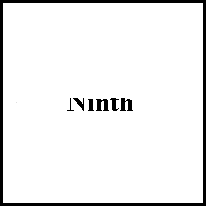
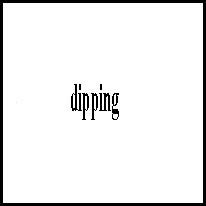
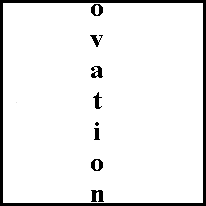
...AND...
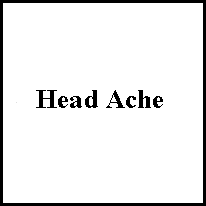
| | Back to Top | | |
|
JET
Registered Member
Date Joined Jun 2002
Total Posts : 397
| Posted 2/25/2003 7:20 AM (GMT -6) | | quote:
Now, Molinists may want to concede that options X, Y, and Z each describe what is possible in this world, but either way things are difficult for them. I was thinking on (and know I read somewhere but can’t remember) something. Take Peter’s denial of Christ as an example. There exist possible worlds (worlds God could have created but didn’t) in which, let’s say, Peter denies Christ without the cock crowing, or in which he doesn’t deny Christ at all, or in which it’s John who denies Christ, etc., an infinite number of logically possible scenarios God could have chose to actualize but which he instead chose to forever close the door to. Let’s consider one such possible world, one which is absolutely identical to our world but in which Peter does not deny Christ. This possible world transpires in every detail exactly as our world does, sharing every antecedent cause and influence perfectly, up to the point where Peter denies Christ. In our world Peter denies Christ, while in this world we’re considering he does not.
If my understanding is correct, according to Molinism, God cannot necessarily choose to create a world in which Peter doesn’t deny Christ in circumstances C. According to Molinism, the realm of possibilities available to God in terms of worlds with free creatures is limited by counterfactuals of creaturely freedom. Thus, Molinism denies that there could be a possible world which is identical to our world but in which Peter does not deny Christ. If an agent otherwise identical to Peter does not deny Christ in circumstances C, the agent would not be Peter. Such a hypothetical agent may not even be possible to create; i.e., there may not exist any possible agent P who would otherwise be identical to Peter, but who would not deny Christ. There may not be within God’s knowledge any true counterfactual of creaturely freedom whereby P in C does not deny Christ. Even if it were possible for a hypothetical agent, P, to exist who would not deny Christ, it might not be possible for such an agent to exist in a world in which circumstances C obtain.
quote:
Craig cannot deny that God knows the possible world I’ve just described, the one identical to ours up to the instant of Peter’s denial but in which Peter stands up for Christ instead of denying him. That world is completely describable in terms of the same CCFs Craig uses.
That world would not include the same CCF’s Craig uses, because Craig’s counterfactuals assumes the existence of an agent “Peter” who would deny Christ in circumstances C. But, if the “Peter” in this alternate world doesn’t deny Christ in circumstances C, then you’d be talking about a different agent; hence, different CCF’s.
quote:
I’m wondering how God is able to guarantee that the world in which Peter does deny Christ is actualized and the world in which Peter does not deny Christ is avoided. How does God do this while respecting libertarian free will?
The world in which Peter does not deny Christ is impossible given the truth of the CCF: “Peter in C would deny Christ”. God respects libertarian free will by choosing to create a world in which Peter is free, even though such freedom entails CCF’s which limit God’s options in terms of possible worlds.
| | Back to Top | | |
|
Tom
Registered Member
Date Joined Jul 2001
Total Posts : 10353
| Posted 2/25/2003 9:01 AM (GMT -6) | | JET: Thus, Molinism denies that there could be a possible world which is identical to our world but in which Peter does not deny Christ.
Tom: Others in the know will have to confirm this. I’m taking William Hasker’s word for it. He discusses this in his book God, Time, and Knowledge, and his views on CCFs, Alan, are very similar if not the same as what you’re arguing for. There are no true counterfactuals of creaturely freedom. To the extent that counterfactual propositions are true, they do not describe “free” actions.
JET: That world would not include the same CCF’s Craig uses, because Craig’s counterfactuals assumes the existence of an agent “Peter” who would deny Christ in circumstances C. But, if the “Peter” in this alternate world doesn’t deny Christ in circumstances C, then you’d be talking about a different agent; hence, different CCF’s.
Tom: Well, I’ll hit the books to check this out, but I think I’m right. As I pointed out regarding the worlds C and D which, though ontologically distinct, are in every particular identical, the same would hold true of Peter in worlds C and D. They’d have the same DNA, history, character, etc., though they would be ontologically distinct as far as the CCFs are concerned. Both worlds are identical up to the instant the choice is made. The ONLY difference is that in C Peter denies Christ while in D he defends Christ. It must be possible for God to create a world D in which Peter shares every particular of history and character in common with our Peter and yet chooses to defend Christ. Why? Because of libertarian freedom. If there CANNOT exist a world identical to ours in which Peter defends Christ, then we ARE nothing more than the sum of our history and circumstances and our choices ARE exhaustively determined by antecedent factors. The alterative world I describe must be possible or determinism is true.
JET: The world in which Peter does not deny Christ is impossible given the truth of the CCF: “Peter in C would deny Christ”.
Tom: You’re assuming the truth of what’s being debated, that “If A were in C, A would freely do B” is true. I, with Alan, am considering whether this is correct; and I think the presummed (on Molinist grounds) truth value of another CCF contradicts this one and suggests that there can be no true CCFs. And the CCF I have in mind is “If A were in D, A would freely refrain from B”, where D is identical to C in every respect up to the instant of A’s choice. I don’t see anything, JET, that tells me a Molinist must believe God incapable of creating a world identical to ours in every respect but in which Peter freely chooses not to deny Christ. On the contrary, I think he has to believe this is possible or surrender libertarian freedom. But once he admits this alternative (identical) world is possible, along with admiting there exist CCFs describing this alternative world having identical "agents" in identical "conditions" making different "choices," then he'll be open to abandoning Molinism.
What d'ya think?
Tom
Love never ends
Edited by - TGB on 02/26/2003 03:33:50 AM | | Back to Top | | |
|
JET
Registered Member
Date Joined Jun 2002
Total Posts : 397
| Posted 2/25/2003 3:54 PM (GMT -6) | | TJB:
quote:
It must be possible for God to create a world D in which Peter shares every particular of history and character in common with our Peter and yet chooses to defend Christ. Why? Because of libertarian freedom. If there CANNOT exist a world identical to ours in which Peter defends Christ, then we ARE nothing more than the sum of our history and circumstances and our choices ARE exhaustively determined by antecedent factors. The alterative world I describe must be possible or determinism is true.
JET:
Within an openness framework, it is not necessary to postulate an alternate world. The OV allows that, in our world C, it is true that "Peter might or might not defend Christ".
It is only necessary to postulate an alternate world if you're speaking in Molinist terms. Within the framework of Molinism, if God can create a world D that is identical to our world C, except that in D Peter chooses to defend Christ, then Peter's denial of Christ in world C is not ultimately the result of Peter's free choice. Rather, it is the result of God's decision to create world C instead of world D.
This result is antithetical to Molinism. So I will tentatively stand by my conclusion that Molinism would deny that God could create an alternate world identical to ours except that Peter does not deny Christ.
I think it is fundamental to Molinism that God's choice to create free creatures entails that God is limited by CCF's. Isn't this part of the Molinist's theodicy? God created C as the best possible world given CCF's. God is not responsible for Peter's denial, because God could not have created a world equivalent to C in which Peter does not deny Christ. Rather, Peter is responsible because Peter had it "within his power" (LF) to do otherwise.
| | Back to Top | | |
|
JET
Registered Member
Date Joined Jun 2002
Total Posts : 397
| Posted 2/25/2003 4:22 PM (GMT -6) | | quote:
TJB:I’m wondering how God is able to guarantee that the world in which Peter does deny Christ is actualized and the world in which Peter does not deny Christ is avoided. How does God do this while respecting libertarian free will?
JET:The world in which Peter does not deny Christ is impossible given the truth of the CCF: “Peter in C would deny Christ”. God respects libertarian free will by choosing to create a world in which Peter is free, even though such freedom entails CCF’s which limit God’s options in terms of possible worlds.
TJB: You’re assuming the truth of what’s being debated, that “If A were in C, A would freely do B” is true.
I am not assuming the truth value of CCF's; Molinism assumes this. Again, it is only necessary to postulate alternative worlds if you're working in a Molinist framework. Given this framework (CCF's are true), it is simply not possible that, in a world identical to C, Peter would defend Christ.
I'm not defending the truth of CCF's. I'm trying to show that the existence of true CCF's is not inconsistent with libertarian freedom understood as "the power to do otherwise" (see my second post). I don't think that you or Alan have shown that the statement "If A were in C, A would freely do B" is inconsistent with the statement that "If A were in C, A would have it within A's power to do not-B".
On the other hand, I DO think that Molinism is inconsistent with "Self-Determining Freedom" of the kind described by Doc in Satan and the Problem of Evil.
Make sense?
Thanks for the interaction!
Earl
Edited by - JET on 02/25/2003 9:24:46 PM | | Back to Top | | |
|
Alan Rhoda
Registered Member
Date Joined May 2002
Total Posts : 680
| Posted 2/25/2003 6:12 PM (GMT -6) | | JET: What I'm hearing you say is that LF (by definition) entails that “it is really possible for agent A in circumstances C both to engage in behavior B and to engage in some incompatible behavior not-B”. Therefore, if A has Libertarian Freedom, then it is not true that “If A were in C, A would do B” because, in fact, A might do “not-B”. Right?
Alan: Right, except I want to be a bit more precise and say that if A has LF then it is not strictly true that "If A were in C, A would do B". A conditional is strictly true if and only if the truth of the antecedent is sufficient to guarantee the truth of the consequent. If LF is true, then the conditions C antecedent to A's choice are not sufficient to guarantee what choice A makes. Therefore, the CCF is not strictly true.
JET: If I understand correctly, you’re saying that:
(1) “A might do not-B”
is inconsistent with:
(2) “A would do B”
Alan: Not quite. I'm saying that
(1') If A were in C, A might do not-B.
is inconsistent with
(2') If A were in C, A would do B.
where these conditionals describe a LFC and (2') is strictly true. For if (2') is strictly true, then A's being in C guarantees that A will do B, which means that he cannot do not-B in C.
JET: In other words:
(1) “If offered the choice, Mrs. Craig would choose the cookies”
is inconsistent with:
(2a) “Mrs. Craig chooses the liver and onions”.
But (1) is NOT inconsistent with:
(2b) “It is within Mrs. Craig’s power to choose the liver and onions”
Alan: As you've stated them, (1) is perfectly consistent with (2a). We need to restate these more precisely to see the logical relationships:
(1) If placed in C, Mrs. Craig would make a LFC for the cookies.
(2a) Mrs. Craig is placed in C and chooses liver and onions.
(2b) If placed in C, Mrs. Craig might have made a LFC for the liver and onions.
Clearly (2a) and (2b) are consistent. But if (1) is strictly true--being placed in C guarantees what Mrs. Craig will do--then (1) is inconsistent with both (2a) and (2b).
JET: If the meaning of Libertarian Freedom is “the power to do otherwise”, then it seems there is no logical inconsistency with LF and the existence of true CCF’s.
Alan: Libertarian freedom is not simply the power to do otherwise, but the power to do otherwise under the exact same circumstances.
JET: But what if instead of talking about “the power to do otherwise” (LF), we are talking about “Self-Determining Freedom”; i.e., the power to “create” one’s choices; the power to determine within one’s self which choices are “actualized”? ... My gut tells me there is something to this distinction between “Libertarian Freedom” and “Self-Determining Freedom”. What do you think?
Alan: I still don't see the difference between LF and SDF. Can you help me out with an example of how an agent could have LF but not SDF, or vice-versa?
Thanks for the discussion,
Alan | | Back to Top | | |
|
Tom
Registered Member
Date Joined Jul 2001
Total Posts : 10353
| Posted 2/25/2003 8:54 PM (GMT -6) | | Alan-
Please tell me you see what I’m getting at! Talk to me.
Earl: Within an openness framework, it is not necessary to postulate an alternate world. The OV allows that, in our world C, it is true that "Peter might or might not defend Christ".
Tom: If Peter might or might not defend Christ in the same set of circumstances then we ARE positing alternative worlds. Within the openness framework this is fundamental. If Peter faces genuine alternatives, he faces genuinely alternative worlds.
Earl: It is only necessary to postulate an alternate world if you're speaking in Molinist terms.
Tom: All who believe in libertarian free will postulate the possibility of alternate worlds. The open view champions alternative worlds as does Molinism and traditional Arminianism, but it does so more consistently. By abandoning EDF, the open view looks forward to alternative worlds as “what might be” and is able to figure these possibilities into life’s deliberations in a meaningful way. There’s an existential “fit.” But by maintaining EDF, Molinism is forced to look backwards to alternative worlds as what “might have been” and cannot meaningfully figure “would-counterfactuals” into deliberations about the future.
Earl: Within the framework of Molinism, if God can create a world D that is identical to our world C, except that in D Peter chooses to defend Christ, then Peter's denial of Christ in world C is not ultimately the result of Peter's free choice.
Tom: Exactly! That’s what I’m saying. So how does the Molinist escape this? She might try to deny that world D (identical to our world C up to the instant of Peter’s choice) is a possible world. But this ends up denying libertarian free will as well. If Peter’s denying Christ in C is the only possible action Peter faces in C (that is, if the alternative world D I’m postulating is not possible), then he’s not libertarianly free. But if the Molinist agrees that LFW means that Peter’s defending Christ was really possible (which is right), then she’s faced with having to affirm as true two self-contradictory CCFs, one stating that Peter would deny Christ in a particular set of circumstances, and the other stating Peter would defend Christ in an identical set of circumstances. It’s the Molinist’s problem, not mine! The problem is that Molinism embraces both EDF and LFW. There aren’t enough fingers to plug all the wholes in the dam. Freedom will find a way to leak out eventually!
Earl: This result is antithetical to Molinism.
Tom: Obviously! This is why I’m not a Molinist.
Earl: So I will tentatively stand by my conclusion that Molinism would deny that God could create an alternate world identical to ours except that Peter does not deny Christ.
Tom: Molinists might indeed try to deny this. They’d have to do something to avoid collapse. But I don’t think they can do so and continue to affirm LFW. This is Alan’s point.
Earl: Given this framework (CCF's are true), it is simply not possible that, in a world identical to C, Peter would defend Christ.
Tom: If there exists no alternative world in which Peter chooses not to deny Christ in the same circumstances, then Peter’s denial of Christ was not a “libertarian” choice.
Alan seems to be right on the money. Self-determining free will IS power to the contrary in the same set of circumstances. Everybody recognizes this (Calvinists and Molinists included). But I’m all ears if you want to argue that LFW and self-determining free will are different animals.
Tom
Love never ends | | Back to Top | | |
|
Tom
Registered Member
Date Joined Jul 2001
Total Posts : 10353
| Posted 2/25/2003 10:31 PM (GMT -6) | | Alan-
Here are three interesting articles of Craig's you might be interested in:
“On Hasker’s Defense of Anti-Molinism”
http://www.leaderu.com/offices/billcraig/docs/haskers-defense.html
“Hasker on Divine Knowledge”
http://www.leaderu.com/offices/billcraig/docs/hasker.html
“Robert Adams’s New Anti-Molinist Argument”
http://www.leaderu.com/offices/billcraig/docs/adams.html
Tom
Love never ends | | Back to Top | | |
|
Starkman
Registered Member
Date Joined Oct 2001
Total Posts : 1747
| Posted 2/26/2003 4:55 AM (GMT -6) | | It seems confusing to talk about alternative worlds, as if the alternative is a settled matter; the variables of what a human being can and cannot choose seem to disolve the statement, "If there exists no alternative world in which Peter chooses not to deny Christ in the same circumstances, then Peter’s denial of Christ was not a “libertarian” choice.", as if God could look at the possibility of world X and see say, "If I create world X, world rather than world Y (where Peter is known to not deny Christ), Peter won't Deny Christ."; LF entails not true alternative worlds, only alternative choices at the moment of any given choice-opportunity.
At what point in time (in God's mind prior to creating) can it be finalized that all the possible variables of choice are exausted by the existence of real alternative worlds so that God can then choose which world he wishes to create based on those variables? That in and of itself nullifies LF. The very essence of what choice means--A or -A, the choice itself creates a variable infinite (not infinite variables), which substantiates LFL: you can't "lock in" on an alternative world in order to actualize that world; the first created world, then, would had to have been determined.
Variables based on LF do not insist themselves as true, lived-out, and finite alternatives for other created world options; quite the contrary: to ensure that there is no alternative world guaranteeing the opposite choice of that in which we currently live. (Peter's denial of Christ must therefore ultimately be seen as God's perfect knowledge of Peter's mind, heart, character and strength; Christ knew that given enough pressure, Peter would deny. It is not to much to ask that God can bring about the circumstances to bare this out of Peter for both His purposes and for Peter's benefit.)
The concept of alternative worlds--as if this somehow affords God a way to ensure that Peter will deny Christ vs. not denying Him, is suspect; it smells (if I'm understanding the concept of alternative worlds correctly) ultimately of compatibilism or determinism.
Starkman
Edited by - Starkman on 02/26/2003 10:12:55 AM
Edited by - Starkman on 02/26/2003 7:41:07 PM | | Back to Top | | |
|
JET
Registered Member
Date Joined Jun 2002
Total Posts : 397
| Posted 2/26/2003 8:20 AM (GMT -6) | | Alan said:
quote:
We need to restate these more precisely to see the logical relationships:
(1) If placed in C, Mrs. Craig would make a LFC for the cookies.
(2a) Mrs. Craig is placed in C and chooses liver and onions.
(2b) If placed in C, Mrs. Craig might have made a LFC for the liver and onions.
Clearly (2a) and (2b) are consistent. But if (1) is strictly true--being placed in C guarantees what Mrs. Craig will do--then (1) is inconsistent with both (2a) and (2b).
Thanks for this restatement. I agree that restated (2b) would be inconsistent with (1). However, restated (2b) is closer to what I would call self-determining freedom.
There is a difference between:
(2b') "might have freely chosen the liver and onions" and
(2b) "had it within her power to freely choose the liver and onions".
I would say (2b) describes LF, while (2b') is closer to SDF.
Libertarian Freedom vs. Self-Determining Freedom
Alan said: "Libertarian freedom is not simply the power to do otherwise, but the power to do otherwise under the exact same circumstances."
Molinism says that, although A has "the power to do otherwise under the exact same circumstances C", God just happens to know that A "would" in fact do B in circumstances C. The Molinist believes this knowledge is compatible with libertarian freedom because there is no causal relationship between God's foreknowledge and the freely chosen response. It is within A's power to choose otherwise; however, if A chooses otherwise, then the CCF, and hence God's knowledge, would have been otherwise. God just happens to know that the creature would not choose otherwise.
As Doc explained in the bivalence thread:
quote:
[Craig] holds we have the power to "bring it about" that God eternally knew what we would do – while denying that we CAUSE what God eternally knew. He leverages everything on the distinction between hard and soft facts.
Now we may disagree with Craig. But then we must deal with Craig's arguments about hard and soft facts, etc. Personally, I haven't read enough to adequately evaluate Craig's arguments. The point of my first post was to suggest that it is not enough to say Molinism is incompatible with LF without interacting more with Craig's arguments to the contrary.
But isn't there is a more fundamental difference between Molinism and the OV that goes beyond this debate over LF and EDF? The OV affirms not only LF, but also SDF. The Molinist cannot affirm SDF. Even if Craig can consistently affirm LF, Craig cannot affirm SDF (which is what OV'ers really care about).
Here's what I mean:
The OV affirms that when God created man in God's image, God invested in the creature the ability to create; i.e., the ability to choose a response that is "created" by the creature; the ability to create actualities out of possibilities; the ability to exercise freedom in a way that is not entirely predictable; a self-determination that, though limited, is truly originated in the individual. In other words, if the statement "A does B in circumstances C" is true, it is because A has "created" something that did not exist before.
Thus, the statement "If placed in C, Mrs. Craig would freely choose the cookies" is false. Not simply because Mrs. Craig has it "within her power to choose the liver and onions". If Mr. Craig is right, Mrs. Craig may have it "within her power to choose the liver and onions", and yet God just happens to know that Mrs. Craig "would" choose the cookies. Rather, the statement is false because it asserts prior to C the truth of what Mrs. Craig would do and, given SDF, only Mrs. Craig can determine at C what Mrs. Craig will do.
Does anybody else see a distinction here? It's a distinction between God knowing (as the result of his knowledge of CCF's that exist independently) what I would "do" in circumstances C at T1 (which possibly could be known prior to T1 if CCF's have independent truth value) vs. God knowing what I would "create" at T1 (which cannot be known prior to T1 because whatever choice I "create" at T1 did not exist prior to T1).
Thanks,
Earl
| | Back to Top | | |
|
Alan Rhoda
Registered Member
Date Joined May 2002
Total Posts : 680
| Posted 2/26/2003 2:12 PM (GMT -6) | | Tom: Alan, here are three interesting articles of Craig's you might be interested in ...
Alan: Thanks, Tom. I'll look at them when I get a chance. Sorry I haven't given you much feedback on your thoughts yet. Haven't had much time the past couple days.
I should have some time tomorrow.
Alan | | Back to Top | | |
|
Tom
Registered Member
Date Joined Jul 2001
Total Posts : 10353
| Posted 2/26/2003 11:28 PM (GMT -6) | | Starkman: It seems confusing to talk about alternative worlds, as if the alternative is a settled matter…
Tom: But the alternative IS a settled matter we believe. If you face options X, Y, and Z, and if these are your only options. Then what these options are is settled, though which one you’ll choose is not.
Starkman: …the variables of what a human being can and cannot choose seem to disolve the statement, "If there exists no alternative world in which Peter chooses not to deny Christ in the same circumstances, then Peter’s denial of Christ was not a “libertarian” choice," as if God could look at the possibility of world X and say, "If I create world X, world rather than world Y (where Peter is known to not deny Christ), Peter won't Deny Christ."
Tom: I see your point, and I agree. But we’re thinking like the open theists we are! But I think this is what Molinism believes. Molin wanted to come up with a way to ascribe to God absolute sovereign control over the minutia of history and still maintain libertarian free will. Middle Knowledge is that way. God previews all the possible words (each one of which is exhaustively settled not by God but by the truth of the counterfactuals that describe that world) and says, “I want to actualize THIS one.” Whamo! God speaks, that world gets created, and here we are.
Starkman: LF entails not true alternative worlds, only alternative choices at the moment of any given choice-opportunity.
Tom: Not sure I’m following ya, Bro. Your alternative choices ARE alternative worlds. When I say “true alternative world” I mean “a truLY alternative world.” I just think, with Alan, that Molinism ends up denying that these alternative worlds/choices are truly alternative worlds/choices in this world. They are all truly alternative worlds, according to Molinism, in the world of God’s contemplation logically prior to his choice to create this world. Once God chooses to create one of the many possible worlds he faced, all the other possible worlds passed from “might be” worlds to “might have been” worlds. Now, Craig would still argue that “X does Y in D” is true were D is a world God could have created but didn’t. But I say, so what? The truth of this counterfactual cannot be meaningfully integrated by me into my experience (deliberations, choices) of this world (world C).
I’m giving ya warp seven now Cap’m; she’s breakin up! Arghghghgh!
Starkman: …you can't "lock in" on an alternative world in order to actualize that world…
Tom: Right, because this amounts to determinism. I don’t know “how” God is believed by Molinists to guarantee that only the libertarianly free choices he wants actualized are the ones that get actualized. I’ve only read pieces of Craig, and I don’t remember him anywhere actually describing how God does this. I think he’d say God just speaks that world into existence, the same way you and I believed God could have created a different world than the one we’re in (say, an exhaustively determined one) but chose to create this world with its possibilities. But Molinists believe God is choosing to actualize not a world of possibilities (like open theists) but rather one specific world from among many possible worlds, but God does this based on what agents “would” freely do in the different worlds. Where in the open view God creates a world OF possibilities, in Molinism God creates a world FROM possibilities.
“La la laa la, my head is spinning…like a whirlwind it’s going round…” (an old song that only 40+ people would remember!).
Starkman: The concept of alternative worlds--as if this somehow affords God a way to ensure that Peter will deny Christ vs. not denying Him, is suspect; it smells (if I'm understanding the concept of alternative worlds correctly) ultimately of compatibilism or determinism.
Tom: Well, it’s not the concept of alternative worlds itself that bothers me. We believe in alternative worlds too. It’s the belief that God alone (as in Calvinism) unconditionally determines which alternative world gets actualized. Again, Molinists want to ascribe to God the same level of control over agents as determinists, but they want to maintain libertarian free will too. But it’s God who ultimately faces the possibilities because he alone chooses which world gets actualized. That takes care of ensuring (with determinism) that God always gets what he wants. But since the CCFs that constitute each possible world are themselves rendered true or false by the agents, it’s cool.
Here we face the grounding objection. I don’t think you can defeat Molinism in the end without appealing to this. What grounds the truth of the counterfactuals which describe what agents “would” do in these different worlds? In one of the articles I posted for Alan, Craig seems to argue that the truth of CCFs is grounded in the “individual essences” of the agents themselves (whatever that means). He also says that CCFs are true or false because they correspond to reality. There are real states of affairs to which CCFs correspond. It’s either true of false that “In 2028 Jones will be President of the United States” because it’s either true of false. That’s it.
Oh well. Craig’s defense is so philosophically complex I have a hard time even understanding it. No wonder the Molinists in the world are all Ph.D.s!
I still like Doc’s suggestion on the Bivalence thread.
1) The principal of bivalence holds for ALL propositions, including propositions about the future.
2) There are three classes of propositions relating to the future: “X will do Y in Z,” “X would do Y in Z,” and “X might do Y in Z.”
3) These propositions are not reducible to one another; each possesses a truth value independent of the other.
4) God is omniscient, meaning it is impossible that God should fail to believe anything that is true or that he should believe any falsehood. Thus God knows the truth value of all propositions regarding the future.
Why can’t this be enough for an evangelical definition of omniscience? That’s it. This affirms omniscience and leaves it open for us to argue whether or not any proposition about the future is true or false. But we do agree all propositions about the future are either true or false and we do agree that God cannot be mistaken in knowing their truth values? We may disagree about whether or not the propositions are true or false, but we agree that whatever their truth value, God knows it.
You know what? It’s not about omniscience, that is, it’s not the kind of knowledge God is believed to possess that decides whether one comes out a Molinist or an open theist from points 1-4. It’s providence, i.e., the kind of control God is believed to exercise that decides where one comes out.
It’s all about providence.
Tom
Edited by - TGB on 02/27/2003 07:40:26 AM | | Back to Top | | |
|
Tom
Registered Member
Date Joined Jul 2001
Total Posts : 10353
| Posted 2/27/2003 12:50 AM (GMT -6) | | Robert Adams’s argument against Molinism:
1. According to Molinism, the truth of all true counterfactuals of freedom about us is explanatorily prior to God's decision to create us.
2. God's decision to create us is explanatorily prior to our existence.
3. Our existence is explanatorily prior to all of our choices and actions.
4. The relation of explanatory priority is transitive.
5. Therefore it follows from Molinism (by 1-4) that the truth of all true counterfactuals of
freedom about us is explanatorily prior to all of our choices and actions.
6. It follows also from Molinism that if I freely do action A in circumstances C, then there is a true counterfactual of freedom F*, which says that if I were in C, then I would (freely) do A.
7. Therefore, it follows from Molinism that if I freely do A in C, the truth of F* is explanatorily prior to my choosing and acting as I do in C.
8. If I freely do A in C, no truth that is strictly inconsistent with my refraining from A in C is explanatorily prior to my choosing and acting as I do in C.
9. The truth of F* (which says that if I were in C, then I would do A) is strictly inconsistent with my refraining from A in C.
10. If Molinism is true, then if I freely do A in C, F* both is (by 7) and is not (by 8-9) explanatorily prior to my choosing and acting as I do in C.
11. Therefore, (by 10) if Molinism is true, then I do not freely do A in C.
In Craig’s article dealing with this argument he lists numbers 6-11 as 10-15. I think it’s a typo. So I changed the numbers.
Alan, what does it mean to be “transitive” here? Explanatory priority is transitive? What's that mean?
Tom
Love never ends
Edited by - TGB on 02/27/2003 07:41:09 AM | | Back to Top | | |
|
JET
Registered Member
Date Joined Jun 2002
Total Posts : 397
| Posted 2/27/2003 1:20 AM (GMT -6) | | Since Doc is conspicuously absent from this discussion (so far  ), I reviewed my copy of Satan and the Problem of Evil. All quotes are from SATPOE.
Here is Doc’s definition of Libertarian Freedom (p. 126):
quote:
[A]gents can be said to possess libertarian freedom if it lies within their power to do otherwise given the exact same set of antecedent conditions.
Here is Doc’s definition of Self-Determination (p. 375):
quote:
Self-determination means that the self gives determinateness to its actions. In other words, regarding any genuinely free act, free agents themselves ultimately transition a range of possible acts into one actual act. By definition, they define (render determinate) what was previously undefined (that is, indeterminate possibilities). They are the ultimate cause and explanation for the move from “possibly this or possibly that” to “certainly this and certainly not that.”
Big, big, huge difference. (Well, ok, maybe, it’s a subtle difference.)
(Putting aside the grounding objection,) the Molinist can affirm libertarian freedom (“power to do otherwise”) simply by assuming the independent existence of true CCF’s. It may be within A’s power to do not-B, but God just happens to know, based on the truth of CCF’s, that A “would” do B instead of not-B.
However, it should be clear that the Molinist cannot affirm “self-determination” as defined by Doc in the above quote. As Doc says, “[e]ither the determinateness of my actions comes from me, in which case I am self-determining, or it does not, in which case I am not self-determining. If the determinateness eternally precedes me in the mind of God, it cannot come from me, for I am not eternal and retroactive causation does not occur. But on the view that God possesses [knowledge prior to the DCD of all true CCF’s], all future actions are from eternity within this category. Thus, if God possesses [knowledge prior to the DCD of all true CCF’s], creatures cannot possess self-determining freedom.” Page 375.
Throughout Satan and the Problem of Evil Doc uses “libertarian freedom” and “self-determining freedom” interchangeably. However, to illustrate my point, notice how Doc’s ultimate argument against Molinism is based on the “self-determining” aspect of freewill:
quote:
It is thus not at all clear that the middle knowledge position is consistent with libertarian freedom, and this is the fourth problem with this position. As was argued in chapter two, agents can be said to possess libertarian freedom if it lies within their power to do otherwise given the exact same set of antecedent conditions. But how then can we meaningfully say that agents could have done otherwise if all they shall ever do, and all they would have done in any possible world, is an unalterable fact an eternity before they even exist? Stated otherwise, how can agents be said to be self-determining when they don’t ground the facticity of what they do and ever would have done in different circumstances? The facticity eternally precedes them, created by nothing. If agents possess self-determining or libertarian freedom, they must be the ones who resolve possibilities into facts.
P. 126.
In fact, Doc’s entire thesis is based on the “self-determining” aspect of freewill. Not just the agent’s “power to do otherwise”, rather the agent’s “power to self-determine”.
| | Back to Top | | |
|
Tom
Registered Member
Date Joined Jul 2001
Total Posts : 10353
| Posted 2/27/2003 2:12 AM (GMT -6) | | From Craig’s "Hasker on Divine Knowledge." Philosophical Studies 67 (1992): 57-78.
Craig: “Suppose, for example, that I hear a knock at the door and go to answer it. Then it is true that if I were to hear a knock at the door, I should go answer it.”
Tom: Remember, Doc, when you said that if Jones becomes President in 2028 it does NOT follow that “Jones will become President in 2028” is true when spoken in 2003? Here it is. Essential to Craig’s Molinism is the assumption that if Jones becomes President in 2028 it must have been true before he became President that he “will” become President. But this does not follow. You touched on this in your first post on the Bivalence thread.
Watch...
Craig: “Suppose, for example, that I hear a knock at the door and go to answer it. Then it is true that if I were to hear a knock at the door, I should go answer it. But the truth of that counterfactual is surely not a consequence of my actual actions, for even if I am asleep and so fail to hear the knock and answer the door, it may well still be true that if I were to hear a knock at the door, I should go answer it.”
Tom: Then what makes the counterfactual true? It’s not God. It’s not the action itself. It’s…the Principal of bivalence itself? What is it?
Craig: “So stated, this [i.e., the question ‘What makes counterfactuals of freedom true?’] is not much of an objection; it is just a question which ought to prompt further philosophical inquiry. Ignorance of an answer to the question demonstrates no incoherence in the position. In any case, it seems to me that the answer is that counterfactuals of freedom are true in virtue of what makes any non-truth-functional proposition true, namely, correspondence…The proposition, ‘If I were rich, I should buy a Mercedes,’ if true, is true in virtue of the fact that if I were rich I should buy a Mercedes. True counterfactuals correspond to reality and are therefore true; false counterfactuals fail to correspond and are therefore false.”
Tom: But doesn’t this push the argument back? What makes contingent counterfactual states of affairs obtain?
Craig: “Plantinga has defended the possibility of transworld depravity--that every creaturely essence is such that, if exemplified, its exemplification would have committed moral evil. More recently, Kvanvig has argued that creaturely essences contain all the relevant counterfactuals of freedom concerning what their exemplifications would do in any circumstances. On such views counterfactuals of creaturely freedom are grounded in the relevant individual essences of the agents referred to in the propositions.”
Tom: But Hasker asks in his rebuttal, how can we be morally responsible for what is contained in our “essences”?
Craig: “…this objection does not tell against a view like Plantinga's, according to which creaturely essences have properties involving counterfactuals contingently, and Kvanvig could avoid the objection by making the counterfactual properties world-indexed. If creaturely essences possess counterfactual properties, then it could be maintained that counterfactuals of creaturely freedom are grounded in individual creaturely essences.”
And…
“The demand for a ground for volitional counterfactual states of affairs seems misguided. It implicitly presupposes that libertarianism and agent causation are false doctrines. To see the point, consider the libertarian claim ‘Jones freely chose x.’ If a compatibilist were to demand what makes this proposition to be true, the libertarian might well respond that nothing makes it to be true, that it simply is true in virtue of the fact that Jones freely chose x. But suppose the compatibilist presses him further, demanding why that state of affairs obtains. If Jones's choice was undetermined, then why did not some other state of affairs obtain, say, Jones's freely choosing y? The libertarian will respond that the compatibilist has missed the whole point. Jones himself is the cause of his choice and there is nothing further that makes it the case that Jones freely chose x; to ask for that is implicitly to deny the very liberty the libertarian presupposes. But in the same way, the proposition, ‘If Jones were in C, he would freely choose x’ is true in virtue of the fact that the counterfactual state of affairs it describes obtains. To demand ‘But what makes it the case that if Jones were in C, he would choose x?’ implicitly denies Jones's liberty. There is no further ground of why Jones would freely choose x if he were in C. To think that there must be such is to deny the hypothesis of Jones's free causal agency.”
Tom: Argghghghghgh! Man I want to understand Molinism, but I give up. It’ll never get off the ground with people who don’t have Ph.D.s in philosophy. I’m outta here!
Back to the poetry thread!
Tom
Love never ends
Edited by - TGB on 02/27/2003 07:22:42 AM | | Back to Top | | |
|
Tom
Registered Member
Date Joined Jul 2001
Total Posts : 10353
| Posted 2/27/2003 2:41 AM (GMT -6) | | Earl-
Duuude! I could be wrong, but I don’t think the distinction you’re trying to make between “libertarian” and “self-determining” free will is gonna get off the ground. They’re the same thing. Now watch Doc get on and prove me wrong. I wouldn’t be surprised.
Tom
Love never ends | | Back to Top | | |
|
JET
Registered Member
Date Joined Jun 2002
Total Posts : 397
| Posted 2/27/2003 2:51 AM (GMT -6) | | quote:
Duuude! I could be wrong, but I don’t think the distinction you’re trying to make between “libertarian” and “self-determining” free will is gonna get off the ground. They’re the same thing. Now watch Doc get on and prove me wrong. I wouldn’t be surprised.
OK, that's one vote for the distinction (me) and one against (TGB). I'm guessing Alan will vote against. So Starkman, I need your vote so we can force a tie-breaking vote from Doc.
| | Back to Top | | |
| 70 posts in this thread.
Viewing Page : 1 2 3 |
| Forum Information | Currently it is Monday, November 09, 2026 1:00 PM (GMT -6)
There are a total of 97,718 posts in 6,040 threads.
In the last 3 days there were 0 new threads and 0 reply posts. View Active Threads
|
Forum powered by dotNetBB v2.42EC SP3
dotNetBB © 2000-2026 |
|
|