 |
 | 
Tom
Registered Member

Date Joined Jul 2001
Total Posts : 10353
| Posted 8/14/2008 9:02 AM (GMT -6) |   | Jeff: Tom, I can't think of a definition of justice that would render mercy an act of justice. And, as Brandon said, I can think of cases of mercy that would be unjust. Like a judge sparing a convicted criminal of punishment that the law requires. Wouldn't that be unjust?
Tom: Not to my mind, no it wouldn't. Does the 'law' permit him to spare the guilty? If not, he does injustice. If so, he does not do an injustice. Forgiveness is not injustice (as far as I can tell). Perhaps the problem is that some think of justice as entailing a SINGLE 'just' response to the guilty (and anything else at all is 'injustice'). I don't know.
Tom | | Back to Top | | |
|
JET
Registered Member
Date Joined Jun 2002
Total Posts : 397
| Posted 8/14/2008 4:22 PM (GMT -6) | | | I think I'd say justice is doing the right thing under the circumstances. If extending mercy is the right thing to do under the circumstances, it is justice; if not, it isn't.
God's mercy is just because, by extending mercy, God was being faithful to his own covenant. It was the right thing to do. The righteousness of God.
Right? (Or should I say Wright?) | | Back to Top | | |
|
Tom
Registered Member
Date Joined Jul 2001
Total Posts : 10353
| Posted 8/15/2008 12:57 AM (GMT -6) | | That's how I understand it. And that's why I don't think God ever has to choose between 'being just' and 'being loving'. Justice is just one of love's aspects viewed separately/contextually when shot through a prism.
Tom | | Back to Top | | |
|
One Love
Registered Member

Date Joined Jan 2003
Total Posts : 13888
| Posted 8/15/2008 6:45 AM (GMT -6) | |
Tom:
Justice is just one of love's aspects viewed separately/contextually when shot through a prism.
Hmmm...one reality (Love)...many aspects of the one reality viewed "separately/contextually" (Justice, Compassion, Wisdom, Peace, Etc)...yeah...
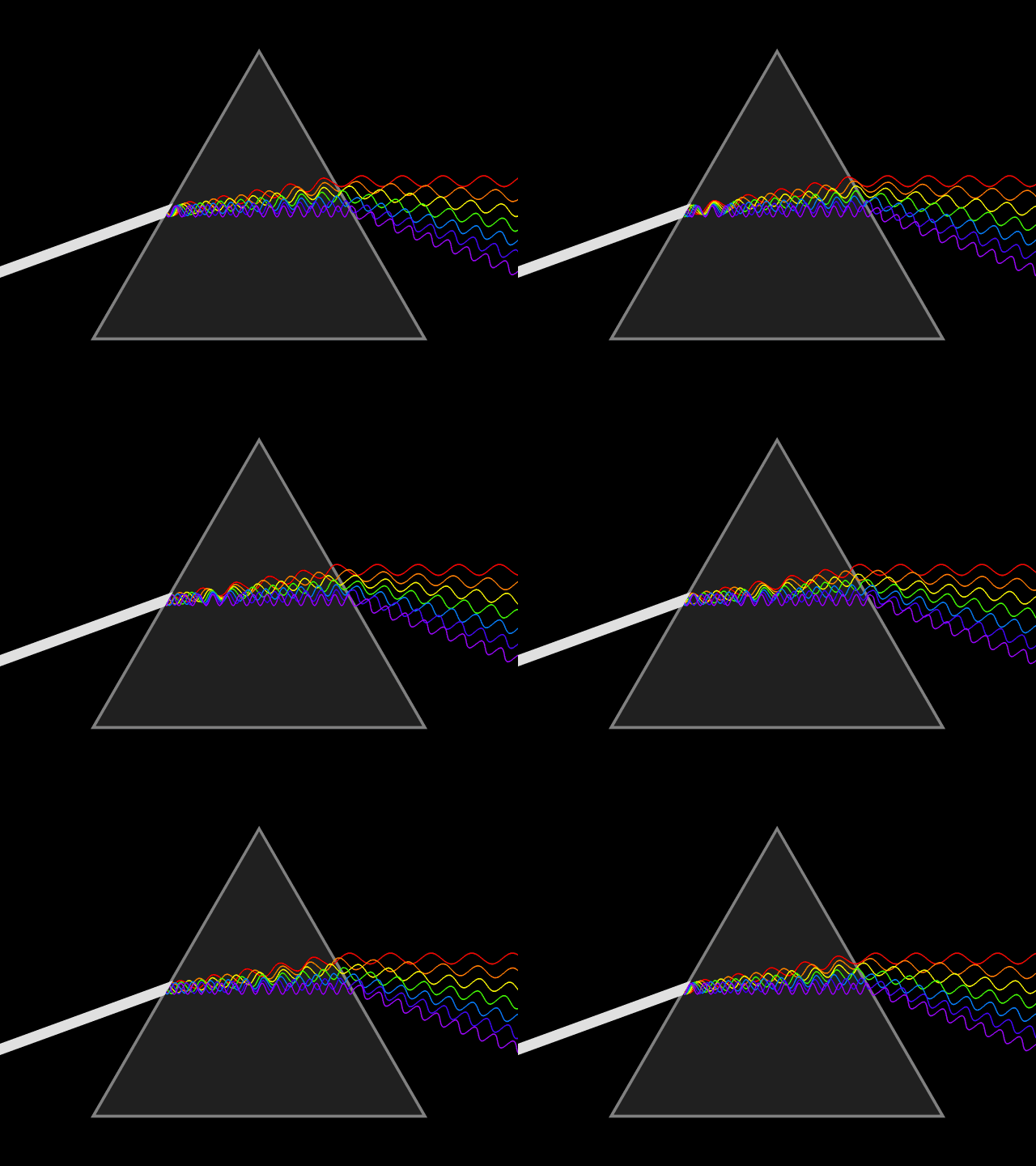
I also think of "Logos" and "logoi" when I see this...
See what great love the Father has lavished on us, that we should be called children of God! And that is what we are! The reason the world does not know us is that it did not know him. Dear friends, now we are children of God, and what we will be has not yet been made known. But we know that when Christ appears, we shall be like him, for we shall see him as he is. All who have this hope in him purify themselves, just as he is pure.
Blessed are the pure in heart, for they will see God.
Blessed are the peacemakers, for they will be called sons of God. Post Edited (Divine Progeny) : 8/15/2008 6:54:22 AM (GMT-5) | | Back to Top | | |
|
Tom
Registered Member
Date Joined Jul 2001
Total Posts : 10353
| Posted 8/15/2008 7:48 AM (GMT -6) | | Yes. Quite UNLIKE the relationship between God and Creation. If you see them as analogous that's a PERFECT demonstration of your monism.
Tom | | Back to Top | | |
|
One Love
Registered Member
Date Joined Jan 2003
Total Posts : 13888
| Posted 8/15/2008 7:53 AM (GMT -6) | | See, man. There YOU go...
If you check Doc's thesis, you would see that the "prism" idea can easily provide an analogy to the "diffusion" of the divine disposition into multiple dispositions that have non-divine concresence into non-divine reality. I told him this and he agreed. And HE saw how I WASN'T monistic in the sense that you keep talking about.
But I guess you didn't know this.
Oh well. 
--------------------------------------------
From Trinity and Process, pages 394-395
God's Relationship to Non-Divine Reality
The disposition of God to create a non-divine reality--which is itself a contingent feature of God's necessary disposition to be God -- is thus a disposition to create experiential centers of, and contributors to, non-divine beauty. It is a disposition to create a matrix of relations with ordinal centers, each of which enjoys and/or contributes to an approximation of divine beauty. The divine disposition "diffuses itself" (Edwards) into a multiplicity of dispositions which "aim at" a unique actualization, a unique perspective on reality, which is defined either as an contribution to, and/or an experience of, beauty.
It is at this point of this "diffusion" that the distinction between God and the non-divine world occurs. The multiplicity of dispositions towards non-divine realities are themselves non-divine in their concrescence. The "termini" of God's creative act is not (as with Neville) the creature act itself, but the beginning of the (not wholly determined) disposition of the creature which shall act. The non-divine disposition arises out of God--it is an aspect of God's self-disposition to delight in Godself--and results in what is not God.
As with Edwards, we can in this way assert that God's creativity is, in one sense,"the substance of bodies", the "ens entium" of all things, without thereby endorsing pantheism. But this in our scheme carried through more consistently than was possible in Edwards because we have not held that this creativity toward non-divine realities is in any sense necessary. The relative autonomy of the non-divine dispositions is manifested in their autonomous--viz. not divinely determined--creativity, though their relative dependence is manifested in their tie to the primordial disposition of God as the ground of their creativity. The divine ground defines the parameters within which the preordained role of the entity within the matrix of being can be played, through exactly how this creativity is in particular actualized is their own doing. The divine ground thus defines the essence of the non-divine creature without thereby undermining the autonomous integrity of the creature: indeed, it is the divine ground of the creature's essence which allows the creature space to be autonomous.
--------------------
I'm NOT going to derail the thread with this. Promise. This is it. 
See what great love the Father has lavished on us, that we should be called children of God! And that is what we are! The reason the world does not know us is that it did not know him. Dear friends, now we are children of God, and what we will be has not yet been made known. But we know that when Christ appears, we shall be like him, for we shall see him as he is. All who have this hope in him purify themselves, just as he is pure.
Blessed are the pure in heart, for they will see God.
Blessed are the peacemakers, for they will be called sons of God. Post Edited (Divine Progeny) : 8/15/2008 8:34:01 AM (GMT-5) | | Back to Top | | |
|
Similitude
Registered Member
Date Joined Apr 2004
Total Posts : 4968
| Posted 8/15/2008 8:17 AM (GMT -6) | | | I gave a bad example. And JET has brought up a good point about God's "righteousness/justice." From the point of view of consequentialism, in terms of benevolent theism, God's justice can not be deemed to be identical to ours. In the first place, we say God doesn't volitionally choose justice, whereas we can. But more importantly, God's justice has nothing to do with a standard. When God is doing what we call just, He is literally merely doing what He MOST wants to do. When we evaluate God's actions, we evaluate them in terms of a standard that we abstract from a designed world. But God is not designed and, hence, can not ultimately be conceived of as acting consistent with any ends He was designed to attain, as we are.
Another perspective to consider is that of rights and duties being correlative. We infer certain designs of our existence and recognize these to be not only for our good, but to be duties as well, especially insomuch as they also have to do with the good of other persons, to the extent that we infer any sympathetic, SOCIAL ends of our existence. And to the extent that we infer any necessary conditions that other persons require to perform their own duties, we call these rights. E.g., we speak of parental rights, by which we mean those conditions and perogatives that we recognize as necessary for a parent to perform their parental DUTY, which was interpreted as an end of our creation.
Now, isn't it true that sometimes we use the idea of justice/righteousness in the context of designed ends and their correlative rights? If so, then God can never be evaluated this way. He has no rights, per se. He is subject to no law. He is not designed for any ends. So we can not use the terms "just" and "right" of Him when we are thinking in terms of "rights" language/thought.
All this is to say, that as a consequentialist, I think that the apropriateness of our reconciliation and our non-reconciliation is conditioned by consequences. As I said earlier, both Jesus and Paul distinguish between reconciling with the truly repentant and the treating of one as a publican. Apart from consequentialism, I have no idea why this would be. Indeed, Paul is explicit as to WHAT the consequences are that we are seeking when refusing company (what is commonly called excommunication), etc. Human forgiveness is not the equivalent of the remission of sins. Only God can remit sins. We can only forgive in the sense of restoring fellowship. And yet we are NOT to do that in all cases. And the exceptions that are given in scripture have consequential grounds provided.
So when I hear Brandon saying "loving CAN amount to being unjust," I think he is saying (he can tell us) what I am saying with respect to the "rights" language of justice. I.e., one can forgive where there is no RIGHT to be forgiven, as far as we can infer from the created order alone. But what we know from scripture and God's nature revealed therein is that there have been providential interventions since the creation of the world order that redeem what are truly fallen aspects of creation. And that these providential interventions actually render consequentially positive many reconciliations that would otherwise be consequentially negative or impossible. Because God is CHANGING hearts in ways that mere mortals, with only the resources of the created order, can not. Hence, it was right for the brethren to embrace Paul even though he had some of their loved ones killed. Because God had worked something in Paul's heart via His Spirit that made his fellowship a truly POSITIVE thing.
So it's about the context we are defining our terms in. There's God's context which renders Him unique because He has no correlative rights/duties and, therefore, we mean something a little bit different when calling Him "just." Then there's the context of the created (i.e., designed) order which has its own inferrable consequences given its inferrable laws, rights, duties, etc. Then there's the context of the world order PLUS God's providential intervention/Self-revelation and the inferrable consequences of the two combined. But even in case three, God and man are distinguishable in the sense that our good comes from fulfilling the ends of our existence, whereas that is not the case for God. It's a subtle distinction that can lead to confusion in our use of terms sense "justice" is sometimes used in the context of "rights" language. And rights language presumes ends for our existence, which emphatically does NOT apply to God.
But I still don't see how we can get around consequentialism. Because intentions should have a voluntary aspect to them, and all voluntary activity has consequences for God if no one else. And given that fact, 1 Cor. 13 doesn't contradict anything else Paul says. For if a man gives his body to be burned for the wrong intent, it is obvious he is profiting nothing if he is burnt, having no post-mortem gain therefrom. Paul is the very one who talks about (in Galations) suffering IN VAIN. Even if the burnt person is ultimately ressurected to life, wouldn't the voluntary sacrifice of being burnt be, for all practical purposes, IN VAIN? Even UR doesn't necessarily undo all vanity in every respect.
The past is the past. UR only assures that the final good outweighs the previous suffering such that it can never be said ABSOLUTELY that "it had been better for you had you never been born." But nothing in the future can negate the fact there are groanings and travailins NOW that are, in some contextual sense, VAIN, just like Rom. 8 says.
Post Edited (Similtude) : 8/15/2008 12:10:15 PM (GMT-5) | | Back to Top | | |
|
One Love
Registered Member
Date Joined Jan 2003
Total Posts : 13888
| Posted 8/15/2008 8:24 AM (GMT -6) | | Check your PM, Tom. Or just revisit the posted quote with the newer emphases.
See what great love the Father has lavished on us, that we should be called children of God! And that is what we are! The reason the world does not know us is that it did not know him. Dear friends, now we are children of God, and what we will be has not yet been made known. But we know that when Christ appears, we shall be like him, for we shall see him as he is. All who have this hope in him purify themselves, just as he is pure.
Blessed are the pure in heart, for they will see God.
Blessed are the peacemakers, for they will be called sons of God. Post Edited (Divine Progeny) : 8/15/2008 8:34:50 AM (GMT-5) | | Back to Top | | |
|
BBBCanada
Registered Member

Date Joined Jun 2001
Total Posts : 2763
| Posted 8/16/2008 12:19 PM (GMT -6) | | Jeff: Tom, I can't think of a definition of justice that would render mercy an act of justice. And, as Brandon said, I can think of cases of mercy that would be unjust. Like a judge sparing a convicted criminal of punishment that the law requires. Wouldn't that be unjust?
Tom: Not to my mind, no it wouldn't. Does the 'law' permit him to spare the guilty? If not, he does injustice. If so, he does not do an injustice. Forgiveness is not injustice (as far as I can tell). Perhaps the problem is that some think of justice as entailing a SINGLE 'just' response to the guilty (and anything else at all is 'injustice'). I don't know.
Brandon: I wouldn't say that love and justice are not interwined or inter-related. They are. Love and compassion though may let that person who is guilty go free when they are deserving of punishment. That would not be justice. However, JET says, "I think I'd say justice is doing the right thing under the circumstances. If extending mercy is the right thing to do under the circumstances, it is justice; if not, it isn't." This is correct as far as it goes me thinks, but it really doesn't tell us anything. For example, in the case of someone who is guilty, again, we should not short circut the deliberation process (which God wants of us in working out justice) and in doing this, love will try to gather the relevant information (as much as possible) based on equality, merit and need. This is why I said, "It is justice that aids love in these considerations because it deals with the individual needs of my neighbour as a member of the community, in the context of his or her special claims..."
Brandon
It is the purpose that makes strong the vow, but vows to every purpose must not hold.--A friend.
To love without love is slavery--Mother Teresa
| | Back to Top | | |
|
Similitude
Registered Member
Date Joined Apr 2004
Total Posts : 4968
| Posted 8/16/2008 3:07 PM (GMT -6) | | | Brandon: For example, in the case of someone who is guilty, again, we should not short circut the deliberation process (which God wants of us in working out justice) and in doing this, love will try to gather the relevant information (as much as possible) based on equality, merit and need. This is why I said, "It is justice that aids love in these considerations because it deals with the individual needs of my neighbour as a member of the community, in the context of his or her special claims..."
Jeff: In a sense, though, aren't we saying that love DOES justice when the consequences are better for it? To short circuit the deliberation process of an institution that has certain powers delegated by God and man to it is to usurp. And usurpation has bad consequences--i.e., worse consequences than punishment. So when we say that "justice ... deals with the individual needs of my neighbour as a member of the community, in the context of his or her special claims...", we are saying what I was trying to say earlier. Namely, there simply are certain "needs" and "claims" that are essentially God-given RIGHTS. I.e., they are conditions, circumstances, or SOFA's that God INTENDED, given the designed order of creation and our place in it.
So again, I think we need to distinguish between justice as used in terms of "rights" language and justice as applied to God. God's justice can never entail the notion of His acting consistent with an end of His existence. Ours does. God can NOT be unjust in the way that we can. For His will is the very ground of rights and responsibilities for creatures. And He has no rights or responsibilities. It would be non-sensical to say God has a "right" to do thus and such...
| | Back to Top | | |
| 63 posts in this thread.
Viewing Page : 1 2 3 |
| Forum Information | Currently it is Monday, November 09, 2026 4:55 PM (GMT -6)
There are a total of 97,718 posts in 6,040 threads.
In the last 3 days there were 0 new threads and 0 reply posts. View Active Threads
|
Forum powered by dotNetBB v2.42EC SP3
dotNetBB © 2000-2026 |
|
|