 |
| 
Seymour
Registered Member
Date Joined Jan 2002
Total Posts : 105
| Posted 5/15/2002 12:39 AM (GMT -6) |   |
This is a first installment of a series of reflections on hell which take as their starting point chapters 11 and 12 of Doc’s SATPOE. I’m going to give Doc a rather hard time at points, but it’s all for fun so don’t sweat it. Eventually, however, after teasing him a bit I want to convince him that this view opens up the question of, and is compatible with, a kind of universalism—or that it itself has the potential to become a triple synthesis of the traditional, annihilationist, and universalist views of hell. All this for just $19.99, that’s right $19.99…
So without further delay I want to begin with one question to frame the post and then end with two questions which I will leave open to Doc or anyone else.
Oops…one further delay. I am currently typing this without having slept in two days, so forgive misspellings, poor grammar, and most of all forgive me if the whole thing is a stupid embarrassing flop and it turns out that Doc is not a universalist after all.
The whole question begins with this: What are we to make of chapter 11 in SATPOE in relationship to chapter 12?
Let us be clearer.
1). What is the relationship between the defense Doc gives of the traditional view of hell on pages 322–7 and Doc’s synthetic view of hell given in chapter 12?
2). What is the relationship between the defense Doc gives of the nnihilationist view of hell pages 327–36 and Doc’s synthetic view of hell given in chapter 12?
In other words in at what points in chapter 11 is Doc giving us a part of HIS VIEW, a part which will be submerged, suppressed, and incorporated into his own view of hell outlined in chapter 12; and at what points is Doc merely REPEATING SOMEONE ELSE’S VIEW?
Upon a first reading it would appear that Doc is agreeing with ALL of the arguments on both sides of the debate and that each will be fully incorporated in the Aufhebung of his rather ingenious synthetic view in chapter 12. But this is not so. Let us first make it clear that Doc is not claiming that he can reconcile every aspect of these two views which form an “apparent antitheses,” rather he is seeking to “construct a model of hell that allows us to affirm the essence of both perspectives” (339 emphasis mine). It is clear that at some points (which are therefore obviously not essential points for Doc) these two perspectives really do take up antithetical positions to one another. At these points Doc lets one view trump the other. For example most traditionalists hold that the soul is intrinsically immortal and use this to support eternal conscious suffering. Annihilationists, however, (and IMHO more Biblically) believe that only God is immortal citing several scriptural texts in support. At this point Doc goes against the apparent unbalanced weight of scripture on this point and lets the traditional view trump the annihilationist view (without commenting on how he deals with the 12 or so Scriptural texts to the contrary) because it conforms to a theoretical idea that he is rather fond of.
quote:
As I argued previously, the nature of morally responsible freedom entails that an agent’s potential for good must be proportionate to its potential for evil. This potential, I further suggested, must be irrevocable (TWT4 and 5). If these insights are valid, one could perhaps further argue that since agents enjoy a potential to choose love for eternity they must, by necessity, possess a proportionate capacity to choose its opposite for eternity. In other words, if opportunity and risk necessarily go hand in hand, then the opportunity for eternal gain must entail the risk of eternal loss. Hence, the risk God must take in creating creatures with the capacity for eternal heaven is that he thereby creates them with the capacity for eternal hell. (326 Doc’s italics, bolds are mine)
Likewise
quote:
First, if my argument in the previous chapter for the inherent immortality of the soul from the principal of proportionality is correct, God has no choice in this matter. The potential for eternally saying yes to reality as defined by the loving Creator metaphysically requires the potential eternally to say no to this reality, just as the creation of two adjacent mountains logically requires the creation of an intervening valley. If this is correct, then, as Peter Kreeft and Ronald Tacelli argue, “To annihilate the souls in hell would be to destroy something God created to be intrinsically and essentially immortal and indestructible—this is [a]…self contradiction.” (342—3 again Doc’s italics, bolds are mine)
Really? Are souls really created to be “intrinsically and essentially immortal and indestructible”? Why then are we told to “fear him who can destroy both soul and body in hell” (Mt 10:28)? This fear must be a rather hollow fear since it would be a “self contradiction” for this someone to actually destroy the soul, something which would logically be like destroying the intervening valley without destroying the two adjacent mountains. Apparently Jesus must not have paid attention in that intro to logic course, eh Doc? You think you could teach Jesus a little bit about logical contradictions do you?
If we are metaphysically required to be immortal Paul must have forgotten the billions upon billions of created souls when he penned that God alone is immortal (1 Tim. 6:16). But don’t worry Doc has a theoretical reason for trumping the annihilationist argument here, and let the Bible be damned! (Wow can I ever play something up for all it’s worth or what?)
Yet he never gives us any account for how to understand these texts which appear to oppose his theory heavy/Biblically light view. However, let us not pretend that he is not aware of these texts, indeed they appear in the section where he outlines the argument for annihilationism, a section of chapter 11 where he is clearly NOT giving us his own view or an aspect of a view compatible with his own:
quote:
On a related note, annihilationists point out that “immortality” and “incorruption” are promised only to the righteous (1 Cor 15:42-44, 50). We “put on imperishability” and “immortality” (1 Cor 15:54). The teaching implies that the unrighteous remain mortal and perishable. Likewise, Scripture teaches that God alone is immortal by nature (1 Tim 6:16); all others receive it as a gift. Believers are given the gift of eternal life (e.g., Jn 3:16; 10:28; 17:2; Rom 2:7; 6:23; Gal 6:8; 1 Jn 5:11); they do not have it innately. The “tree of life” [a theme which is apparently currently a subject of thought for Doc] that was forbidden to humans after the Fall (Gen 3) is open to them in the eschaton (Rev 22:19). Conversely, annihilationists argue, those who are not given eternal life have only finite life, which is to say, it comes to an end (334 see also n.21).
QUESTION NUMBER ONE: So my first question for Doc is this. How do you deal with all of these verses which go against your view of the soul? You never seem to deal with them (or if you do I must have missed it, in that case give me a page number please).
QUESTION NUMBER TWO: And my second question sets up my next post. Since in chapter 11 you don’t seem to signal when you are articulating an aspect of one of these two views which is contained in your own, or when you are merely repeating the views of others as above, can you tell me which category this next excerpt from chapter 11 applies to?
quote:
In this same context Jesus teaches that the wicked will be “salted with fire” (Mk 9:49). This unusual expression arguably suggests that the fires of hell will not utterly annihilate the wicked, for the primary function of salt in the ancient world was preservation. Hence, traditionalists argue, we must accept that this terrible unquenchable fire burns even while it preserves those whom it burns. (324 – 5).
Is this an interpretation which you stand by, one that you would use and incorporate in support of your view in chapter 12? Or would you break from this interpretation and only include it here by means of repeating someone else’s viewpoint? The "traditionalist argue" which begins the last sentance seems to put some distance between this interpretation and yourself, yet there doesn't seem to be any reason why you couldn't fully stand behind this reading. Do you?
WARNING: I'm sort of setting you up here. I just want to know whose's bad Bible reading skills I should be attacking, yours or someone elses. But if someone elses why do you include it?
P.S. oh and by the way, your totally a universalist man (I think).
Some folks dance cool, all angels and swaying hips, Sensual as all get out and in. Me, I'm a hick, and I dance like one, I just kinda jump around and grin.
--Greg Brown
Edited by - Seymour on 05/15/2002 05:50:05 AM | | Back to Top | | |
 |
Seymour
Registered Member
Date Joined Jan 2002
Total Posts : 105
| Posted 6/10/2002 5:34 PM (GMT -6) | |
Cooled down yet?
Okay from this point on I'm sticking only to the Germans.
quote:
Socrates belonged, in his origins, to the lowest orders: Socrates was rabble. One knows, one sees for oneself, how ugly he was. But ugliness, an objection in itself, is among Greeks almost a refutation. Was Socrates a Greek at all? Ugliness is frequently enough the sign of a thwarted development, a development retarded by interbreeding. Otherwise it appears as a development in decline. Anthropologists among criminologists tell us the typical criminal is ugly: monstrum in fronte, monstrum in animo. But the criminal is a decadent. Was Socrates a typical criminal?-At least that famous physiognomist's opinon which Socrates' friends found so objectionable woud not contradict this idea. A foreigner passing through Athens who knew how to read faces told Socrates to his face that he was a monstrum-that he contained within him every kind of foul vice and lust. And Socrates answered merely: "You know me, sir!"-
Friedrich Nietzsche Twilight of the Idols 3/3.
You can't understand anything about Socrates until you understand that he was ugly.
Is this ad hominum? Of course. But it is you who need to justify yourself. Why should ad hominum arguements remaind below the level of discusion? Why not let all valid arguements surface? Is it not valid to point out how ugly Socrates was? (I wonder what edification is if not ad hominum?)
Your illiteracy has become the issue, espeically when you let such wonderfully (unread) German concepts creep into your argument.
You can't undersand anything about chapter 12 untill you understand that Doc is illiterate, you won't be able to understand anything about my reading of chapter 12 (which is coming soon ) untill you understand that Doc won't know how to be read because he doesn't know how to read.

P.S. look at the smile man, it turns up on one side and down on the other. I'm just messin with you. I'm just smiling at you. But you are a universalist, i'm not messing about that.
Some folks dance cool, all angels and swaying hips, Sensual as all get out and in. Me, I'm a hick, and I dance like one, I just kinda jump around and grin.
--Greg Brown
Edited by - Seymour on 06/10/2002 10:40:31 PM | | Back to Top | | |
|
Semeia
Registered Member
Date Joined Aug 2001
Total Posts : 522
| Posted 6/10/2002 6:42 PM (GMT -6) | | Hey Seymour! Welcome back. Have you caught up on your sleep?
A couple of days ago Doc got on this thread and said, "Hug hug, kiss kiss," or something like that. Unfortunately, at just that time the server was being upgraded or something, and all his posts got deleted. I'm pretty sure it was Satan metaphorically trying to get in the way of reconciliation.
However, are you sure you're getting off on the right foot calling Doc illiterate?
And if you're going to lob that kind of accusation, use your spell-checker, man!
I hope Doc reads the small print where you say you're joking...
Thanks,
Semeia
"The opposite of sin is not virtue, but faith."--Soren Kierkegaard | | Back to Top | | |
|
Tom
Registered Member

Date Joined Jul 2001
Total Posts : 10353
| Posted 6/10/2002 7:21 PM (GMT -6) | | 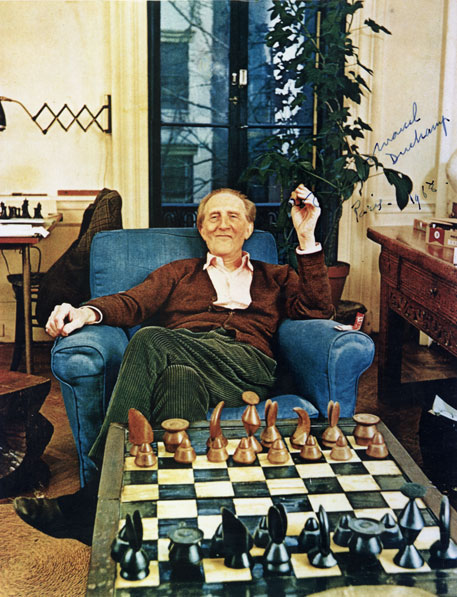
Seymour-
I don't like the chess pieces.
Tom
"Every saint has a history and every sinner a future." Oscar Wilde
Edited by - TGB on 06/11/2002 12:25:44 AM | | Back to Top | | |
|
Seymour
Registered Member
Date Joined Jan 2002
Total Posts : 105
| Posted 6/12/2002 10:03 PM (GMT -6) | | quote:
Seymour-
I don't like the chess pieces.
Tom
Why is that? They were hand carved as a gift by the world renouned painter and sculpter Jean Arp.
Some folks dance cool, all angels and swaying hips, Sensual as all get out and in. Me, I'm a hick, and I dance like one, I just kinda jump around and grin.
--Greg Brown | | Back to Top | | |
|
Seymour
Registered Member
Date Joined Jan 2002
Total Posts : 105
| Posted 6/17/2002 8:35 AM (GMT -6) | | quote:
This is a first installment of a series of reflections on hell which take as their starting point chapters 11 and 12 of Doc’s SATPOE. I’m going to give Doc a rather hard time at points, but it’s all for fun so don’t sweat it. Eventually, however, after teasing him a bit I want to convince him that this view opens up the question of, and is compatible with, a kind of universalism—or that it itself has the potential to become a triple synthesis of the traditional, annihilationist, and universalist views of hell. All this for just $19.99, that’s right $19.99…
Clean Cups!!!
clean cups clean cups (new thread new thread) move down move down clean cups clean cups new thread new thread move down move down new thread clean cups
Time for a freash start, no more teasing Doc about confusing the Holy Spirit with the fires of hell or being illiterate. (Although Doc still never answered my question about how the view he takes in SATPOE that the soul's immortality is a logical neccesity accounts for verses to the contrary. Still waiting Doc)
Time to move on to the real project, it may not work but my feelings will be hurt if people don't at least think that it was ingenius.
Some folks dance cool, all angels and swaying hips, Sensual as all get out and in. Me, I'm a hick, and I dance like one, I just kinda jump around and grin.
--Greg Brown | | Back to Top | | |
| Forum Information | Currently it is Monday, November 09, 2026 3:52 PM (GMT -6)
There are a total of 97,718 posts in 6,040 threads.
In the last 3 days there were 0 new threads and 0 reply posts. View Active Threads
|
Forum powered by dotNetBB v2.42EC SP3
dotNetBB © 2000-2026 |
|
|